Why the timeline is moving
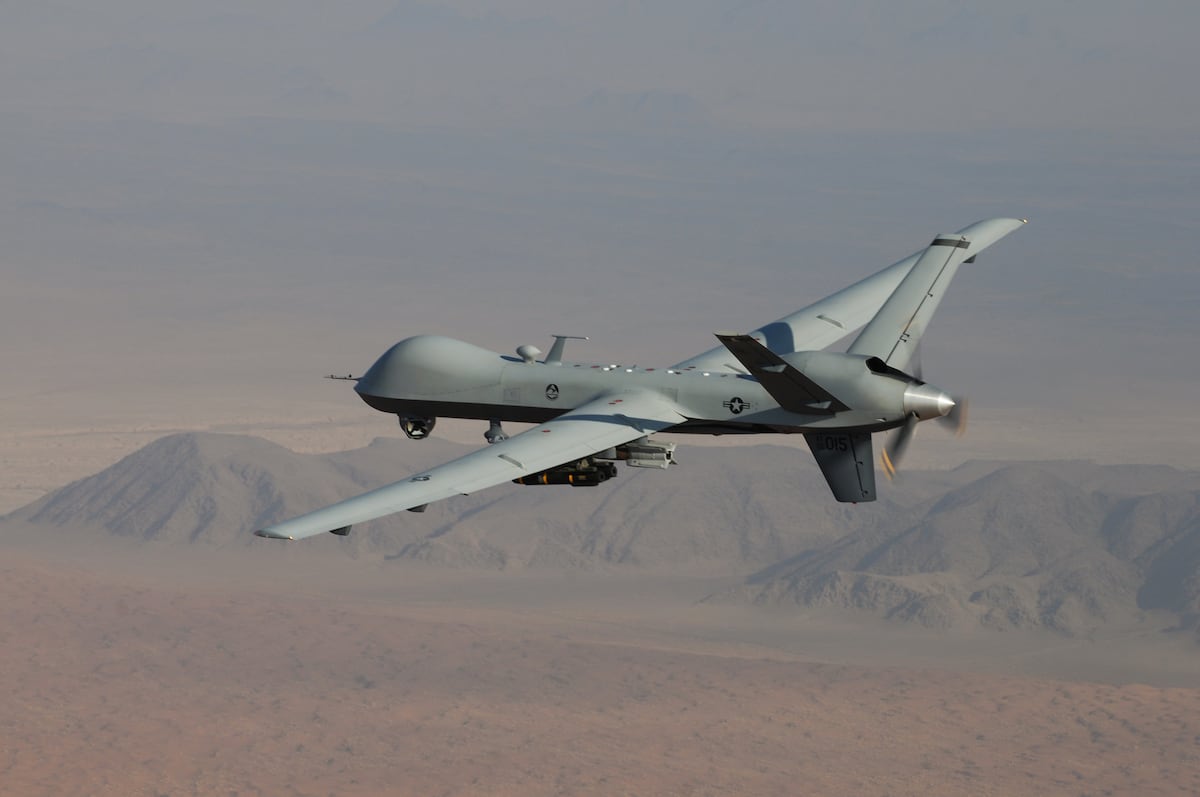
The U.S. Air Force is accelerating plans for a replacement to the MQ-9A Reaper, with senior leaders saying combat losses against Iran have made the service unwilling to wait out the remaining lives of today's aircraft.
At a Pentagon briefing on September 3, Lt. Gen. Christopher Niemi, the Air Force's chief modernization officer, said the service is going through its Reaper inventory at a rate that cannot be sustained. Air Force Secretary Troy Meink has directed the schedule to speed up, according to Defense Daily, and a goal that once centered on fiscal 2031, when 20 mission-ready aircraft would be fielded, could be pulled forward by as much as two years.
The shift is a direct response to recent combat attrition. Niemi did not update the inventory during the briefing, but he acknowledged the trend is shaping requirements.
Reaper fleet under pressure
The scale of Reaper losses became a question for Congress in the spring. In May testimony before the Senate Armed Services Subcommittee on Airland, Lt. Gen. David Tabor said the active fleet had fallen to about 135 aircraft, roughly 54 below the 189-aircraft floor the service believes it needs.
- Fleet inventory: about 135 aircraft available in May, against a stated floor of 189.
- Reported losses in Iran operations: at least 24 as of an April report cited by the Congressional Research Service.
- Later reporting by The Washington Post, based on three U.S. officials, said the number had risen to at least 45, or roughly a quarter of the fleet.
The two loss figures span a wide range, and Niemi's September briefing did not provide a third, more current count. The Congressional Research Service also noted it was unclear whether the Pentagon has given Congress a formal accounting of the losses.
Production limits close off old answers
Replacing Reapers with new Reapers is no longer straightforward. General Atomics shut down MQ-9A production in 2025, so the service cannot simply order more of the same aircraft. Tabor told the Senate subcommittee that the Air Force is pursuing a short-term buy of existing MQ-9A airframes for fiscal 2026, a stopgap intended to preserve capacity while a follow-on is developed.
Niemi ruled out a large purchase of the upgraded MQ-9B SkyGuardians as the main path, saying budget constraints make that unrealistic. He cautioned against the assumption that the Air Force could write a check and take delivery of 100 aircraft. The limitations are both industrial and financial: even the current Reaper, when loaded with a full sensor package, can cost as much as $50 million per aircraft.
That combination of attrition above projections, a closed production line, and constrained budgets has pushed officials to look for aircraft that can be produced in volume, flown for fewer dollars per mission, and accepted as losses.
Introducing Massed Modular Aircraft
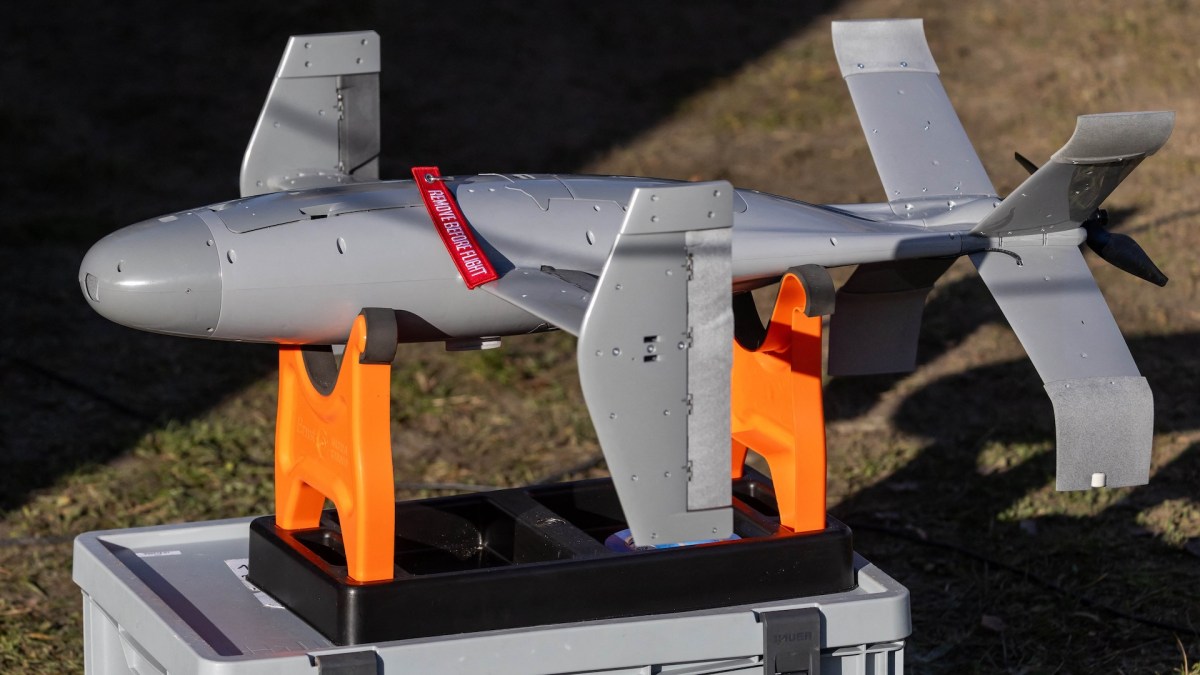
Niemi signed requirements for that program, known as Massed Modular Aircraft, or MMA, in May. The Defense Innovation Unit opened a competition on July 7 with the Air Force as partner; the solicitation closed July 23. The program's name signals the intent: a common drone design with modular payloads that can be mass-produced and fielded as distributed mass, rather than as a small number of exquisite platforms.
Required capabilities
- Reaper-class strike, intelligence, surveillance, and reconnaissance, electronic warfare, and communications-relay missions;
- at least 2,800 pounds of payload;
- an 8,000-nautical-mile one-way ferry range;
- and cost levels low enough to allow commanders to absorb losses without losing the mission.
The range and payload figures suggest the Air Force still wants MMA to cross theaters and move weapons or intelligence-gathering equipment into contested environments. The key difference is expected to be cost, not capability placement.
Counting the cost trade
Niemi has started comparing MMA with Collaborative Combat Aircraft, a separate family of drones designed to fly alongside fighter jets. Air vehicle prices differ sharply by category. CCA air vehicles are estimated near $20 million, while an MMA air vehicle would run about half that.
An Air Force spokesperson was careful to say those numbers apply to the bare airframe, not to the fully missionized package. Sensors, datalinks, weapons, and other mission kit will add to the total, but the Air Force is reportedly planning for at least 180 MMA drones.
The plan shows the service treating the Reaper replacement as a mass problem rather than an optimization problem. By setting a larger fielding target and pricing the system against an attritable aircraft, officials are signaling that they want the future fleet sized for operational risk, not just peacetime availability.
Unanswered questions
Several gaps remain in the public picture. The Air Force has not released an updated Reaper inventory count since Tabor's May testimony, and the different loss figures have not been reconciled. Niemi also did not explain whether the MQ-9B talk is entirely off the table or only unavailable in quantity.
The exact fielding date is still a moving number. Reports from the September 3 briefing say a fiscal 2031 initial capability could be accelerated by around two years, but no single official date has been announced. Defining a mission-ready MMA aircraft will be difficult until the Defense Innovation Unit competition produces a winner and the service completes a more detailed cost estimate.
For now, the clearest signal from the Pentagon is a shift in intent: the Air Force considers the Reaper unaffordable to continue losing, and expensive to replace at the pace or price that made sense before the current conflict began.
This article is based on reporting by Defense News. Read the original article.
Originally published on defensenews.com