A compressed route from urgent need to formal program
The US Army says it moved the Merops interceptor drone into a formal program of record in just 142 days, an unusually rapid acquisition timeline that it is presenting as a model for responding to fast-changing battlefield threats.
Col. Christopher Hill, director of the Army’s Global Tactical Edge Acquisition Directorate, described the effort at the Association of the U.S. Army’s annual convention in Washington, DC. His account places the program in the context of pressure to field counter-drone capabilities quickly for troops and NATO partners.
Merops is a small counter-unmanned-aircraft system designed to intercept long-range, one-way attack drones in flight. The program’s speed is notable not only for the technical mission, but because it shows how the Army is trying to shorten the distance between a demonstrated capability and an official acquisition pathway.
A response to drone incursions and combat experience
According to Hill, the system came to the Army’s attention after drone incursions involving two NATO partners prompted a senior commander to seek an urgent response. The capability was not included in that commander’s original acquisition plan. Its performance in Ukraine, however, made it a compelling candidate for accelerated fielding.
The initial demand was stark: put the capability in the hands of partners within 14 days. The Army did not meet that timetable, Hill said, but the request set the direction for a rapid effort. The subsequent 142-day path to program-of-record status is the milestone the service is now highlighting.
The episode reflects a wider shift in military procurement. One-way attack drones have become a persistent operational problem, and the speed at which systems, tactics and threats evolve can outpace traditional development and acquisition cycles. An interceptor designed around a specific gap may therefore have strategic value well before a conventional multi-year program can be established.
How Merops is designed to work
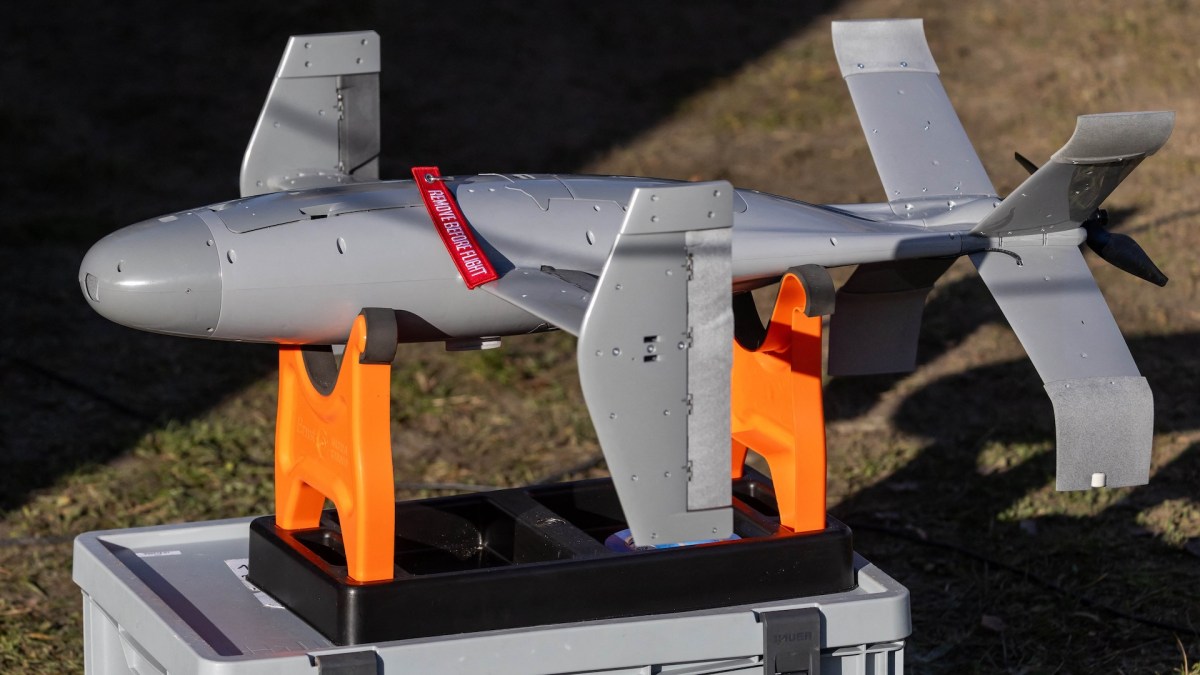
The Merops system uses Surveyor drones as airborne interceptors. It includes onboard sensors to track targets and can operate autonomously or under remote control. The interceptors can destroy enemy unmanned aircraft either by direct impact or with a proximity-detonated explosive warhead.
That combination puts Merops in the growing class of counter-UAS systems aimed at confronting relatively inexpensive long-range attack drones without relying exclusively on larger, more costly air-defense weapons. The source describes it as a relatively low-cost system, a consideration that matters when defenders must respond repeatedly to massed drone attacks.
Merops was originally developed under the US-backed Project Eagle initiative. The effort included contributions from Swift Beat, a company associated with former Google chief executive Eric Schmidt. The program’s origins also illustrate the increasingly mixed ecosystem behind modern defense technology: government-backed initiatives, commercial partners and lessons from active conflict can all shape what advances into formal military procurement.

From partner support to Army acquisition
The Army’s rapid formalization of Merops followed its use in a broader security context. The system was rushed to NATO partners after drone incursions, according to the report. It later received attention for its role in defending against Iranian barrages of Shahed-136 one-way attack munitions in the Middle East.
Those experiences supplied something that acquisition organizations often seek but do not always get early in a program: operational evidence. Hill characterized Merops as an example of how the Army can move quickly when circumstances require it. The service’s decision to make it a program of record turns that urgency into a more durable institutional commitment.
A program of record generally provides a formal basis for planning, resourcing and managing a capability inside the defense acquisition system. In this case, the significance is as much about the process as the platform. The Army is signaling that a counter-drone system with demonstrated relevance can be moved through that process on a far shorter timeline than is commonly associated with major weapons programs.

The broader lesson for counter-drone defense
Merops arrives amid an expanding contest between inexpensive uncrewed attack systems and the tools designed to defeat them. The operational problem is not merely detecting an incoming drone; it is doing so reliably, responding quickly and finding a means of interception that can be sustained during repeated attacks.
The Merops design addresses that problem with an interceptor that is itself an unmanned aircraft. Onboard target tracking and the option for autonomous or remotely controlled operation give operators multiple ways to employ the system. Direct impact and proximity-fuzed engagement provide two mechanisms for destroying a target.
Whether the 142-day model can be applied broadly will depend on the availability of mature technology, a clear urgent need and the willingness of military organizations to make rapid decisions. Merops had several of those ingredients: a defined threat, evidence from Ukraine, immediate partner requirements and a senior commander’s push for action.
A test of faster military fielding
The Army’s Merops announcement does not mean that every capability can or should be acquired at the same pace. Systems differ in their maturity, complexity and safety requirements. But the program offers a concrete example of how the service hopes to accelerate fielding when an emerging threat exposes a gap.
For the Army and its allies, the immediate objective is countering long-range one-way attack drones. For acquisition officials, the larger objective is proving that bureaucratic timelines can be compressed when technology has shown practical value and the operational demand is urgent. Merops is now both a counter-drone program and a case study in that approach.
This article is based on reporting by twz.com. Read the original article.
Originally published on twz.com