From skepticism to operational use
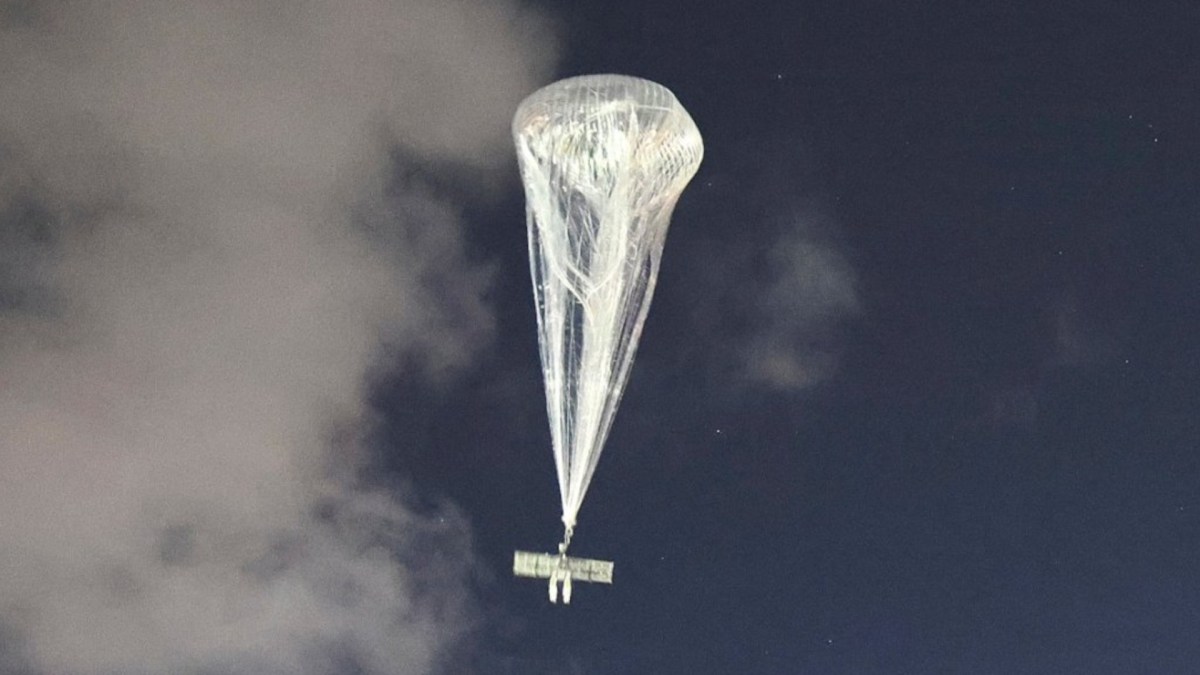
High-altitude balloons have moved from an experimental idea to a capability the U.S. Army is using in real operations, according to the head of Army Space and Missile Defense Command.
Lt. Gen. John Rafferty described the systems as “game-changing” during a media roundtable held alongside the Association of the U.S. Army’s annual convention. His assessment follows a separate disclosure that the Army redirected balloon systems intended for a Pacific swarm test to support operations in the Middle East.
The shift is significant because it shows the Army treating balloon-based systems as more than a distant technology demonstration. Rather than keeping the equipment within a planned exercise, the service sent it into an operational setting. The source material does not specify the precise missions, locations, or performance results, but the decision itself indicates an immediate demand for the capability.
A platform between aircraft and satellites
High-altitude balloons occupy an unusual place in the military’s collection of sensing and communications tools. They are lighter-than-air platforms that can carry sensors and other payloads at high altitude. The War Zone has tracked their growing use worldwide for intelligence gathering, as potential drone-launch platforms, and for other missions.
That flexibility helps explain the Army’s interest. A balloon can offer an elevated position for a payload without the same type of runway, aircraft, or orbital infrastructure associated with other systems. Its value will depend on the payload, weather, survivability, endurance, launch arrangements, and the needs of the force using it. Still, an elevated sensor platform can be useful where commanders need broader awareness than ground-based equipment can provide.

Rafferty’s comments point to a change in institutional perception. He said that, while serving previously in Army Futures Command and hearing discussion of high-altitude balloons, the concept initially sounded implausible to him. Later, during training and experimentation with the 2nd Multi-Domain Task Force in Morocco, he saw the balloons in action and became convinced of their value.
That trajectory matters. Military adoption often depends not only on a technology’s theoretical potential but also on whether operational leaders see it work in a realistic setting. Rafferty’s experience suggests that demonstrations helped turn an unfamiliar idea into a capability senior leaders now consider operationally relevant.
Why the Middle East deployment matters
The reported decision to cancel a planned Pacific balloon-swarm test and redirect systems to the Middle East reflects a common tension in defense technology: whether to continue a controlled experiment or use a promising system against a nearer-term operational requirement.
Testing remains essential, particularly for a system that may be exposed to severe weather, contested airspace, and sophisticated adversary sensors or defenses. But deployment can produce a different kind of evidence. It places the equipment inside actual command structures, logistical chains, and mission rhythms, revealing whether a concept can be sustained and used effectively when conditions are less predictable.
The available information does not establish that balloons can replace satellites, aircraft, or unmanned aerial vehicles. It does suggest that the Army sees them as a complementary option. Their appeal may be strongest when a force needs an adaptable, sensor-carrying platform and wants to diversify the ways it can gather information or support operations.
An expanding role for lighter-than-air systems
The Army’s interest comes amid broader attention to high-altitude balloons and other lighter-than-air platforms. Their possible uses range from intelligence, surveillance, and reconnaissance to serving as platforms that enable other systems. The technology has gained attention precisely because it can sit between familiar categories: it is not a satellite, not a conventional aircraft, and not simply a ground sensor.
That does not make the systems uncomplicated. High-altitude platforms can present operational, legal, safety, and escalation questions, especially when used near sensitive airspace or in regions where adversaries may contest their presence. Their practical usefulness will be shaped by how easily they can be launched, controlled, recovered, and protected, as well as by the quality of the payloads they carry.
For now, the clearest signal is organizational. Army Space and Missile Defense Command’s leader has publicly endorsed high-altitude balloons after seeing them in experimentation and after the Army used related systems in support of Middle East operations. That combination of senior advocacy and operational demand is likely to keep the technology on the Army’s agenda.
What to watch next
Future disclosures will determine how consequential this development becomes. Key questions include which payloads the Army is fielding, how long the systems can remain useful in operational conditions, how they integrate with other sensing networks, and whether the service returns to the postponed Pacific swarm concept.
For defense planners, the immediate lesson is that useful capability can emerge from platforms that once seemed unconventional. Rafferty’s change of mind captures that transition: high-altitude balloons are no longer only an experimental curiosity in Army discussions. They are being considered as a practical part of the force’s evolving toolkit.
This article is based on reporting by twz.com. Read the original article.
Originally published on twz.com