Boeing Demonstrates Software to Link Super Hornets and MQ-25A Tankers
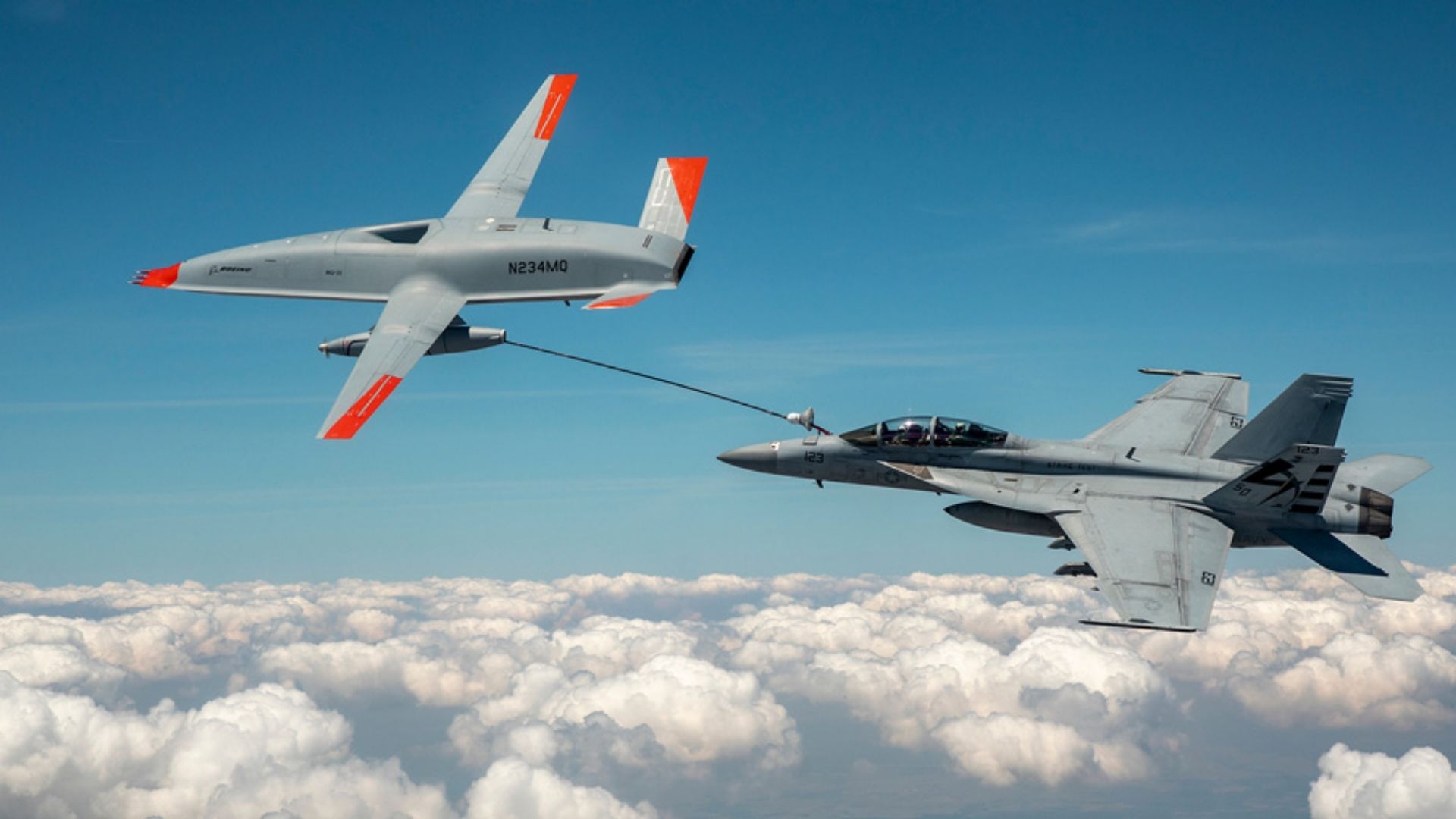
Boeing has demonstrated software designed to let pilots in crewed aircraft coordinate with unmanned aircraft, a capability that could reshape how carrier-based fighters and drone tankers work together. The demonstration connects the Super Hornet, a long-serving crewed fighter, with the MQ-25A, an unmanned tanker built to refuel aircraft in flight. The pairing is significant because it moves beyond treating drones as remote-controlled curiosities and toward integrating them as routine partners in combat air operations.
What the Demonstration Actually Shows
At its core, the software acts as a translator and coordinator between two very different kinds of aircraft. A Super Hornet pilot operates in a cockpit with direct sensory input, while the MQ-25A flies without a human onboard. For the two to work as a team, the pilot needs a clear, low-friction way to direct the unmanned tanker's behavior, receive status updates, and confirm that refueling or other coordinated actions are safe to proceed. The software Boeing demonstrated is aimed at exactly that problem: making the unmanned aircraft a predictable, manageable asset rather than an additional burden.
That matters because modern fighter cockpits are already information-dense. Pilots juggle navigation, sensors, weapons, communications, and threat warnings. Adding another screen or control scheme for a nearby drone could easily overwhelm a crew. The value of Boeing's approach lies in abstraction—presenting the MQ-25A's state and available actions in a way that fits the pilot's existing workflow, so coordination feels like working with another aircraft rather than operating a remote vehicle.
Why the MQ-25A Matters
The MQ-25A is designed as a carrier-based unmanned tanker. Its primary job is to extend the reach of fighter aircraft by providing aerial refueling without putting a crew at risk or consuming a crewed aircraft's service life on tanker duty. Tankers are force multipliers: they allow fighters to fly farther, stay on station longer, and carry more weapons instead of fuel. An unmanned tanker offers those benefits while freeing crewed aircraft for other missions.
Bringing a drone tanker into a carrier air wing, however, is not just a matter of flying the vehicle. It has to integrate with the human pilots who will rendezvous with it, take fuel from it, and depend on it. That integration is where software becomes the critical enabler. A tanker that cannot be reliably directed or understood by the fighter pilot receiving fuel is a liability; one that communicates its intentions and responds predictably is an asset.
The Broader Push Toward Manned-Unmanned Teaming
The Boeing demonstration fits into a broader military trend often described as manned-unmanned teaming. The idea is to combine human judgment with machine persistence and reach. Crewed aircraft bring situational awareness, adaptability, and accountability. Unmanned aircraft bring endurance, the ability to operate in dangerous environments without risking a pilot, and potentially lower operating costs.
For that combination to work, several things have to come together:

- Reliable communication links that function in contested electromagnetic environments.
- Interfaces that let human operators supervise autonomy without micromanaging it.
- Software architectures that can be updated as tactics and threats evolve.
- Clear rules for what the unmanned system may do on its own and what requires human approval.
Boeing's demonstration addresses the interface and coordination layer. It is one piece of a much larger puzzle, but it is a foundational piece. Without a usable link between the crewed and uncrewed platforms, the rest of the concept cannot mature.

Technical Hurdles Remain
Trust and Predictability
Pilots are trained to trust their wingmen, and that trust is built on shared training and predictable behavior. An unmanned tanker must earn similar confidence. If the MQ-25A behaves unexpectedly—changing speed, altitude, or position without clear reason—the pilot's workload spikes and safety margins shrink. The software must make the drone's behavior legible, so the human always understands what the machine is doing and why.
Latency and Spectrum
Any coordination between crewed and uncrewed aircraft depends on data links. Those links can be jammed, degraded, or lost. A robust system has to handle imperfect communications gracefully, including defining what happens when the connection drops. Autonomy can help fill gaps, but only if the boundaries of that autonomy are well defined and tested.
Certification and Integration
Carrier operations are unforgiving. Aircraft launch and recover in tight sequences, on a moving deck, in all weather. Integrating a new unmanned aircraft and the software that connects it to crewed fighters requires extensive testing, new procedures, and buy-in from the people who will actually fly and maintain the system. Demonstrations like Boeing's are early steps in that long process.
What Comes Next
The path from a software demonstration to routine carrier operations involves iterative testing, feedback from pilots, and refinement of both the autonomy and the human-machine interface. Success will be measured not by whether the software works in a scripted scenario, but by whether it remains useful when communications are poor, the tactical situation is chaotic, and the pilot is under stress.
If it works, the implications extend beyond aerial refueling. The same coordination software could support other unmanned aircraft performing surveillance, strike, or electronic warfare missions alongside crewed fighters. The MQ-25A may be the first routine unmanned teammate in a carrier air wing, but it is unlikely to be the last.

The Bottom Line
Boeing's demonstration of software connecting Super Hornets to MQ-25A drone tankers is a concrete step toward making crewed-unmanned teaming practical in naval aviation. It does not answer every question about autonomy, trust, or combat resilience. It does show that the connective tissue between human pilots and unmanned aircraft is being actively developed and tested. As carrier air wings look for ways to extend reach and reduce risk, that connective tissue may prove as important as the aircraft themselves.
This article is based on reporting by Interesting Engineering. Read the original article.
Originally published on interestingengineering.com