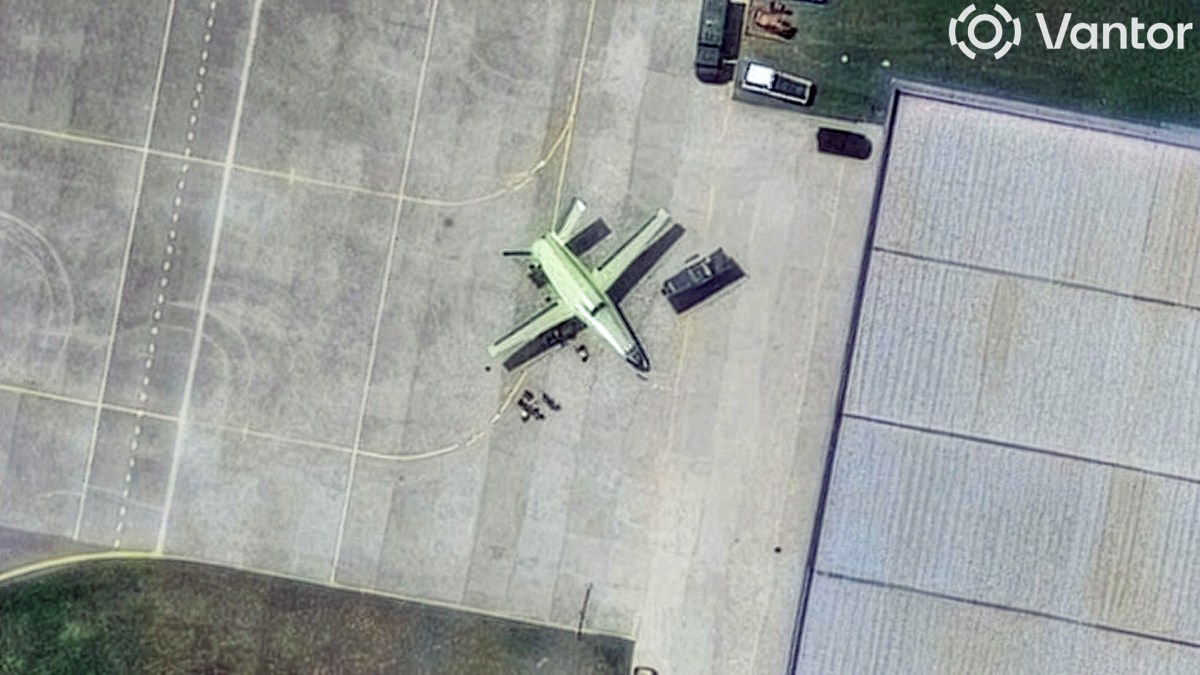
An unidentified uncrewed aircraft has appeared at a Chinese flight-test site
Satellite imagery has revealed an unusual uncrewed aircraft at Pucheng Neifu Airport in Shaanxi Province, a facility in northwestern China that appears to be gaining importance in the country’s expanding drone sector. The aircraft’s configuration bears strong visual similarities to Boeing’s MQ-25 Stingray, the U.S. Navy’s carrier-based uncrewed tanker.
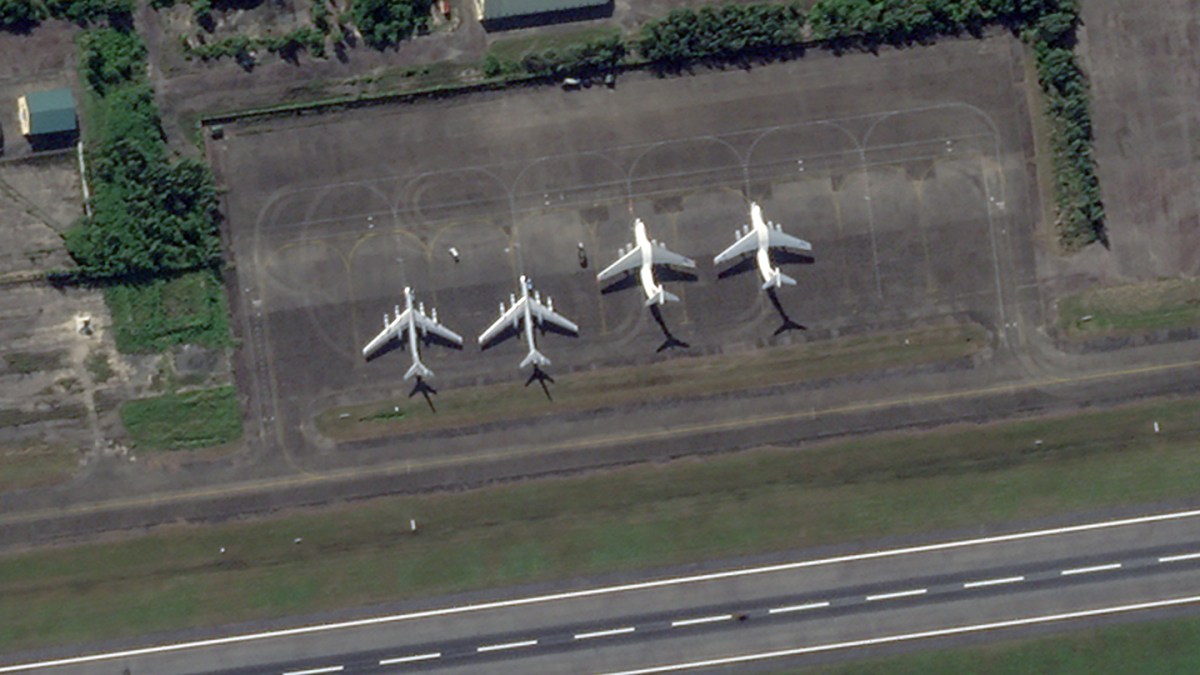
The imagery, obtained by The War Zone from satellite provider Vantor, shows the aircraft at Pucheng on April 23, 2026. The drone had previously drawn attention after it was visible in imagery available through Apple Maps. A separate image available through Bing Maps appeared to show it positioned on a runway.
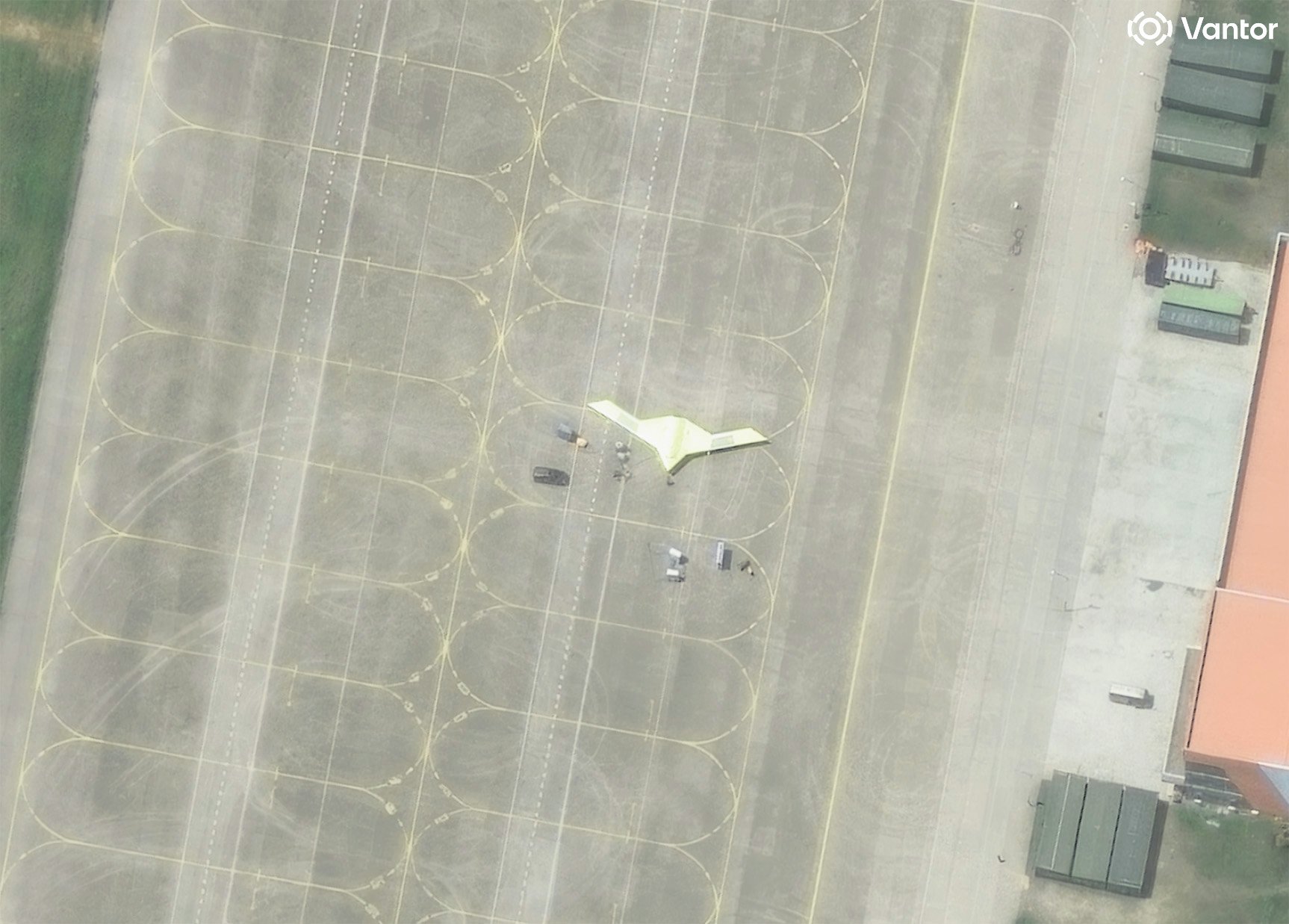
Its presence is notable not because its purpose has been established, but because the available imagery places it among other prominent Chinese uncrewed-aircraft designs. The same April imagery shows what appears to be a CH-7 stealthy flying-wing drone and an example of the jet-powered Jiutian “mothership” drone at Pucheng.
Why the MQ-25 comparison matters
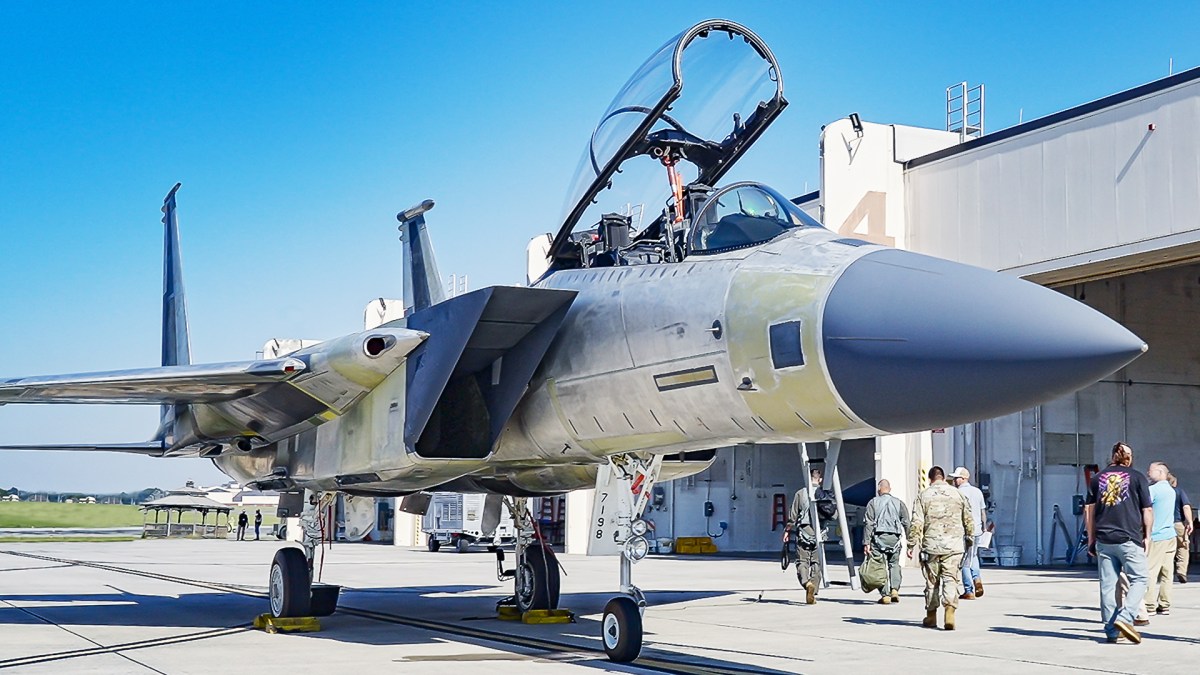
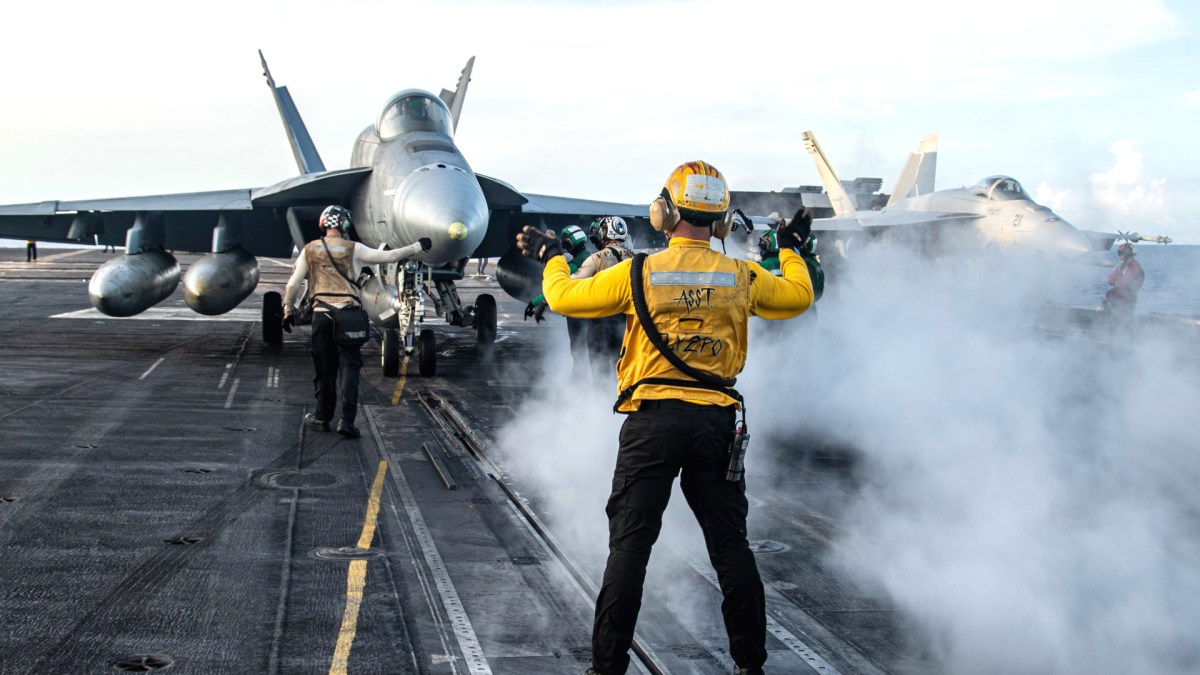
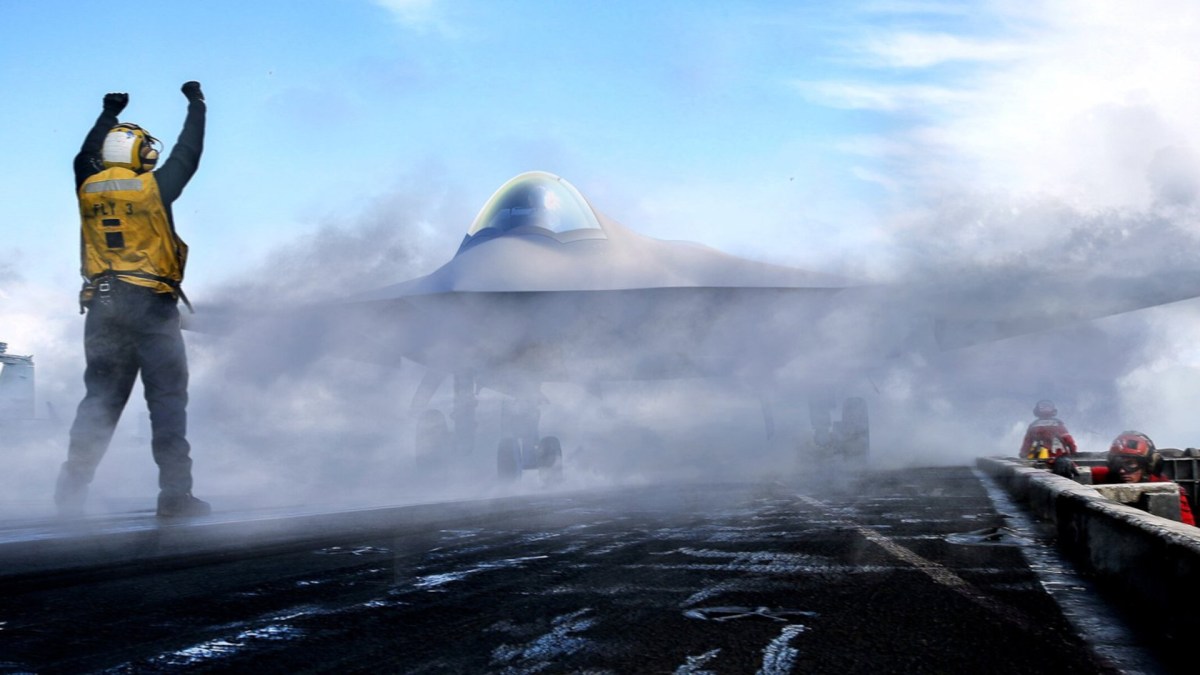
The most immediate comparison is Boeing’s MQ-25 Stingray. The U.S. Navy developed the MQ-25 primarily for aerial refueling, allowing carrier-based combat aircraft to operate farther from their carriers and giving carrier air wings more operational flexibility. The platform is also a stepping stone for wider use of uncrewed aircraft in naval aviation.
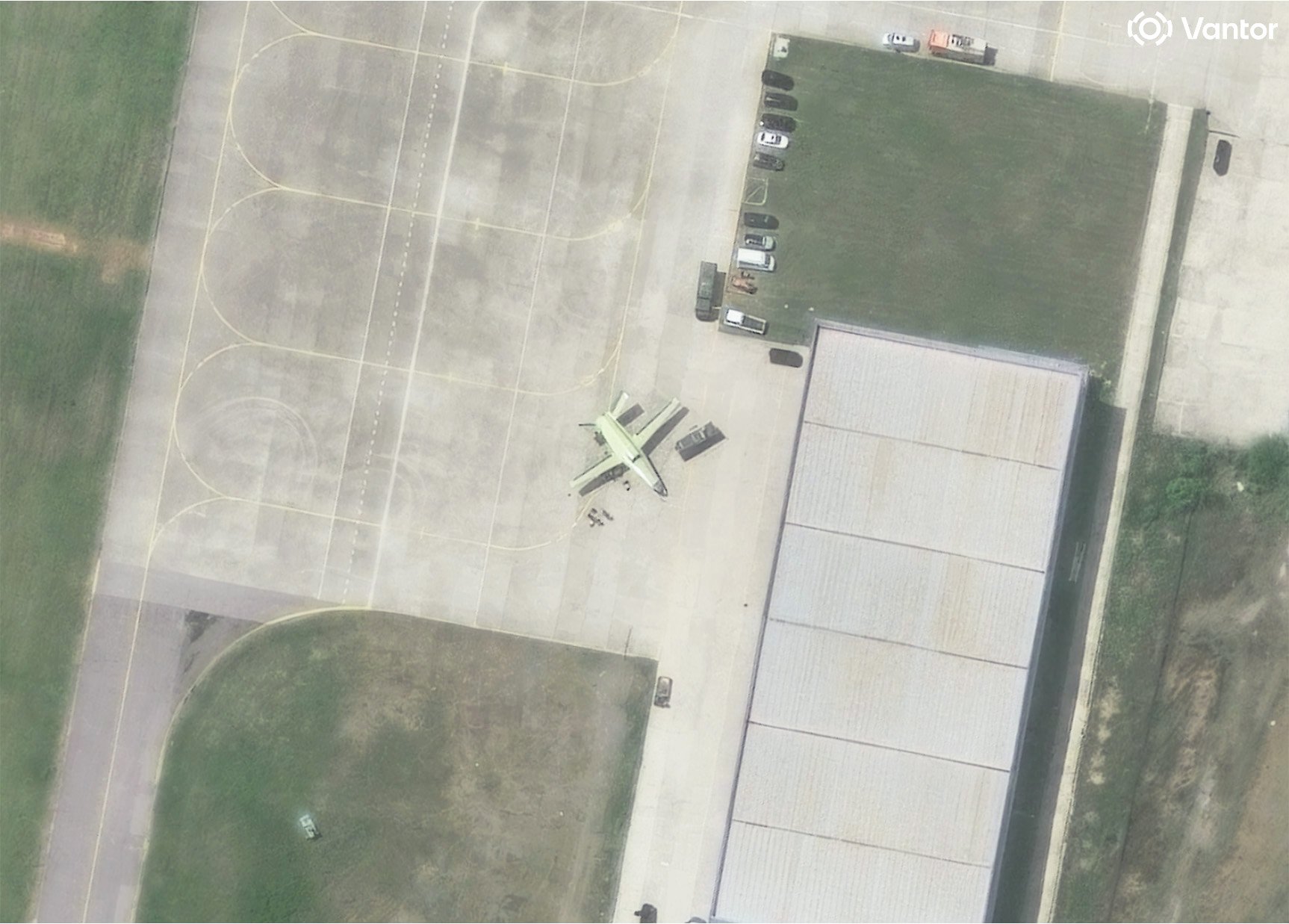
The unidentified Chinese aircraft is not confirmed to have that role. Still, its broad layout resembles the MQ-25 closely enough to invite the comparison: a conventional fuselage-and-wing arrangement distinct from a flying-wing stealth drone. Vantor’s measurements put the Chinese aircraft at approximately 66 feet in wingspan and 49 feet in length.
Dimensions and silhouette alone cannot establish an aircraft’s mission. Tanking, surveillance, electronic warfare, strike support, testing and other roles can involve overlapping design choices. No official Chinese description of this drone’s capability or intended service has been cited in the available reporting.
Pucheng’s expanding role in China’s drone ecosystem
The greater significance may be the location. Pucheng Neifu Airport is emerging in satellite imagery as a site where several types of advanced Chinese uncrewed aircraft can be observed. The presence of the unidentified aircraft alongside the CH-7 and Jiutian suggests a test environment supporting more than one development program.
The CH-7 is a stealthy flying-wing design, while the Jiutian is described as a heavyweight, jet-powered drone mothership. Their differing configurations underscore the breadth of China’s ongoing uncrewed-aircraft work. A third, unidentified design with a more conventional layout adds another data point, even if its role remains uncertain.
That uncertainty is important. Satellite photographs can reveal aircraft dimensions, placement and external geometry, but they do not show internal systems, flight-test objectives, payloads, carrier compatibility or whether a prototype will move into production. The images offer a useful indication of activity, not a definitive account of capability.
What to watch next
Further imagery could help clarify whether the aircraft is a single prototype, a recurring test article or part of a larger program. Repeated sightings, changes in configuration, ground-support equipment and evidence of flight activity would all add context. Official disclosures, if they emerge, would be more decisive.
For now, the drone’s appearance illustrates how commercial satellite imagery continues to expose developments that otherwise receive little public explanation. It also highlights the growing centrality of uncrewed systems in military aviation, where new platforms are increasingly being developed for missions ranging from intelligence collection to logistics and support.
The aircraft at Pucheng may ultimately prove to be unrelated to carrier aviation or aerial refueling. But its resemblance to the MQ-25, combined with the variety of other drones visible at the same site, makes it a development worth tracking rather than a conclusion to draw prematurely.
This article is based on reporting by twz.com. Read the original article.
Originally published on twz.com