A fight over the next generation of US aircraft carriers
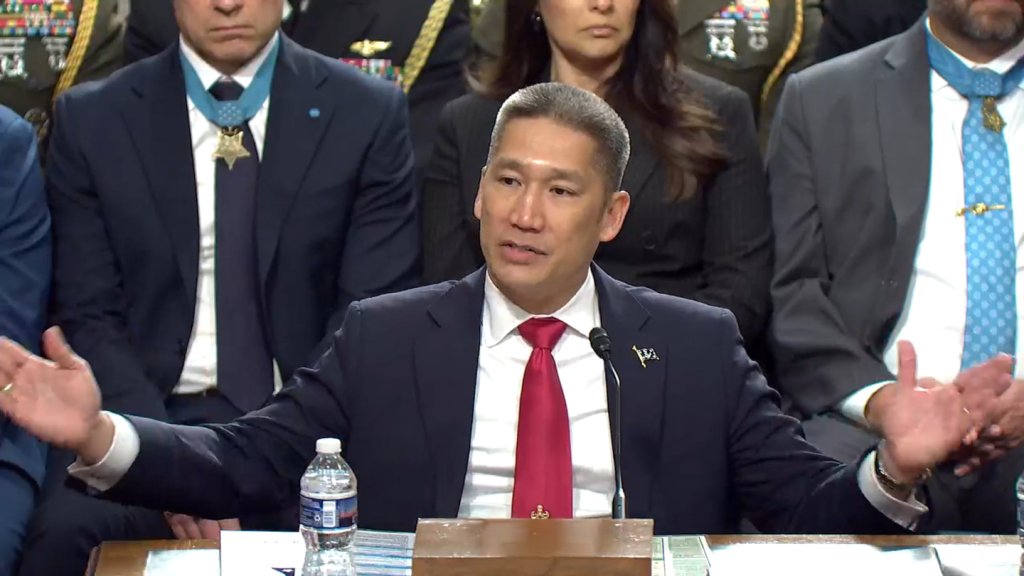
A proposal to bring steam-powered catapults back to future US Navy aircraft carriers is meeting firm resistance on Capitol Hill. Senator Roger Wicker, chairman of the Senate Armed Services Committee, said the idea was a “non-starter” during a hearing on the nomination of Hung Cao to become Secretary of the Navy.
The dispute centers on the Ford-class carrier program, whose design uses the Electromagnetic Aircraft Launch System, known as EMALS, and Advanced Weapons Elevators. Earlier in 2026, President Donald Trump ordered the Navy to develop plans to abandon those systems on the future USS Doris Miller and return to steam catapults and older-style elevators.
Wicker’s response reflects the scale of the decision involved. The question is not simply whether one launch system is preferable to another. Replacing the signature systems of an existing carrier design would require an extensive redesign, impose new costs and risk worsening delays on ships already under construction or contract.
What would have to change
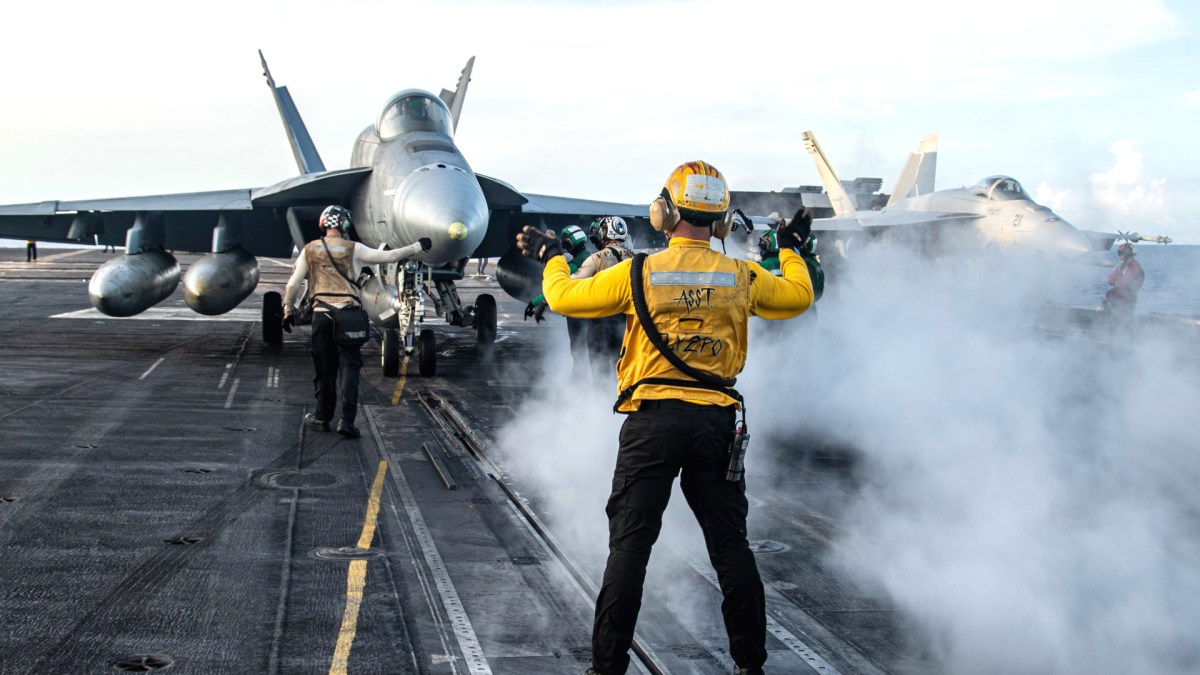
Steam catapults were a familiar feature of earlier US supercarriers. Ford-class ships instead use EMALS to launch aircraft, while Advanced Weapons Elevators move munitions through the ship. Those systems have faced reliability and maintenance problems, providing the basis for longstanding criticism from Trump.
But technical difficulties do not make a reversal simple. EMALS and the elevators are core parts of the Ford-class design. A change back to steam launch equipment would affect much more than the deck hardware. It would involve reworking a complex warship program that is already moving forward across multiple hulls.
The War Zone reported that the redesign would be immensely costly and time-consuming. It could also add to substantial delivery delays for new carriers. Wicker’s declaration signals that at least one powerful congressional voice sees the potential disruption as unacceptable, even while acknowledging the systems’ troubled history.
A program already under pressure
The USS Gerald R. Ford is currently the only operational ship in its class. The Navy announced preliminary acceptance of the future USS John F. Kennedy in September, though the vessel has not yet been formally commissioned. The future USS Enterprise is under construction, and a contract has been awarded for the future USS Doris Miller.
All three are running behind schedule, according to the report. That context sharpens the stakes around a redesign. Carrier construction is a multiyear industrial undertaking involving a large supplier base, specialized shipyard work and tightly connected ship systems. Significant late-stage design changes can have effects well beyond the individual vessel named in a policy debate.
The Navy ultimately plans to acquire at least 10 Ford-class carriers. Future ships are expected to include vessels named USS William J. Clinton and USS George W. Bush. A decision about Doris Miller could therefore shape the direction of a much larger fleet program rather than remain a one-ship exception.

Reliability versus continuity
The policy disagreement exposes a difficult trade-off. Critics of EMALS and the Advanced Weapons Elevators can point to real reliability and maintenance concerns. A carrier’s launch and weapons-handling systems are central to its ability to generate sorties, so poor performance in either area is consequential.
At the same time, a return to steam would not merely restore a proven legacy technology. It would require the Navy to reintroduce it into a carrier architecture built around a different approach. The cost, schedule and engineering risks of that shift are the reasons opponents say it cannot be treated as a quick correction.
Wicker’s comments also show the role Congress can play in deciding the practical boundaries of presidential direction on major defense programs. The Senate Armed Services Committee oversees issues central to the Navy’s force structure and acquisition policy. Its chairman’s public opposition gives the carrier debate an institutional dimension beyond disagreements over the merits of a particular technology.
The decision ahead
The hearing did not settle every question about how the Navy will address the performance of EMALS and the Advanced Weapons Elevators. It did establish a clearer fault line: improving the Ford class is one objective, while rebuilding it around steam systems is another.
For the Navy, continuity carries major value when several ships are simultaneously in different stages of construction and acceptance. For Congress, the issue will involve not only technical performance but also the consequences for cost, schedules and the wider carrier fleet plan. Wicker’s “non-starter” assessment suggests that a fundamental shift back to steam faces a high political hurdle, even as criticism of the Ford class’s advanced systems continues.
This article is based on reporting by twz.com. Read the original article.
Originally published on twz.com