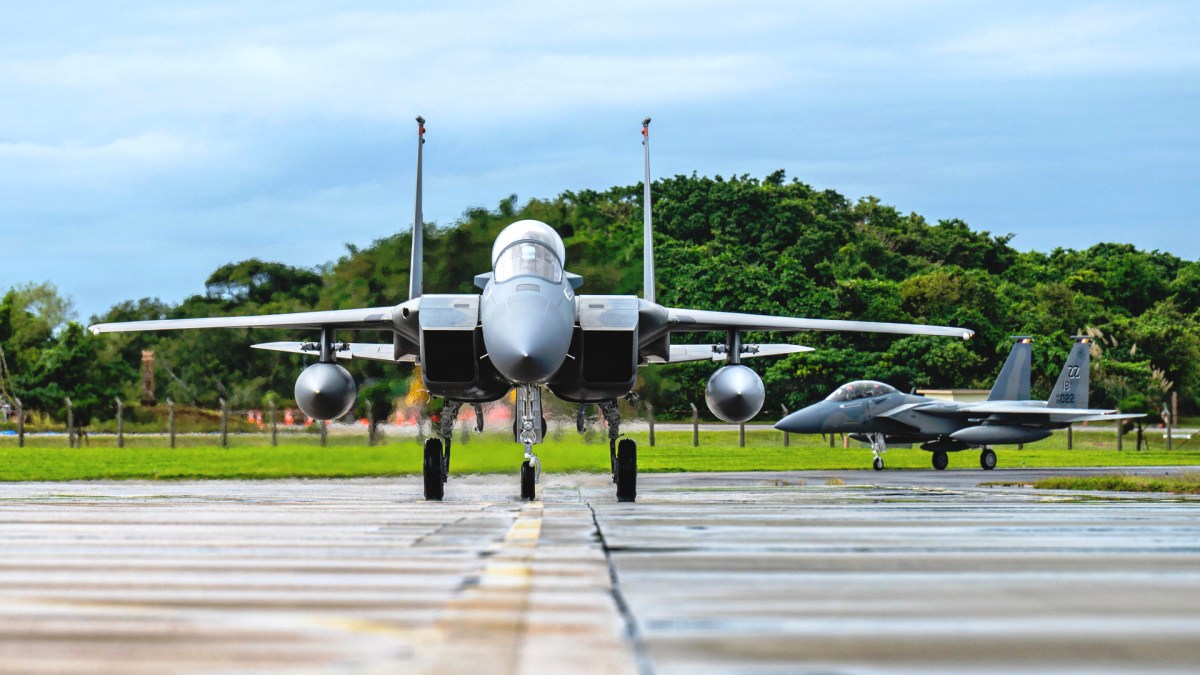
F-15EX arrives at Kadena in a long-planned fighter transition
The US Air Force has permanently forward-deployed two F-15EX Eagle II fighters to Kadena Air Base on Okinawa, Japan. The arrival marks the first time the service’s newest fighter has been stationed outside the United States and begins a replacement process for the F-15C/D Eagles previously operated by Kadena’s 18th Wing.
The two aircraft arrived on November 15. Boeing identified them as EX22 and EX23, the 22nd and 23rd F-15EXs produced. Their deployment gives the 18th Wing its first combat-coded Eagle IIs after years of preparation for the transition.
A larger fleet is taking shape
Boeing said 25 F-15EXs have now been delivered to the Air Force, including aircraft from the first two production lots. Deliveries from Lot 3 are underway. The program is now planned to reach 267 aircraft, roughly twice the size of the program of record in 2025.
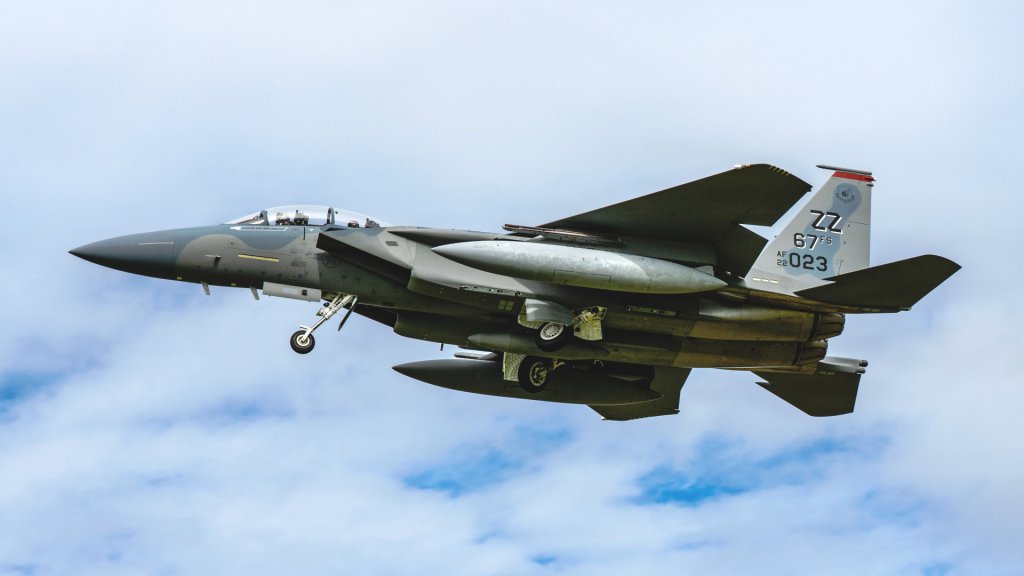
That expansion makes Kadena’s initial deployment more than a symbolic overseas appearance. It connects a growing production program to one of the Air Force’s most consequential Pacific bases, where the new aircraft are intended to restore and expand the wing’s fighter capacity following the retirement of its older F-15C/D fleet.
Path to a 36-aircraft presence
The Air Force expects 36 F-15EXs to be based in Japan eventually. The plan calls for 18 aircraft each in the 44th and 67th Fighter Squadrons, both associated with the 18th Wing at Kadena.
Before leaving for Japan, EX22 traveled from Boeing’s St. Louis production facility to Portland Air National Guard Base in Oregon. The Oregon Air National Guard’s 142nd Wing was the first unit to operate combat-coded F-15EXs and has played a role in preparing for the Kadena deployment. Personnel from the 67th Fighter Squadron also trained at Eglin Air Force Base in Florida and at Portland to maintain flying proficiency and complete aircraft qualification training.
Why the deployment matters
The move places the Eagle II permanently in the Indo-Pacific at a time when fighter availability, training and force posture remain central to US planning in the region. Kadena is located on Okinawa, putting the new aircraft at a key US air base in Japan rather than at a temporary exercise or rotational location.
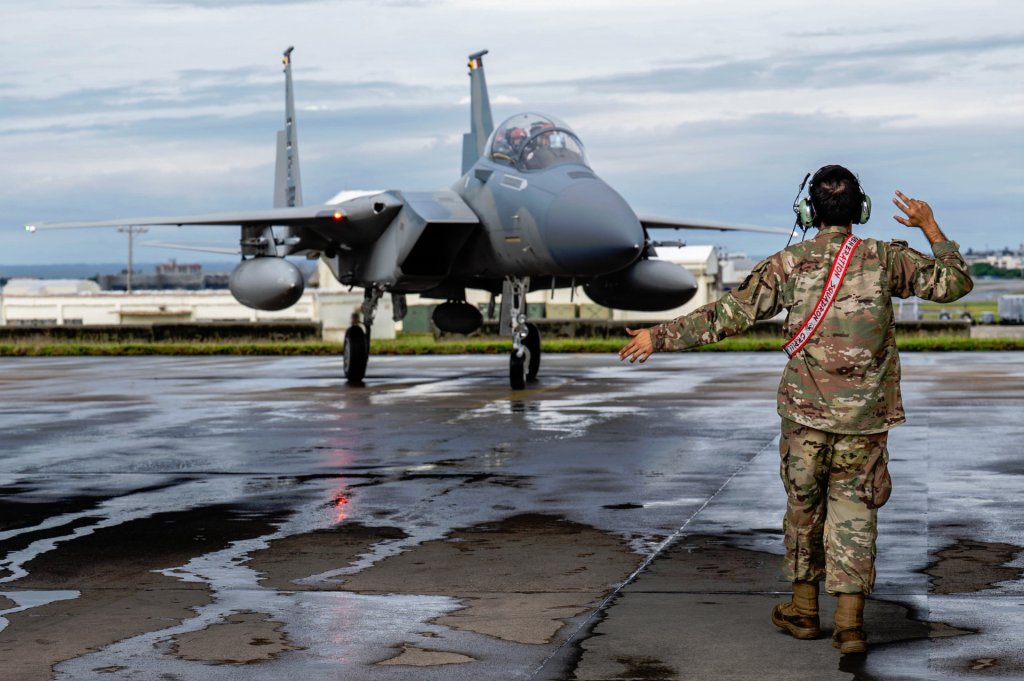
The first two aircraft are only the opening installment of the planned force, but they establish the operational framework for a much larger transition. The next question is execution: how quickly additional aircraft can arrive, how smoothly the two Kadena squadrons can convert, and whether deliveries continue at a pace that supports the planned 36-aircraft presence.
What comes next
The F-15EX fleet is still growing, with Lot 3 deliveries now in progress. For Kadena, the immediate milestone is the integration of its first two Eagle IIs into a wing preparing for a full replacement of the retired F-15C/D force.
For the broader Air Force, the deployment demonstrates that the program has moved beyond domestic fielding and into permanent overseas operations. With 25 aircraft delivered and a 267-aircraft future fleet planned, the Kadena arrivals offer an early measure of how the Eagle II will be used in the service’s evolving force structure.
This article is based on reporting by twz.com. Read the original article.
Originally published on twz.com