Strategic crossing targeted again
The Kerch Bridge, the key road and rail crossing connecting Russia’s Krasnodar Krai with the occupied Crimean Peninsula, was struck during what Russian authorities described as a large Ukrainian overnight drone offensive on November 16.
The Russian-installed head of occupied Crimea, Sergey Aksyonov, confirmed that the crossing had been targeted and said temporary traffic restrictions were imposed while authorities assessed the situation. The reported attack came against one of Russia’s most important and heavily defended pieces of transport infrastructure in the region.
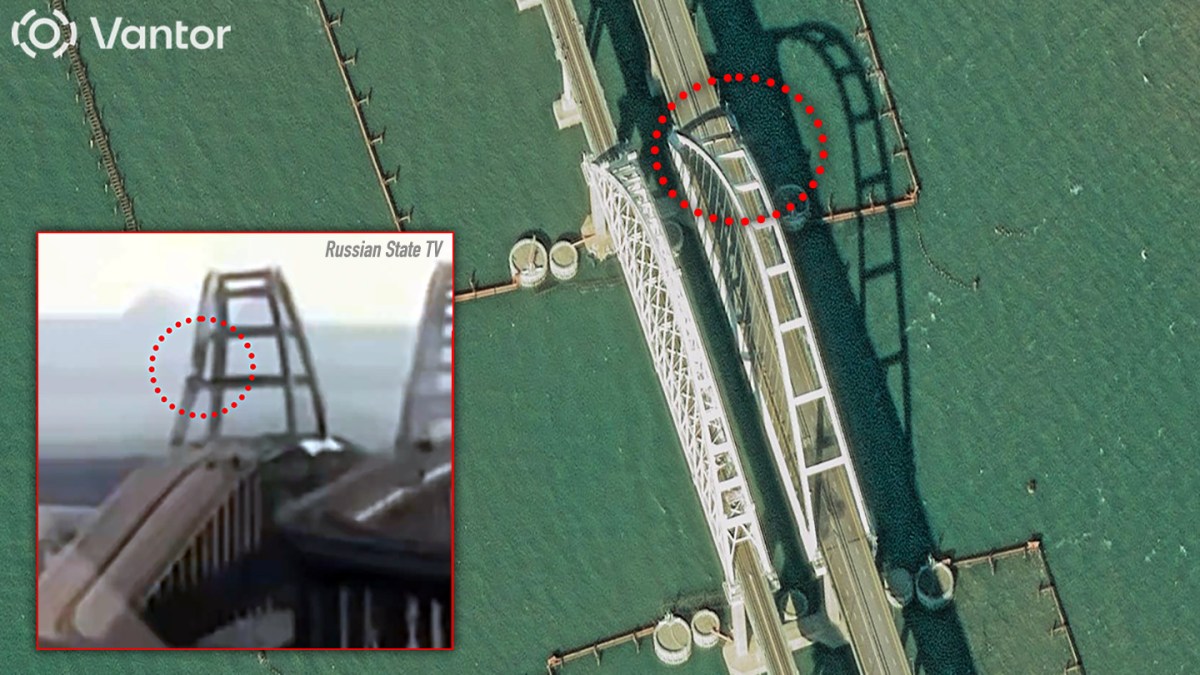
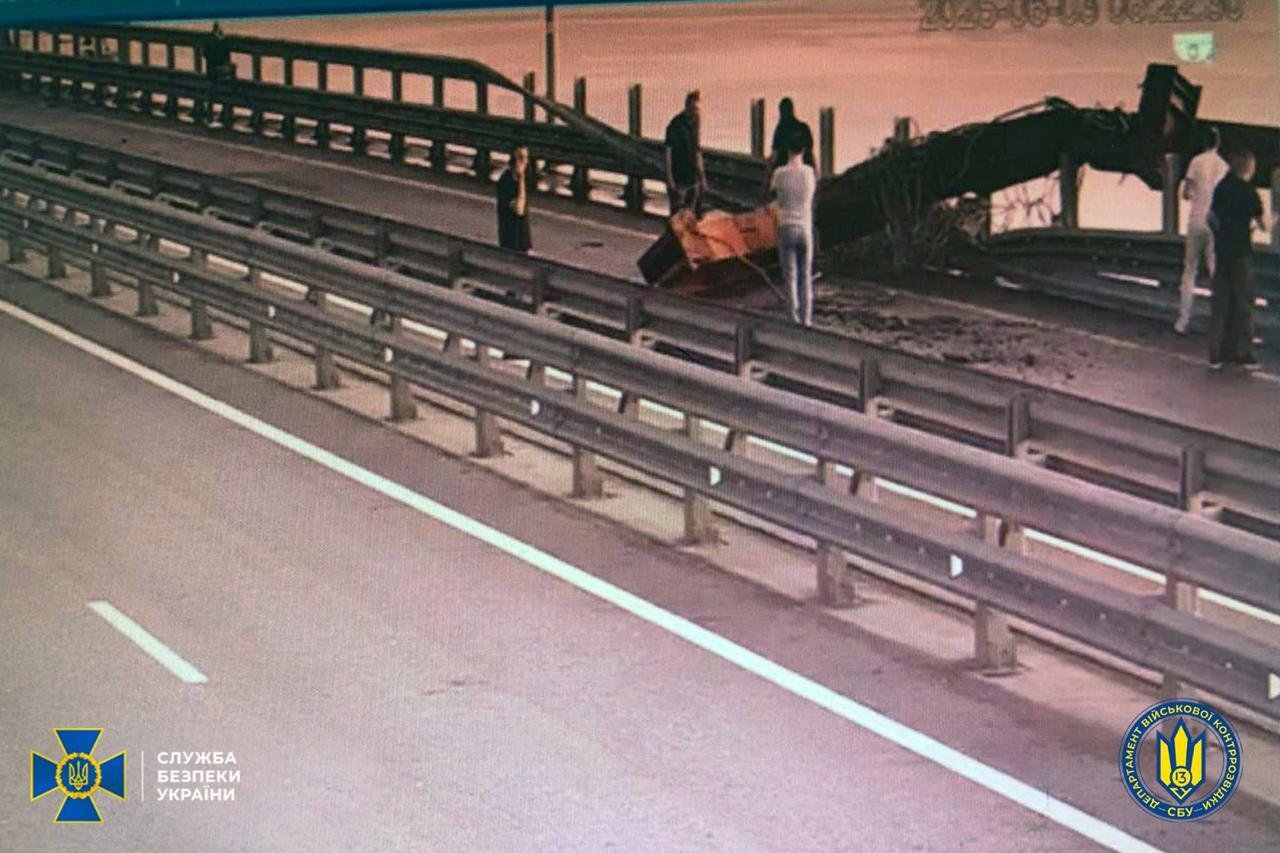
Available imagery and video described in reporting from The War Zone indicated visible damage on a main road span on the Kerch side of the bridge. The full extent of the damage, and its effect on traffic or rail operations, remained unclear at the time of publication.
What is known about the reported strike
The attack was reported to have occurred at about 5:38 a.m. local time. Footage said to show the event appeared to depict a straight-winged, propeller-driven drone with twin booms and an inverted-V tail, features used by several Ukrainian one-way attack-drone designs.
Russian air defenses were reportedly engaging incoming drones around the bridge. Moscow said the wider overnight offensive involved 1,336 long-range drones, though the supplied reporting does not independently verify that figure or provide a full account of all targets.

Russian television footage reportedly showed deformation to part of the main road span’s superstructure, suggesting a direct impact or nearby blast effect. The original footage was subsequently reported to have been removed by the broadcaster. Satellite imagery cited in the report also showed the bridge after the latest attack.
These details establish that the crossing was hit and that damage was visible, but they do not settle several central questions: the precise weapon used, the scale of structural damage, whether the rail portion was affected, or how quickly normal movement could resume.

Why the bridge matters
The Kerch Bridge spans the Kerch Strait between Russia and Crimea. Its road and rail links give it strategic, logistical and political importance. The crossing connects occupied Crimea to Russia directly, making it an especially prominent piece of infrastructure in the war and a recurring focus of Ukrainian attempts to disrupt Russian operations and movement.
Because the bridge supports both automotive and rail lanes, even limited restrictions can carry significance beyond the immediate damage site. It is also a highly visible symbol of Russia’s control over Crimea, which has been occupied by Russia since 2014. That combination of utility and symbolism has made it a target of unusual importance.
The latest strike also underscores the continued role of long-range uncrewed systems in the conflict. The available reporting describes an attack that reached a defended crossing and produced visible damage despite air-defense activity. It does not, however, provide enough evidence to assess the broader effectiveness of the operation or confirm longer-term disruption.
Damage assessment remains incomplete
Early reports from attacks on critical infrastructure are often incomplete, particularly when access is restricted and parties to a conflict control the release of imagery and operational details. In this case, Russian authorities confirmed the targeting and temporary restrictions, while visual evidence indicated damage to a road span. Beyond that, caution is warranted.
There was no definitive account in the supplied source text of casualties, repair timelines, traffic capacity, or any confirmed interruption to rail service. There was also no independent damage assessment included that would allow the severity of the deformation to be measured.
The difference between a visually damaged span and a crossing rendered unusable is substantial. A bridge can sustain visible damage while continuing to carry some traffic, or it can require closure and extensive engineering inspection. The report supports neither a claim of complete destruction nor a claim that the crossing was fully operational after the strike.
A continuing contest over logistics
The reported strike fits a wider pattern in which infrastructure, air defenses and long-range drone capabilities are central to the war’s operational contest. For Ukraine, reaching the bridge demonstrates an ability to threaten a strategically important route. For Russia, protecting and restoring the crossing is both a logistical and political imperative.
Drone attacks also complicate defense because they can be launched in large numbers, require defenders to detect and engage many possible threats, and can be used alongside other forms of pressure. The Russian claim of more than a thousand long-range drones in the broader overnight assault has not been independently verified in the supplied material, but it illustrates the scale Moscow attributed to the operation.
For now, the clearest conclusion is narrow: the Kerch Bridge was targeted, Russian authorities temporarily restricted traffic, and imagery showed damage to a main road span. Further evidence will be needed to establish the strike’s full operational consequences.
- Russian-installed Crimean authorities confirmed that the Kerch Bridge was targeted.
- Reporting described visible damage to a main road span and temporary traffic restrictions.
- The full structural and operational impact remains unconfirmed.
This article is based on reporting by twz.com. Read the original article.
Originally published on twz.com