A possible new aircraft option for Ukraine
The Czech Republic is discussing a potential arrangement to supply Ukraine with up to 16 Aero L-39NG Skyfox aircraft, a proposal that could give Kyiv another option for defending against Russia’s Shahed-type one-way attack drones. The discussions cover four aircraft that had previously been agreed for transfer and a further 12 jets now under consideration.
The plan remains a proposal, not a completed deal. Czech Deputy Prime Minister and Industry and Trade Minister Karel Havlíček raised the expanded arrangement during a visit to Kyiv, where he met Ukrainian Prime Minister Serhiy Koretskyi. Havlíček characterized the talks as encouraging, but did not announce that Ukraine and the Czech Republic had finalized an agreement for the additional aircraft.
That distinction is important. The potential transfer points to a capability under discussion rather than an imminent fleet arrival. But the numbers being discussed show how Ukraine and its partners are considering less costly ways to counter a persistent drone threat while conserving more capable frontline aircraft for missions that require them.
Why the Skyfox is being considered
The central appeal of the L-39NG in this role is cost and availability. Using frontline fighters to pursue large numbers of one-way attack drones can place expensive, high-end aircraft on a mission that may not always require their full capabilities. A modernized light jet could provide a cheaper alternative for at least some drone-defense tasks.
The Skyfox is based on the Cold War-era Aero L-39 Albatros, a trainer aircraft produced in the thousands and used around the world. The L-39NG is not simply an unchanged legacy airframe. Aero Vodochody reworked and modernized the design during the 2010s, seeking to renew its position in the jet-trainer market as the older Soviet-era aircraft was increasingly displaced by newer designs.
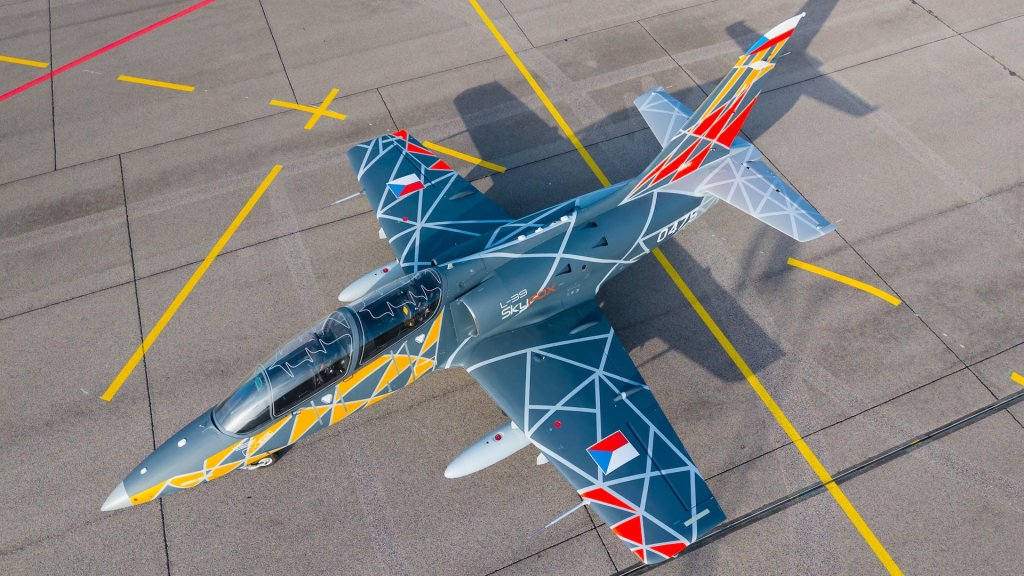
Its structure uses modern materials intended to lower weight and extend structural life to 15,000 flight hours. The aircraft replaces the original Soviet-designed engine with a Williams FJ44-4M turbofan, an engine widely used in private jets. According to the aircraft’s described configuration, the new powerplant offers improved fuel efficiency, digital engine control and updated maintenance support.
Modern systems in a familiar airframe
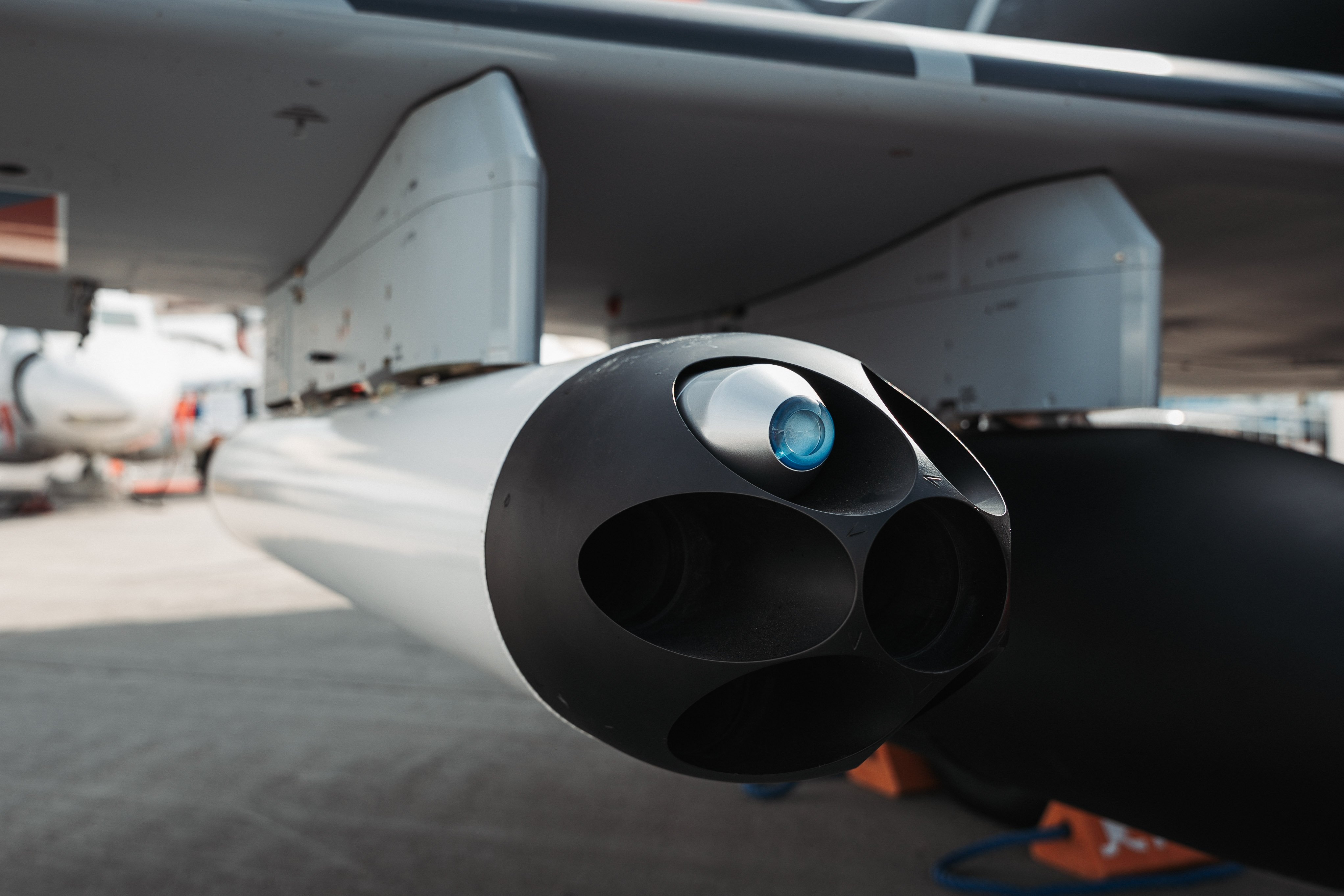
The L-39NG also brings a modern glass cockpit and updated flight-control system compared with the earlier Albatros. It has updated ejection seats and five external hardpoints for weapons or other mission equipment. Those features would give operators flexibility in how they configure the aircraft, although the discussions reported so far do not establish the exact equipment, weapons, training package or operational concept that any Ukrainian transfer would include.
Published specifications put the Skyfox’s maximum speed at about 560 miles per hour and its service ceiling at 38,000 feet. Those figures do not alone determine effectiveness against drones, which depends on detection, command-and-control links, weapon integration, pilot training and the characteristics of the target. Still, they illustrate why a light jet may be relevant to a mission that demands speed, persistence and an ability to carry mission equipment without committing a frontline fighter every time.
The aircraft’s heritage may also matter operationally. The original L-39 was designed as a rugged and reliable trainer, and the type has been operated widely. Modernizing that basic concept gives the Skyfox a familiar jet-class platform with contemporary systems and support features.
A wider problem of drone-defense economics
The proposal emerges as Russia’s attack-drone arsenal continues to pose a recurring challenge. One-way attack drones can force defenders to expend aircraft availability, pilot time and interceptors repeatedly. The problem is not only whether a drone can be intercepted, but how to do so in a way that remains sustainable over many attacks.
That is why a lower-cost airborne option can be strategically meaningful. If a modern trainer-derived jet can take on some counter-drone tasks, it could reduce pressure on frontline fighters. In turn, those higher-end assets could be reserved for missions that need their advanced performance and systems.
The potential Czech package should not be read as a replacement for layered air defense. The reported discussions concern an additional option, not a complete solution. Drone defense requires a combination of detection, decision-making and multiple methods of interception. The value of the Skyfox proposal lies in the possibility of adding another aircraft type to that broader mix.
What remains unresolved
Several major questions remain unanswered. The Czech officials did not confirm a final agreement for the 12 additional aircraft. The reporting also does not specify a delivery schedule, the final number of jets, their precise mission configuration or the details of any associated training and sustainment effort.
For now, the development is best understood as an active discussion about expanding a previously agreed transfer into a larger potential fleet. If it proceeds, the Skyfox could give Ukraine a comparatively economical tool for some drone-hunting missions, built around a heavily modernized descendant of one of the most widely used jet trainers of the Cold War era.
This article is based on reporting by twz.com. Read the original article.
Originally published on twz.com