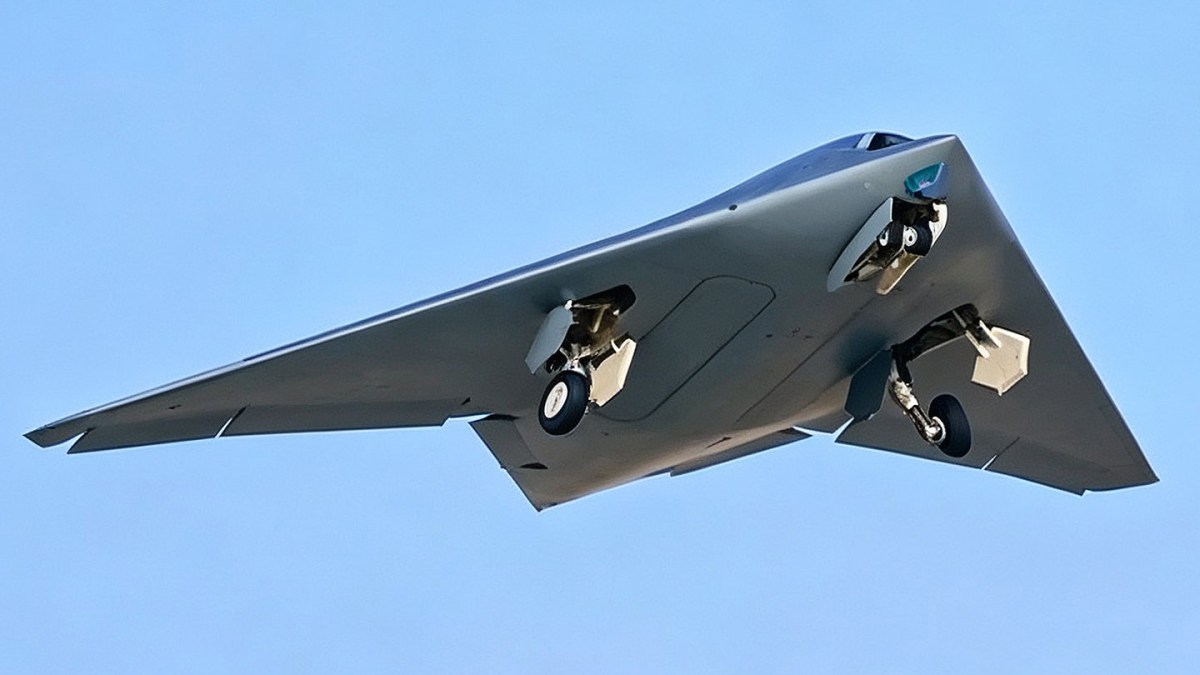
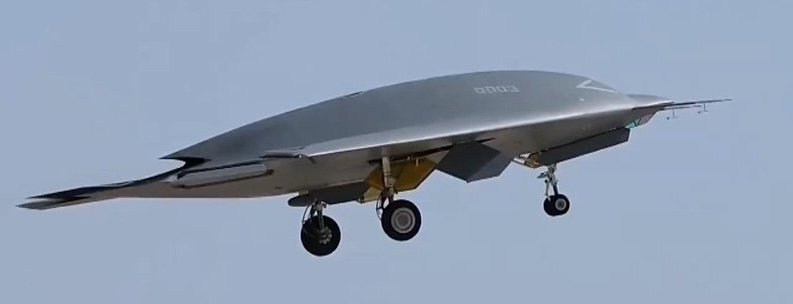
China has released its most detailed official imagery yet of the GJ-11, a flying-wing uncrewed combat aerial vehicle that the People’s Liberation Army Air Force identifies as Xuanlong, or “Mystery Dragon.” Footage broadcast by state television showed features that had not previously been visible in public, including the aircraft’s internal weapons bays, landing gear, nose-mounted sensor installation and exhaust arrangement.
The disclosure matters less as a reveal of a new aircraft than as a clearer statement of how China says it intends to use the GJ-11. Accompanying reporting described missions including airstrikes, suppression of enemy air defenses and operations alongside crewed fighters. The footage was released shortly before the 77th anniversary of the PLAAF’s founding.
A clearer look at a low-observable design
The GJ-11’s blended wing-body shape and flying-wing layout are intended to reduce the aircraft’s observability. In the new views, the underside of the aircraft exposes two internal bays within the central body. Each bay has its own doors, whose serrated edges are a familiar feature on low-observable aircraft because they help avoid a simple, highly reflective seam.
The footage does not establish the exact dimensions of the bays, the types of weapons they can carry or the aircraft’s range. Those details remain unconfirmed publicly. Still, the presence of separate internal bays is significant: carrying stores inside the airframe supports the GJ-11’s stealth-oriented configuration while enabling it to perform the strike missions China now associates with the platform.
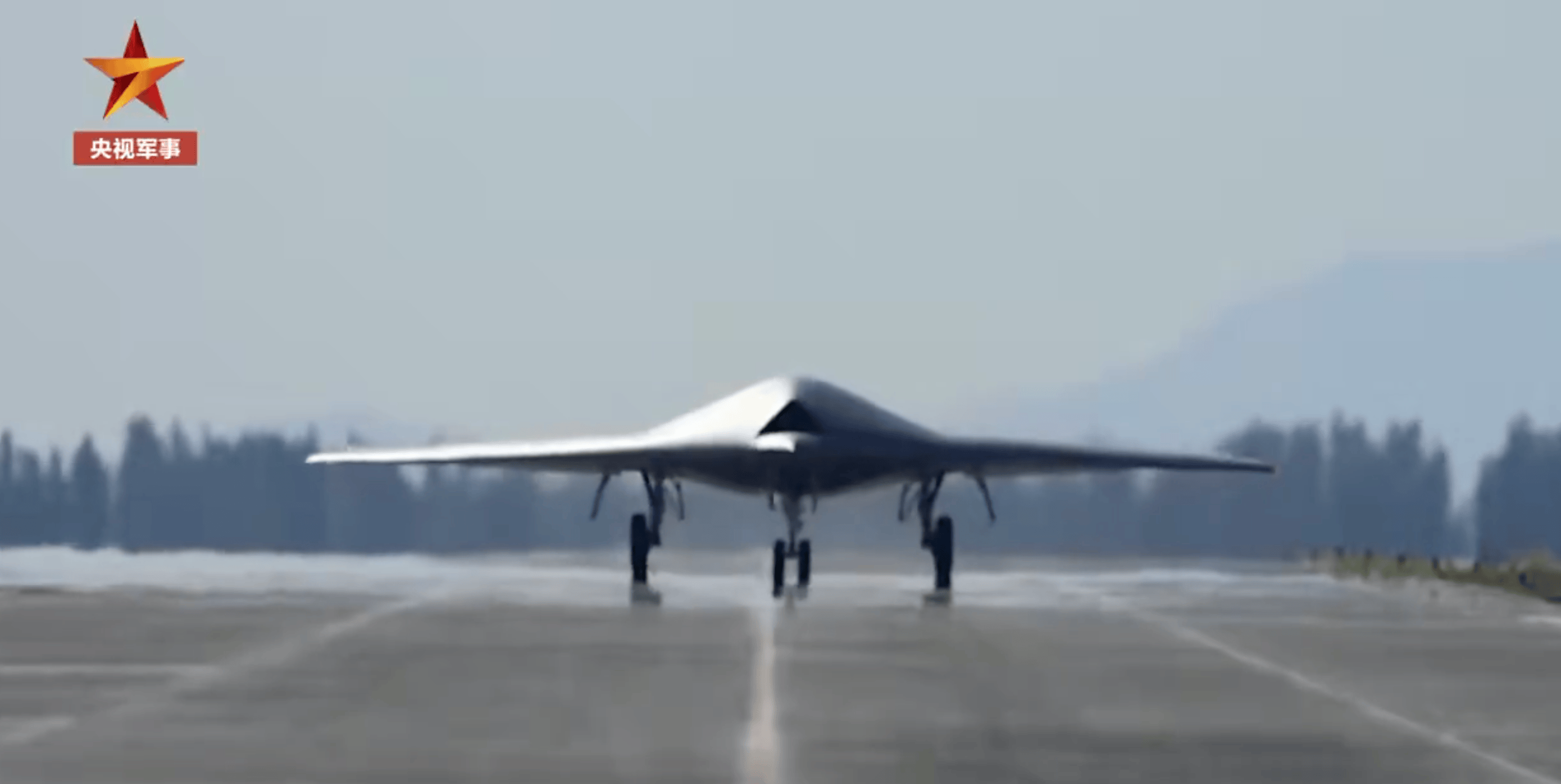
The official footage also showed the landing gear, the sensor area at the nose and the aircraft’s exhaust configuration. Together, those images provide a more complete public picture of an aircraft that has appeared in Chinese displays and imagery before but whose operational details have largely remained opaque.
Strike and air-defense-suppression missions
Chinese reporting tied to the release lists airstrikes and suppression of enemy air defenses, commonly called SEAD, among the GJ-11’s intended tasks. SEAD missions seek to degrade or neutralize an opponent’s surface-based air-defense network, a role that places a premium on survivability, sensing and the ability to carry weapons into defended airspace.
That assignment fits the broad logic of a stealthy uncrewed flying wing. But the footage and associated reports do not identify a specific weapon, target set or operational unit. Nor do they provide performance figures. The public evidence therefore supports a view of the GJ-11 as a strike-oriented platform with a stated SEAD role, not a full accounting of its operational capability.
The PLAAF also said the GJ-11 had completed its first live-fire strike mission and achieved a hit. The claim is notable, though the reporting leaves important context unresolved. The GJ-11 has conducted test sorties for years, including flights from forward operating locations, making it unclear whether the statement refers to the aircraft’s first-ever live weapons release, a particular new configuration or a newly acknowledged event.
Manned-unmanned teaming moves into view
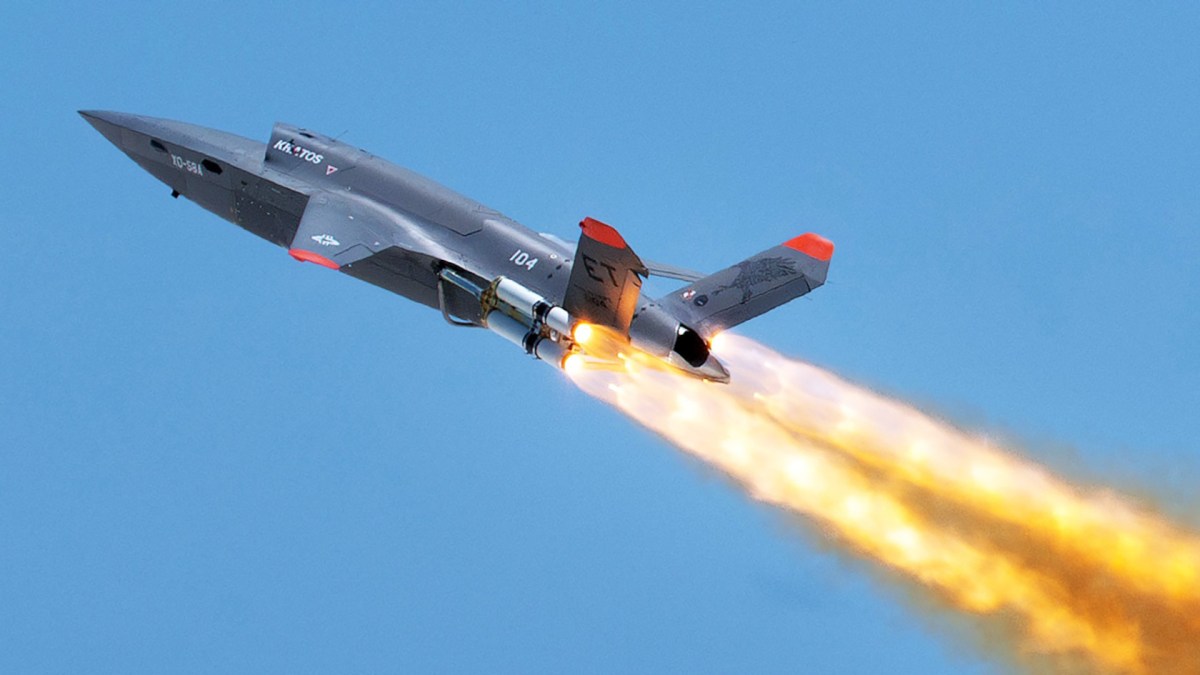
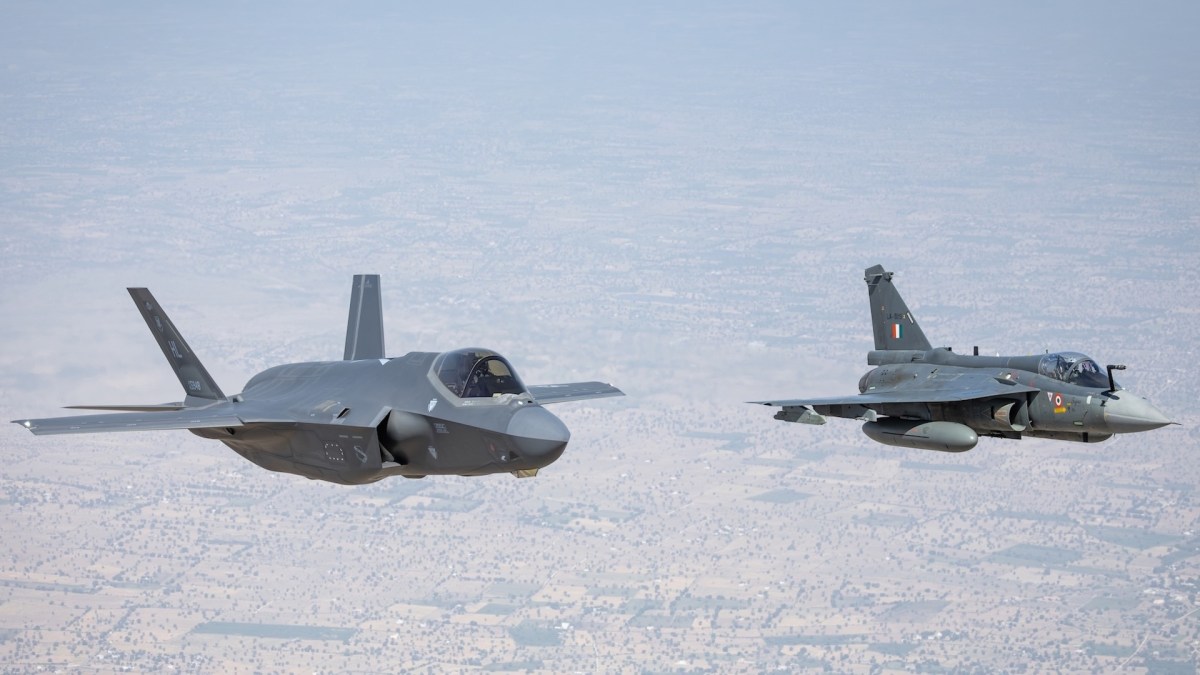
Perhaps the most consequential element of the disclosure is the stated link between the GJ-11 and crewed fighters. Chinese reporting described the aircraft as part of manned-unmanned teaming operations, in which an uncrewed aircraft works in coordination with a piloted one.
The new imagery does not show the command arrangements, data links or degree of autonomy that would make such teaming work. It also does not name the specific fighter types involved. Nonetheless, the official framing places the GJ-11 within a broader military interest in pairing crewed aircraft with uncrewed systems that can extend sensing, carry weapons or take on higher-risk tasks.
For Beijing, the messaging is as important as the visual detail. Publicly connecting the GJ-11 to airstrikes, air-defense suppression and crewed-uncrewed cooperation presents the drone as more than a long-running technology demonstrator. It signals an aircraft China expects to integrate into a wider air-combat system.
What remains unknown
The release answers some visual questions but leaves many operational ones open. There is still no authoritative public description of the GJ-11’s payload, combat radius, sensor suite, communications architecture or production status. The size and internal layout of its bays are also not established by the available footage.
Even so, the images mark the most comprehensive official public presentation of the aircraft to date. They show a design built around internal carriage and low-observable shaping, while the accompanying accounts identify a mission set that includes strike, SEAD and cooperation with crewed fighters. The result is a sharper, if still incomplete, view of how China wants the GJ-11 to be understood: as a stealthy uncrewed combat aircraft intended to operate as part of a modern airpower network.
This article is based on reporting by twz.com. Read the original article.
Originally published on twz.com