A new designation, with few public answers
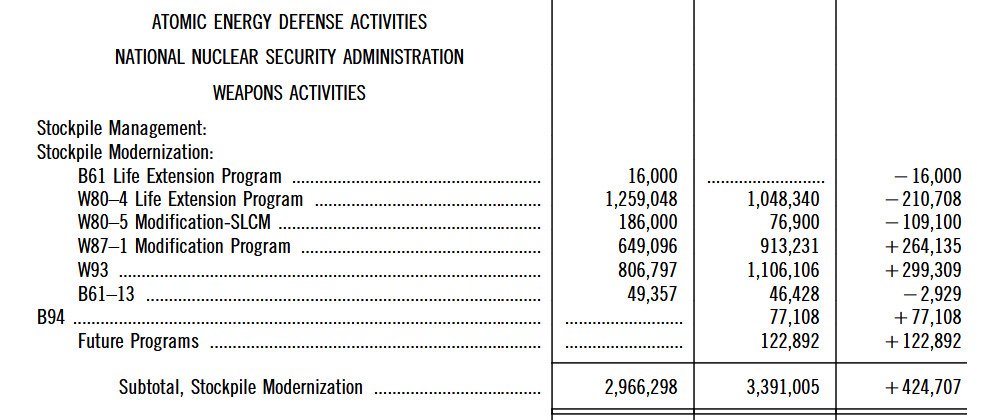
A U.S. Senate appropriations document has surfaced what appears to be the first newly disclosed designation for an air-dropped nuclear gravity bomb in decades: B94. The reference is brief, and it leaves crucial questions unanswered. But its appearance in a Fiscal Year 2027 funding document is notable because U.S. nuclear weapon designations are closely watched indicators of programs moving through the national security system.
The designation was included in an explanatory statement released by the Senate Appropriations Committee alongside a draft bill covering proposed funding for the Department of Energy and other government organizations. The document adds $77.108 million for the B94, without describing the weapon, its intended mission, its schedule or its status.
That limited disclosure matters. The available record does not establish that the B94 is a fielded weapon, identify its technical characteristics or confirm how it relates to other modernization programs. It does, however, put a new label into public view at a time when the United States is pursuing broad updates to its nuclear enterprise.
Why the “B” prefix is significant
U.S. nuclear weapons use a common alphanumeric designation system. Air-dropped gravity bombs, including air-dropped depth bombs intended for anti-submarine use, receive designations beginning with the letter B. The B94 label therefore points toward an air-delivered nuclear weapon rather than, for example, a missile warhead or a naval system.
Public reporting has identified one known development effort that could fit the broad description: the Nuclear Deterrent System-Air-delivered, or NDS-A. That program has been associated with a bunker-busting role, but the available appropriations language does not explicitly connect NDS-A to B94. Treating the two names as confirmed equivalents would go beyond the evidence currently available.
The funding figure alone also cannot explain the program’s maturity. Budget lines can support studies, engineering, component work, program management or other activities. Until the National Nuclear Security Administration, Congress or another authoritative source releases more detail, the most precise conclusion is that a B94-related activity has been included in proposed funding.

How the designation came to light
The B94 reference was noticed in the Senate committee material by researchers tracking U.S. nuclear policy. Jeffrey Lewis, a lecturer at Stanford University’s Center for International Security and Cooperation and a distinguished fellow at the Foreign Policy Research Institute, was among those who highlighted the designation publicly. He credited Eliana Johns, a University of Maryland doctoral student and research adviser at the Federation of American Scientists, with spotting it first.
That chain of discovery reflects the unusual nature of the disclosure. At the time of the report, the committee statement appeared to be the only public reference to B94. The absence of prior public detail is why the designation has drawn attention: a new name can signal a program that has not yet received a substantial public explanation.
The War Zone reported that it had contacted both the National Nuclear Security Administration and the Senate Appropriations Committee for clarification. Neither a formal description of the B94 nor an explanation of its relationship to existing programs was included in the supplied material.
What to watch next
The immediate question is whether future budget documents, hearings or agency statements provide a mission description for B94. Confirmation that it is linked to NDS-A would narrow the picture, while a separate explanation could reveal a different air-delivered nuclear effort. Congressional appropriations language may also clarify whether the $77.108 million is intended for research, development, production preparation or another stage.
For now, the B94 should be understood as an emerging designation rather than a fully described weapons program. The public evidence supports its appearance in proposed Fiscal Year 2027 funding and its placement within the designation convention for air-dropped nuclear weapons. It does not yet support firm conclusions about yield, delivery aircraft, operational timeline, targeting role or deployment plans.
That uncertainty is itself consequential. Nuclear modernization decisions carry long timelines and large institutional commitments, and even small pieces of budget language can foreshadow debates about deterrence, force structure and congressional oversight. The B94 entry offers a new point for those debates, while leaving the central facts still to be disclosed.
This article is based on reporting by twz.com. Read the original article.

Originally published on twz.com