Army Central seeks stronger shelters for deployed personnel
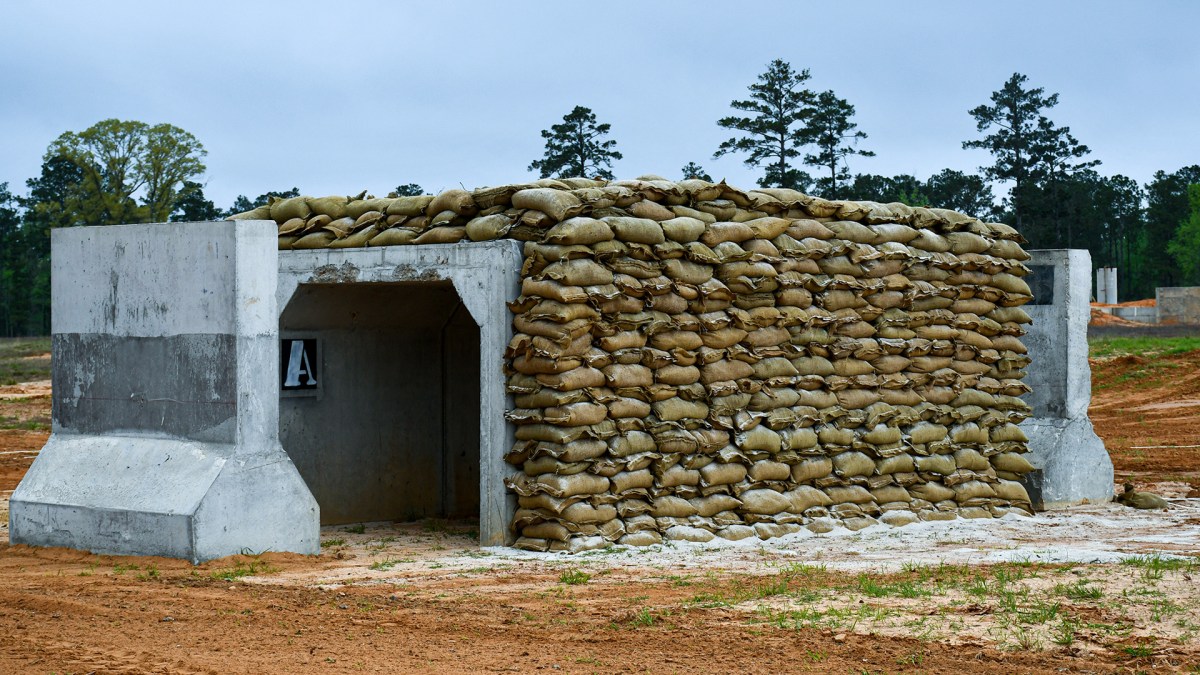
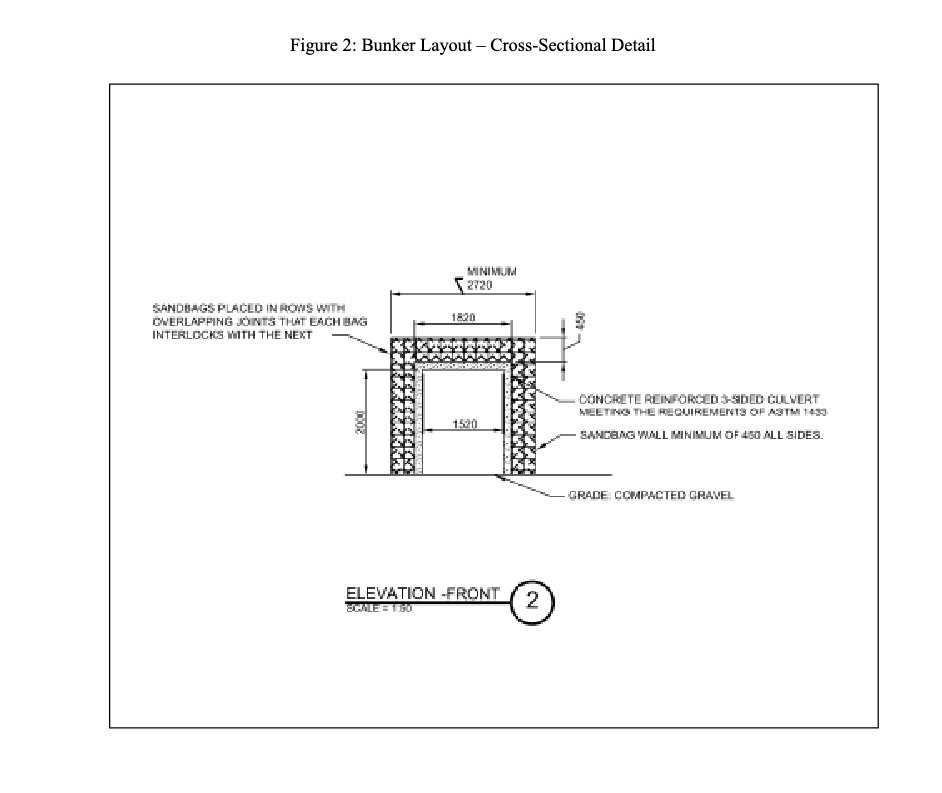
U.S. Army Central is seeking companies that can provide standardized precast reinforced-concrete bunkers for personnel at locations in Israel, Lebanon and Saudi Arabia. The effort would replace non-standard shelters, including converted shipping containers, at sites operating under elevated regional force-protection conditions.
A sources-sought notice posted on the U.S. government’s contracting portal on November 13 describes an urgent, high-priority requirement for concrete indirect-fire bunkers across multiple countries in U.S. Central Command’s area of responsibility. The stated objective is to protect U.S. and coalition service members in potentially hostile environments.
The request points to a practical but consequential shift in how the Army is approaching protection at regional facilities. Converted shipping containers and other improvised structures can provide basic accommodation or shelter, but the planned replacement calls for purpose-built, reinforced systems intended to offer standardized protection from indirect fire.
Why the requirement is urgent
The War Zone reported that the search for bunker builders came amid heightened concern over the vulnerability of U.S. military infrastructure in the region. Iranian attacks across the region have destroyed and damaged aircraft, radars and other equipment, while also causing billions of dollars in damage to infrastructure used by the U.S. military, according to the report.
The article also notes that the solicitation was issued shortly before 60 Minutes aired interviews with relatives of troops killed in Kuwait and a soldier who was present there. Those accounts raised questions about why stronger protection had not been put in place at a base where six soldiers were killed in an Iranian drone attack.
The new requirement therefore has a wider significance beyond the construction itself. It acknowledges that personnel protection, not only the defense of aircraft, sensors and other high-value equipment, is a pressing operational need in a region where bases and deployed forces can face attack risks.

From modified containers to engineered bunkers
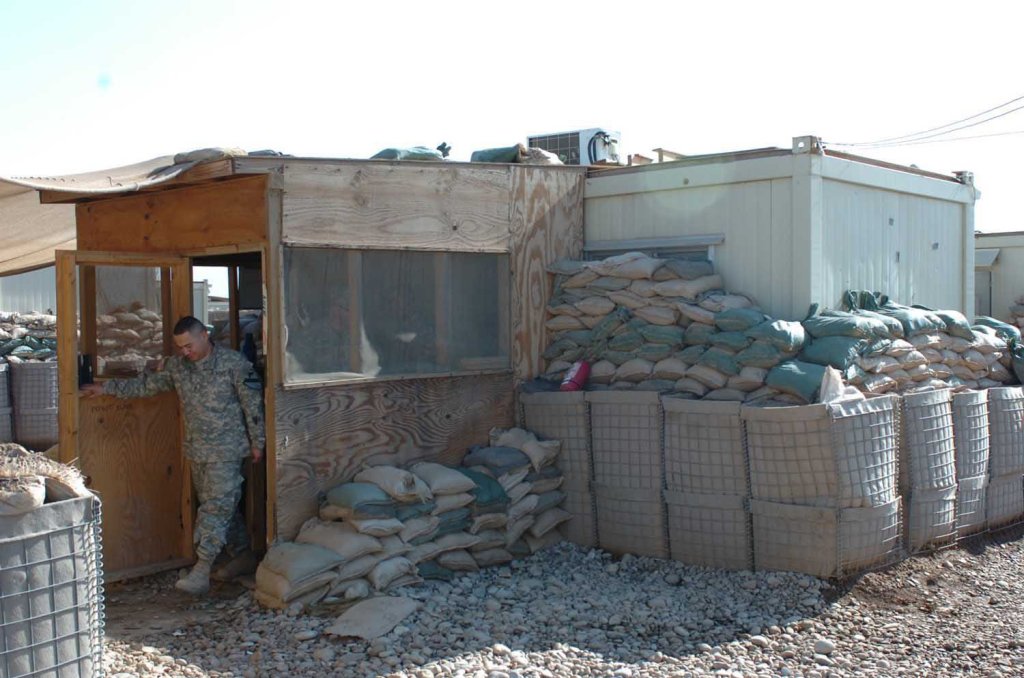
Converted shipping containers have been used in military settings for housing and other purposes. The Army describes the shelters it now wants to replace as non-standard personnel-protection shelters, specifically citing converted containers as an example. The planned alternative is a standardized precast reinforced-concrete indirect-fire bunker.
Standardization matters in a dispersed theater. A common bunker design can simplify procurement, deployment and support across several countries while giving commanders a more consistent baseline for force protection. Precast construction may also be useful where a requirement must be met quickly, since major elements can be manufactured before installation rather than built entirely on site.
The contracting notice is not a completed construction award. It is an effort to identify companies able to meet the requirement. That distinction is important: the public notice signals the Army’s direction and urgency, but it does not by itself establish how many bunkers will be purchased, where each will be installed or when construction will begin.
A wider reassessment of physical hardening
The initiative fits a broader debate over hardened infrastructure at U.S. military facilities. The War Zone said it has repeatedly highlighted the vulnerabilities created by a lack of hardened facilities abroad and in the United States. The recent requirement places that concern into a concrete procurement context.
Physical hardening is not a substitute for other force-protection measures. It is instead a layer of resilience: a way to reduce exposure when threats penetrate or bypass other defenses. In the Army Central request, that layer is being treated as an urgent need for personnel across several countries.
The geographic scope is also notable. Israel, Lebanon and Saudi Arabia sit within a regional security environment in which U.S. forces and partners operate amid varying threat conditions. By framing the requirement across multiple countries in the Central Command area of responsibility, the Army is seeking a regional solution rather than a one-site fix.
What the solicitation reveals
The request does not answer every question about the Army’s construction plans, but it clearly establishes several points. Army Central wants to replace converted-container shelters with reinforced concrete bunkers. It considers the need urgent and high priority. And it is connecting the procurement directly to safeguarding U.S. and coalition personnel in potentially hostile environments.
Those details show that infrastructure protection has moved closer to the center of force-planning discussions. In an era when bases can be threatened by drones, indirect fire and other attacks, the survivability of the places where personnel live and take shelter is becoming a more visible operational issue.
Whether the effort produces a rapid buildout will depend on the subsequent contracting process and execution. But the sources-sought notice marks a significant public indication that the Army is pursuing more robust, standardized shelters in the region rather than relying on converted shipping containers for a role they were not designed to fill.
What to watch next
- Whether Army Central issues a formal solicitation and identifies construction timelines.
- How broadly the bunker requirement is applied across the three named countries.
- Whether similar hardening initiatives follow at other U.S. facilities in the Central Command region.
This article is based on reporting by twz.com. Read the original article.

Originally published on twz.com