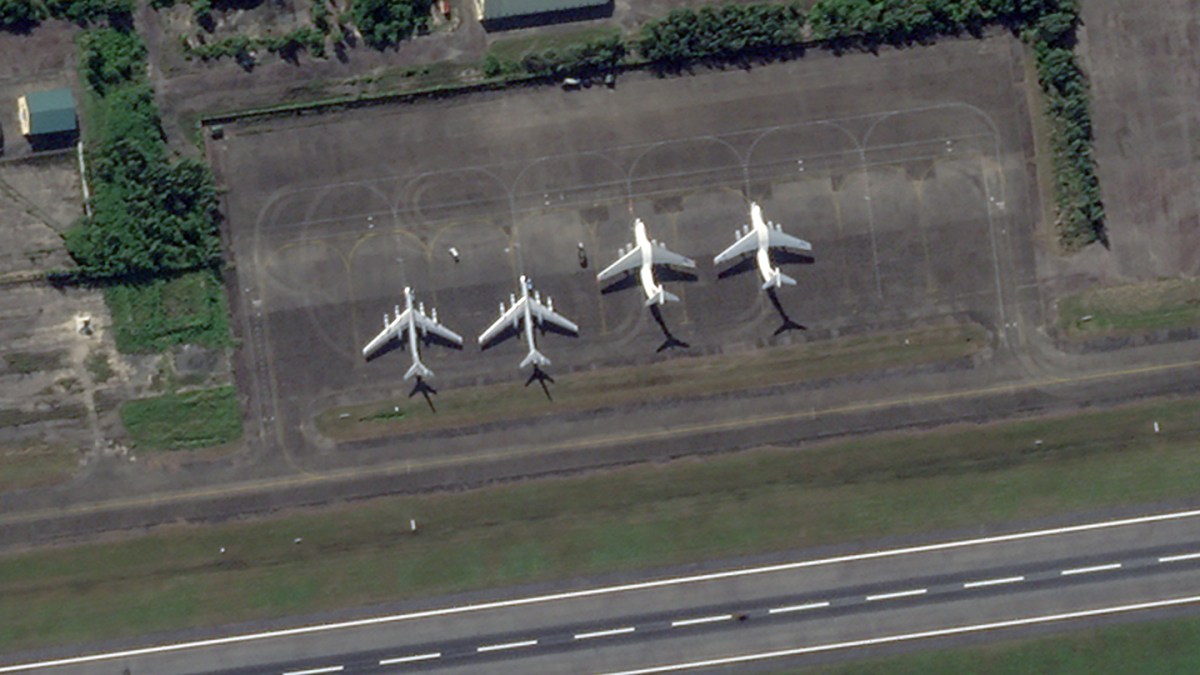
Russia has sent two Tu-95MS strategic bombers to Vietnam after a period of Russian military aviation activity across Northeast Asia that prompted air-defense responses from regional governments, according to reporting by The War Zone.
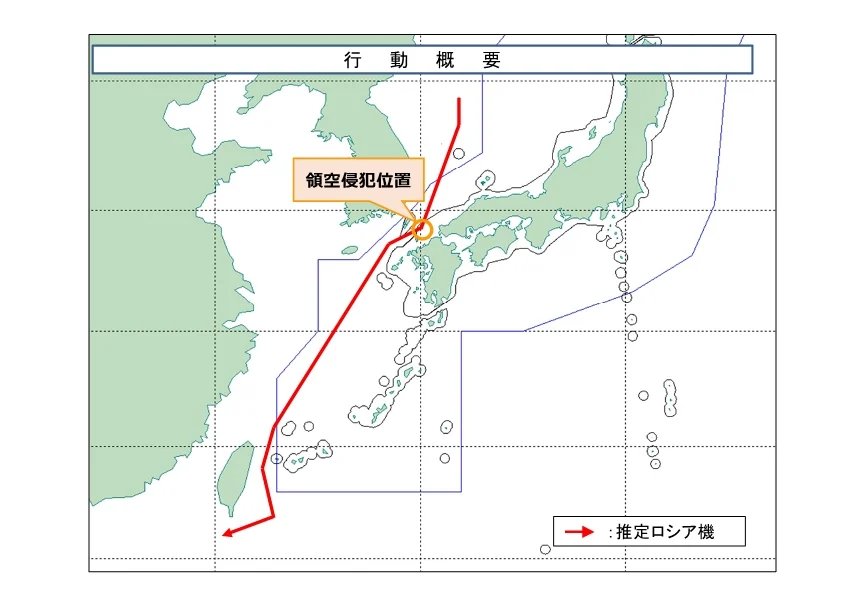
The two bombers, accompanied by two Il-76 transport aircraft, arrived in Da Nang. Their visit followed activity on November 16 and 17 that included reported flights over the Sea of Japan, Japanese reports of territorial-airspace violations by aircraft believed to be Russian, and a passage through Taiwan’s Air Defense Identification Zone.
The movements are notable both for the aircraft involved and for their timing. The Tu-95MS is a long-range, turboprop-powered bomber, and visits by the type to Vietnam are rare. The activity occurred 48 hours before a planned trilateral meeting in Shenzhen involving Chinese President Xi Jinping, Russian President Vladimir Putin, and U.S. President Donald Trump, the report said.
Two Russian flight patterns
Analyst AviVector reported that five Tu-95MS bombers departed Ukrainka air base in Russia’s Far East on November 16. The reported movements then divided into two groups.
Three bombers conducted an approximately 11-hour training flight over the Sea of Japan. They were supported by three Il-78M Midas aerial-refueling tankers, while an A-50U Mainstay airborne early-warning and control aircraft was also reported operating over the sea.
The other two Tu-95MS aircraft continued south toward Vietnam. Their eventual arrival in Da Nang, alongside two Il-76 aircraft, turned what could otherwise have been read as a routine regional training sortie into a more conspicuous deployment across several sensitive air and maritime approaches.
Japanese and Taiwanese responses
Japan’s Ministry of Defense confirmed that two separate aircraft believed to be Russian violated Japanese territorial airspace northwest of Okinoshima, in Fukuoka Prefecture, early on November 17. The ministry did not officially identify the aircraft type in the information cited by the report.
Taiwan likewise did not officially identify the types of aircraft involved in its own airspace-related incident. The report said the two aircraft heading toward Vietnam appeared to have passed through Taiwan’s Air Defense Identification Zone.
An ADIZ is distinct from sovereign airspace. It is an area in which states seek to identify and monitor approaching aircraft for air-defense purposes. A passage through an ADIZ can still trigger scrutiny and military responses, particularly when it involves long-range bombers operating in a region with acute strategic tensions.
Japan’s report concerned territorial airspace, a more sensitive category than an ADIZ transit. The separate incidents nevertheless formed part of the same broader period of Russian aviation activity, in which aircraft operated from the Sea of Japan to Southeast Asia.
Why the Tu-95MS matters
The Tu-95MS is one of Russia’s most recognizable long-range military aircraft. Its turboprop engines and counter-rotating propellers give it a distinctive profile, but its strategic relevance comes from range and endurance. A bomber force able to fly long missions with tanker support can demonstrate reach far beyond the airfields from which it departs.

In this case, the reported 11-hour Sea of Japan flight included tanker support and an airborne early-warning aircraft. The southbound group’s arrival in Vietnam added another operational thread: a rare bomber visit to a Southeast Asian country after flights through areas watched closely by Japan and Taiwan.
Neither Japan nor Taiwan, according to the report, publicly identified the aircraft types in their respective incidents. That distinction is important. The broader chronology supports describing an interval of Russian military-aircraft activity and regional alerts, but it does not establish a definitive official attribution of every incident to a specific platform.

A message delivered through movement
Long-range military flights can serve multiple purposes at once. They provide training, test logistics and coordination, and put aircraft in front of regional air-defense networks. They can also carry political significance without any formal statement beyond the flight itself.
The reporting places these events immediately before an unusual leaders’ meeting in Shenzhen. It does not establish that the flights were coordinated with that meeting or directed by it. But the proximity adds to the attention surrounding the deployment, especially given the route’s intersections with Japanese and Taiwanese defense-monitoring areas.
For regional governments, the immediate issue is airspace awareness and response. For observers, the episode illustrates how quickly a handful of aircraft can create a chain of alerts across Northeast and Southeast Asia. Japan confirmed two territorial-airspace violations involving aircraft believed to be Russian; Taiwan monitored activity in its ADIZ; and two Tu-95MS bombers then appeared in Da Nang.
The central fact is a rare Russian bomber arrival in Vietnam after a wider sweep of aviation activity. Whether the visit develops into further exercises, diplomacy, or additional deployments was not established in the supplied reporting. What is clear is that the operation combined long-range aviation, refueling support, regional monitoring, and a highly visible destination.
This article is based on reporting by twz.com. Read the original article.
Originally published on twz.com