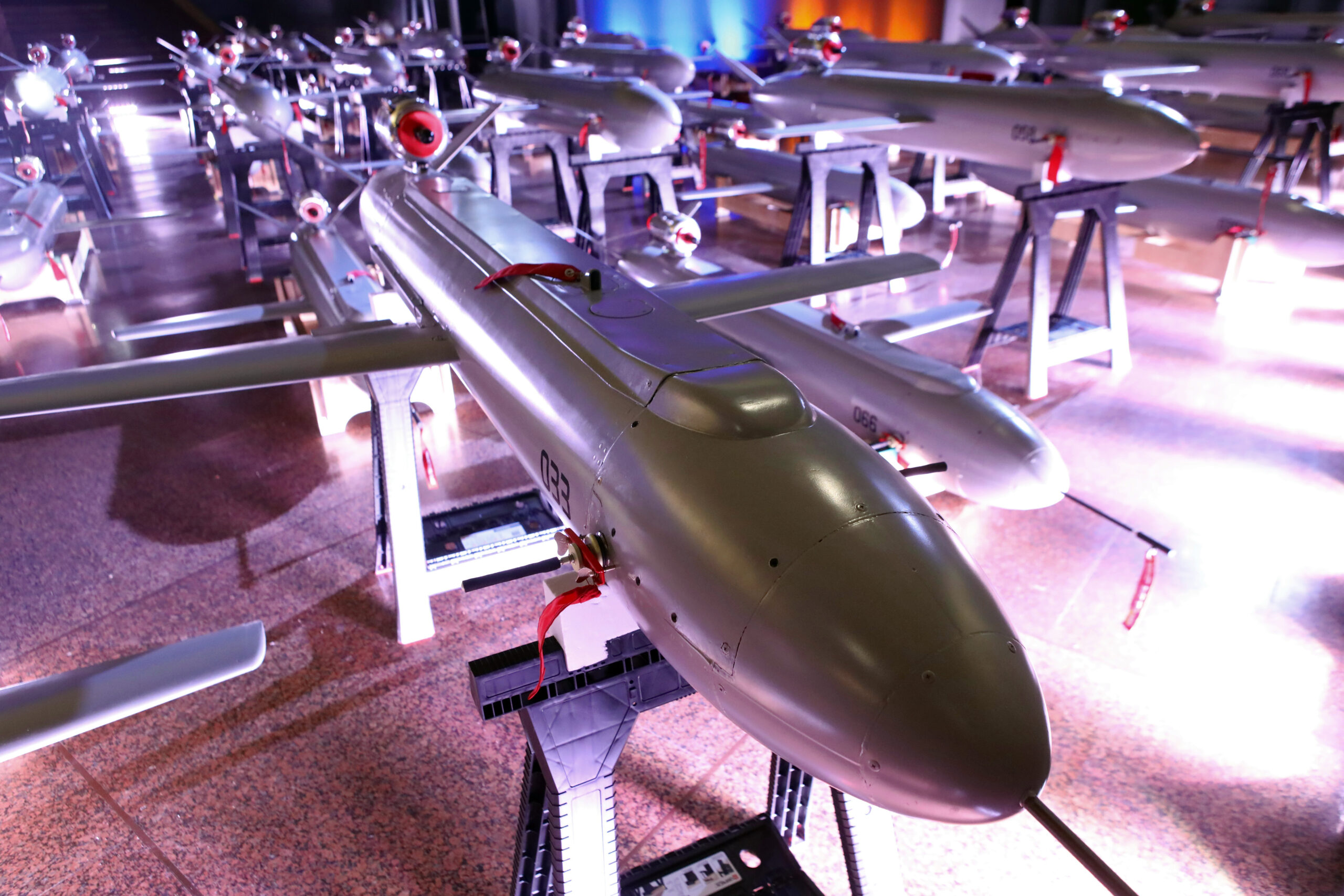
Kyiv puts drones at the center of its weapons plan
Ukraine plans to double its drone supplies and more than triple its long-range strike capabilities next year, according to Defense Minister Yevhenii Khmara. The plan underscores how central uncrewed systems have become to Kyiv’s approach to the war and to its longer-term defense planning.
Khmara announced the targets after the 37th meeting of the Ukraine Defense Contact Group at NATO headquarters in Brussels. He described the effort as still at an early stage, saying there are prospects in the campaign. The stated goals cover both the quantity of drones available to Ukraine and the reach of systems used for attacks at longer distances.
The announcement comes amid a strategic disagreement over priorities. Ukraine is pressing ahead with long-range strikes with support from European partners, while Washington has urged greater emphasis on front-line defense and associated midrange strikes. The difference is not simply about equipment: it reflects competing judgments about where scarce production capacity and funding can have the greatest military effect.
More than a single class of drone
Ukraine’s planned drone investment spans several roles. Khmara said drones should account for 62% of funding and make up more than half of Ukraine’s weapons needs in 2027. The categories he identified include first-person-view systems, middle-strike drones, deep-strike drones and logistics drones.
That mix matters because the word “drone” covers sharply different missions. First-person-view drones are associated with close-range operations, while logistics systems can move supplies. Midrange and deep-strike systems are intended for missions farther from the immediate front. Building out all of those categories indicates an effort to treat drones as a broad military infrastructure rather than as a narrow addition to conventional forces.
The scale of the funding target also signals that Kyiv expects uncrewed systems to remain important well beyond the current year. Treating drones as a majority share of weapons needs would require more than acquiring airframes. It would also place continued demands on production, integration, training, maintenance and the ability to match systems to changing operational conditions.
British package adds long-range systems
Britain said it will send Ukraine more than 1,000 long-range strike drones as part of a roughly £260 million package, or about $342 million. Some of the drones are able to fly more than 1,000 kilometers, or about 620 miles.
The British statement followed Khmara’s announcement by a day and gives the broader European support effort a concrete near-term component. The package was set to be announced in Berlin at a meeting of the Coalition of the Willing, a grouping of countries supporting Ukraine. U.S. special envoys Jared Kushner and Steven Witkoff were expected to brief European leaders there on peace negotiations.
Long-range systems can have a political as well as military significance because they extend the debate about the purpose of strike campaigns. For Ukraine, the ability to reach deeper targets is part of a strategy that seeks to impose costs beyond the front line. The Pentagon, according to the report, has criticized attacks deep inside Russia and has instead requested that Kyiv prioritize defending the front and conducting midrange strikes.
Two views of military effect
The divergence in emphasis does not necessarily mean that either side rejects drones. Rather, it concerns the missions those systems should support. One approach gives priority to immediate defensive needs and operations linked closely to the front. The other maintains that longer-range capabilities should continue expanding alongside those needs.
Khmara’s funding outline suggests Ukraine is not treating the choice as strictly binary. By naming FPV, logistics, middle-strike and deep-strike categories together, he presented a layered drone portfolio. In that framework, systems used at the front and systems intended for distant strikes are both parts of the country’s future force structure.
The limits of long-range strike operations are also part of the debate. The report notes a U.S. assessment that public attention often focuses on the spectacle of deep strikes intended to inflict pain on Russia’s population. The supplied account does not provide the full assessment or a measurement of the campaign’s effectiveness, so no conclusion can be drawn from it about the overall military results. What is clear is that Ukraine and its partners are making funding and procurement decisions while those assessments remain contested.
What to watch next
- Whether Ukraine can turn the announced supply and capability targets into sustained production and deployment.
- How the 62% funding goal is divided among FPV, logistics, midrange and deep-strike systems.
- How Britain’s more than 1,000 promised long-range drones are integrated into Ukraine’s broader campaign.
- Whether European support changes the balance between Kyiv’s long-range priorities and Washington’s focus on front-line defense.
The immediate announcement is ambitious: double the supply of drones and more than triple long-range strike capacity next year. Its larger significance lies in the institutional choice behind it. Ukraine is planning around drones as a dominant share of its weapons requirement, not as a temporary workaround or a specialized capability.
That choice will keep drone policy at the center of discussions among Kyiv, Washington and European capitals. The question is no longer whether uncrewed systems matter in the conflict. It is how quickly each class can be fielded, what missions it will serve and how allies will weigh short-term defensive priorities against the pursuit of greater reach.
This article is based on reporting by Defense News. Read the original article.
Originally published on defensenews.com