Where Are the Aircraft Carriers? October 6, 2026
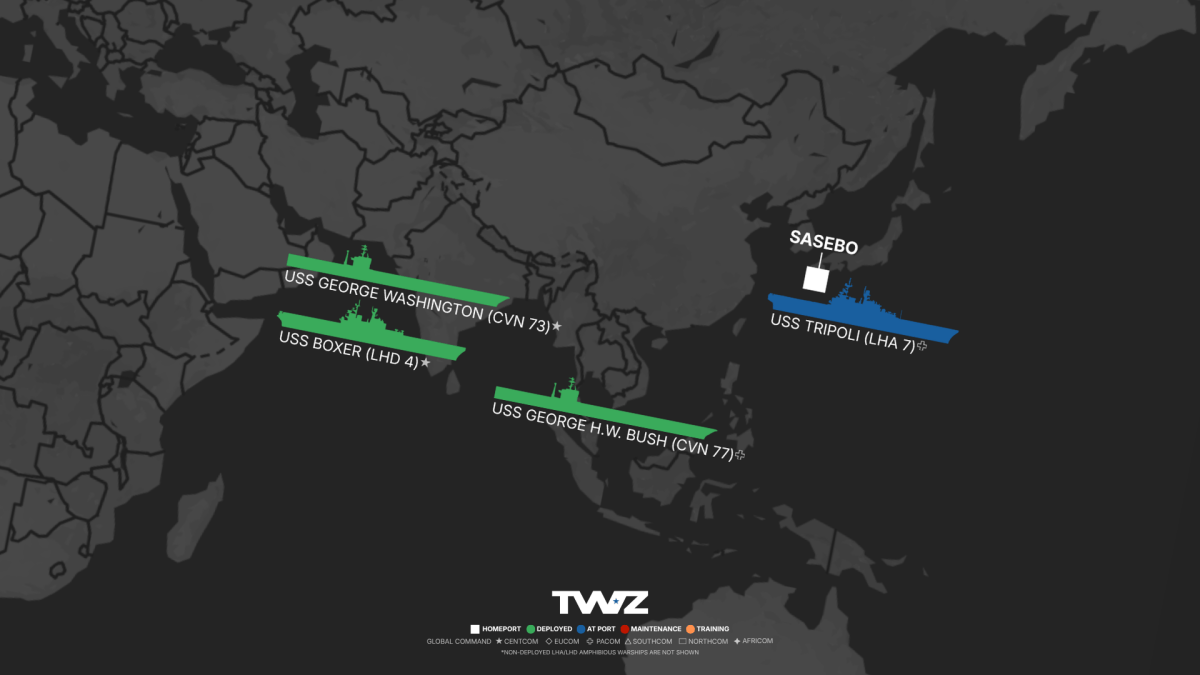
The U.S. aircraft carrier fleet is moving through a busy rotation cycle, with one flattop enjoying a long-awaited port call in Thailand, another holding down the Middle East alone, and several others shifting between homecomings, maintenance, and future deployments. According to The War Zone's weekly carrier tracker, the arrival of USS George H.W. Bush in Phuket has left USS George Washington as the only carrier strike group supporting operations against Iran for the first time in months.
The picture is temporary. Several outlets have confirmed that USS Theodore Roosevelt will deploy to the Middle East, which could put three carriers in the region again. But because normal rotation schedules govern how long each ship remains on station, any overlap among Bush, Washington, and Roosevelt is expected to be short-lived. The tracker relies on publicly available open-source information, including ship movements, Navy announcements, and automatic identification system data, to assemble a snapshot of America's big-deck fleet.
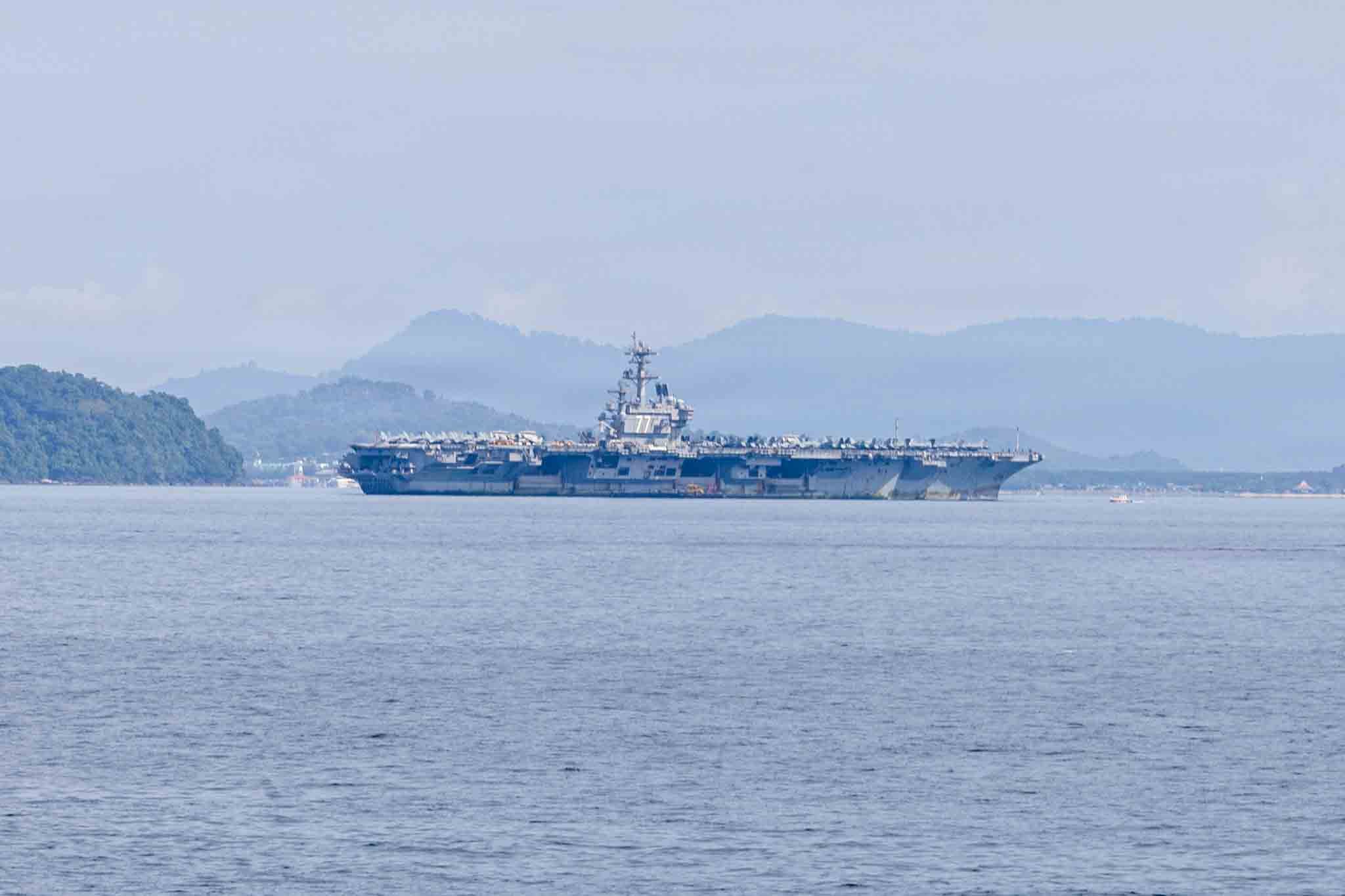
George H.W. Bush Drops Anchor Off Phuket for Liberty Port Call
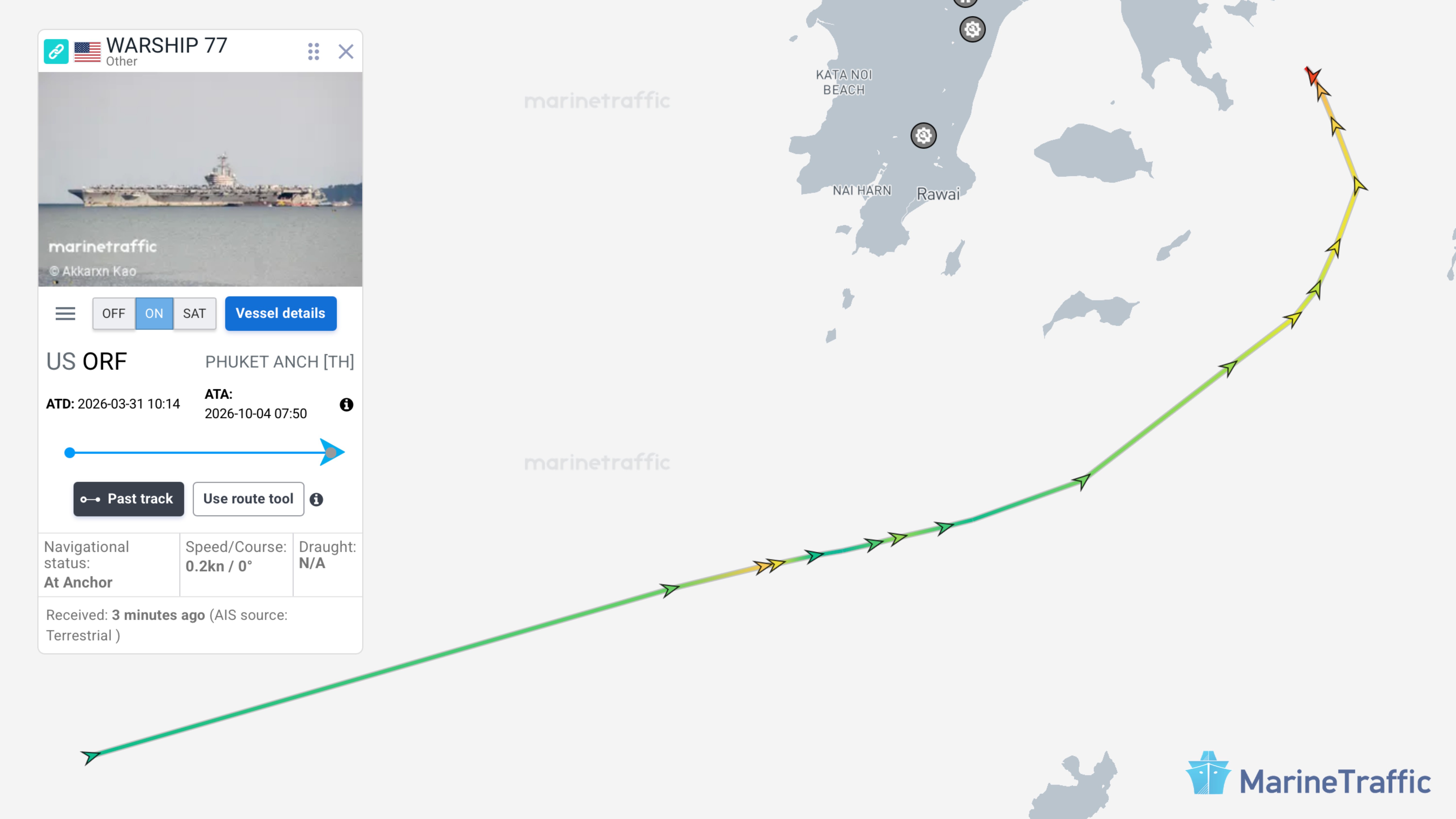
USS George H.W. Bush arrived in Thailand on October 4 for a scheduled port visit, U.S. 7th Fleet announced. The carrier pulled into Phuket after 188 days at sea, giving its crew a first liberty call and a break from an extended deployment. The guided-missile destroyer USS Delbert D. Black escorted the carrier from its previous station in the Arabian Sea and joined the port call.
Bush departed the continental United States on March 31 and took an unusually long route to the Middle East. Rather than transit the Red Sea and the Bab Al Mandeb Strait, the carrier rounded the Cape of Good Hope. That decision was made to limit exposure to the treacherous waters of the Red Sea corridor, where commercial and military shipping have faced persistent threats.
On October 3, one day before arriving in Thailand, Bush switched on its Automatic Identification System transponder about 15 nautical miles southwest of Thailand. AIS broadcasts are not always active for warships, but they can provide useful public data during routine transits and port approaches. The port call in Phuket marks a notable pause for a ship that had been underway for more than six months.
George Washington Becomes the Sole Middle East Carrier
With Bush moving out of the Middle East and into the 7th Fleet area of operations, USS George Washington is now the only carrier strike group supporting operations against Iran. Washington relieved USS Abraham Lincoln in August, and until Bush's departure, the Navy had maintained more than one flattop in the region. The shift to a single carrier underscores how quickly carrier presence can change as ships rotate between theaters.
The arrival of USS Theodore Roosevelt, if confirmed by deployment orders and subsequent movements, would restore a larger carrier presence. Yet the Navy often has to balance overlapping deployments against maintenance and training needs. A three-carrier window in the Middle East would be operationally significant, but it would not necessarily last long. The tracker notes that any overlap will be temporary given normal rotation schedules.
Abraham Lincoln Prepares for Homecoming
Across the Pacific, USS Abraham Lincoln is holding off the west coast of California. The carrier is preparing to disembark its air wing and offload ammunition ahead of a homecoming expected this week. Washington relieved Lincoln in August, allowing the ship to begin the long journey back to the United States. After months of deployment, the offload process is a standard but demanding phase that returns aircraft, munitions, and equipment to shore before the ship reaches its homeport.
Lincoln's return will mark the end of a deployment cycle that included time in the Middle East. Its current position off California places it in the final stages of that cycle, with families and crews anticipating a well-deserved homecoming.
Ronald Reagan Moves From Washington State to San Diego
USS Ronald Reagan has moved from Washington State to San Diego, according to the tracker. The shift is part of the carrier's broader maintenance and homeport rhythm. San Diego is a major hub for the Pacific Fleet, and carrier movements between Washington and California are common as ships prepare for future operations, inspections, or training periods. For the fleet, such repositioning helps align ships with available maintenance capacity and crew readiness.
Dwight D. Eisenhower Returns to Homeport After Growler Mishap
USS Dwight D. Eisenhower has returned to its homeport following a Growler mishap. The tracker does not provide additional details on the incident, but the carrier's return places it back at its base after the event. The EA-18G Growler is a carrier-capable electronic warfare aircraft, and mishaps involving carrier aircraft can prompt investigations and temporary operational pauses. Eisenhower's return to homeport is a notable data point in the fleet-wide rotation.
Harry S. Truman Moves Dead Stick for Mid-Life Nuclear Refueling Overhaul
USS Harry S. Truman is moving dead stick as it heads toward a mid-life nuclear refueling overhaul. The ship is entering a major maintenance period that will keep it out of operational rotation for an extended time. Mid-life refueling overhauls are among the most complex and costly events in a carrier's service life, involving work on the reactor plants and extensive upgrades across the ship. Truman's move is a reminder that the carrier fleet's availability is shaped not only by deployments but also by long-term maintenance schedules.
John F. Kennedy Transits to Norfolk After Preliminary Acceptance
The newest Ford-class carrier, USS John F. Kennedy, has transited to Norfolk after preliminary acceptance. The movement marks another step in the ship's journey toward fleet service. Ford-class carriers are designed to bring new technologies and greater efficiency to carrier operations, though they also undergo extensive testing and acceptance processes before becoming fully operational. Kennedy's arrival in Norfolk places it at a key East Coast naval hub as it continues its path toward joining the fleet.
Big Deck Fleet at a Glance
The weekly carrier tracker monitors America's flattop fleet, including deployed Carrier Strike Groups and Amphibious Ready Groups, using publicly available open-source information. It is not a complete operational picture. Warships can turn off or limit AIS broadcasts, and deployment schedules can change without public notice. Still, the tracker offers a useful way to follow the broad movements of carriers and their escorts.
This week's snapshot shows a fleet in transition. Bush is in Phuket for liberty after 188 days at sea. Washington is the sole carrier supporting operations against Iran. Lincoln is off California ahead of homecoming. Ronald Reagan has shifted to San Diego. Eisenhower is back at homeport after a Growler mishap. Truman is moving toward a mid-life nuclear refueling overhaul. Kennedy is in Norfolk after preliminary acceptance.
Those movements reflect the constant balancing act required to keep carriers deployed, maintained, and ready. A carrier that is in port, in maintenance, or in transit is not available for contingency operations, and the Navy must manage those gaps across multiple theaters. The Middle East is currently down to one carrier, but Theodore Roosevelt's expected deployment could temporarily raise that number. The Pacific and East Coast are also seeing significant repositioning, with Reagan and Kennedy moving to key hubs and Lincoln preparing to come home.
For now, the most visible story is Bush's arrival in Thailand. After 188 days at sea, the carrier and its crew are getting a rare port call, while the rest of the fleet continues to rotate through deployments, homecomings, and overhauls. The next tracker update will show whether Roosevelt has entered the Middle East and how long the three-carrier overlap lasts.
This article is based on reporting by twz.com. Read the original article.
Originally published on twz.com