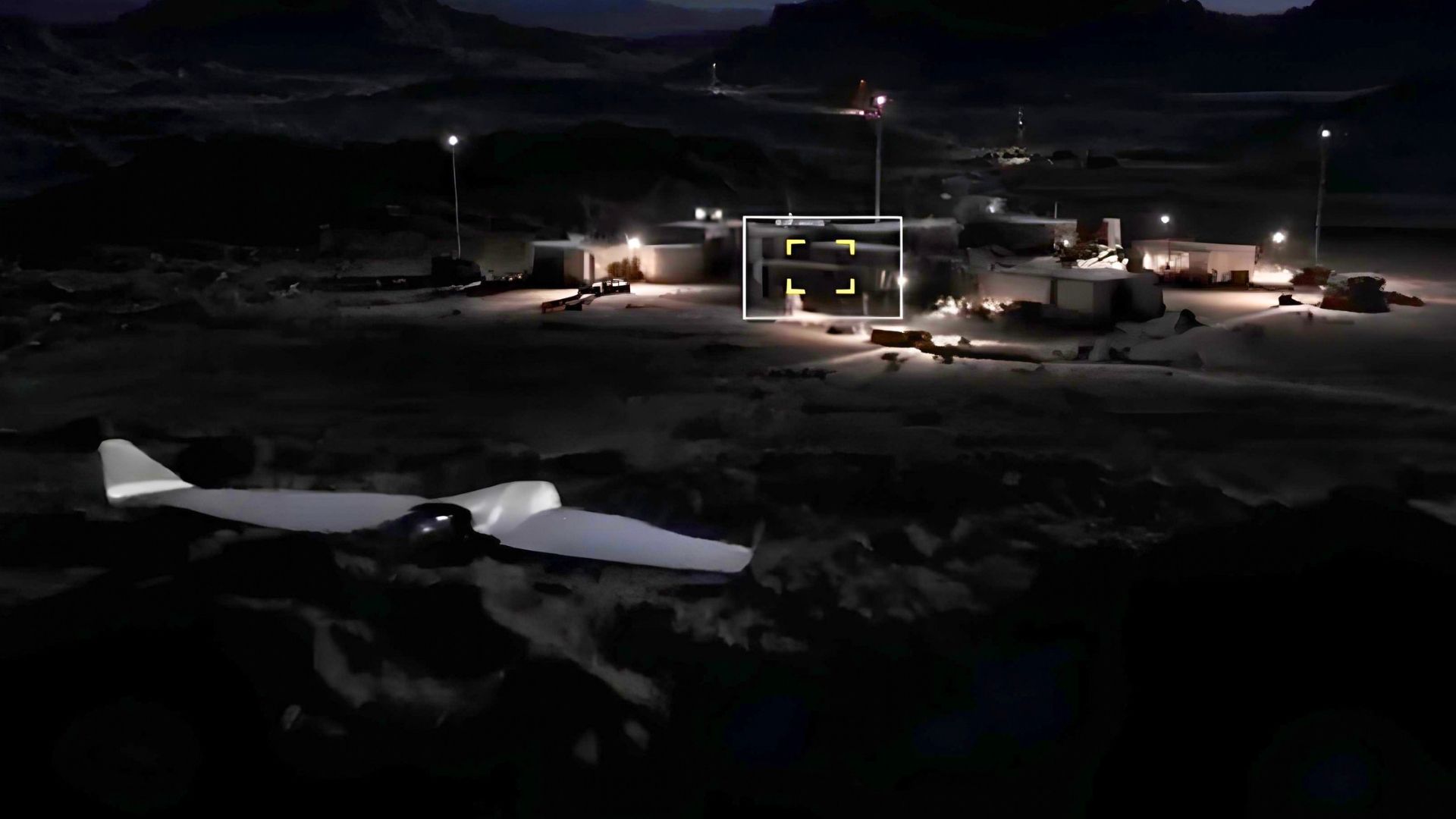
French defense startup Harmattan AI has unveiled IRIFI, an autonomous long-range strike system that the company says is designed to hit targets up to 1,240 miles away. The announcement places a young, Dassault-backed venture at the center of one of the most closely watched questions in European defense: who will build the continent's next generation of deep-strike weapons, and how much decision-making those systems will be permitted to exercise on their own?
Details released so far are deliberately high-level. The company's framing emphasizes range and autonomy — two attributes that have become defining markers of modern strike concepts — while the full technical picture remains under wraps. Still, the range figure and the identity of the backer are enough to make the project worth tracking.
What the Company Says IRIFI Is
According to Harmattan AI, IRIFI is an autonomous long-range strike system. The headline figure is a reach of up to 1,240 miles, roughly 2,000 kilometers — a distance that places it in the category of weapons built to strike far beyond the forward edge of a battlefield.
That framing matters. Systems in this class are typically discussed not in terms of a single engagement but in terms of what they allow a military to threaten: rear-area infrastructure, logistics hubs, command nodes, and other targets sitting well behind a front line. Whether IRIFI is intended for land attack, maritime targets, or both has not been detailed publicly.
The autonomy descriptor is equally consequential and equally opaque. In contemporary defense marketing, "autonomous" can describe anything from automatic route planning to target selection with a human merely approving a final decision. Where IRIFI sits on that spectrum — and how much human oversight is built into its employment — is not something the company has spelled out in its initial announcement.
Why 1,240 Miles Is the Headline Number
Range is the metric that most clearly separates this project from the crowded field of short- and medium-range systems. A strike radius measured in the high hundreds of miles changes the geometry of a conflict:
- Launch platforms can remain farther from contested airspace, reducing exposure to air defenses.
- Targets previously considered safe in the deep rear fall within reach.
- Planning cycles lengthen, because a weapon that flies farther takes longer to arrive and must cope with more variables en route.
- Deterrence calculations shift, since the mere existence of such reach alters an adversary's cost-benefit math.
The figure also invites comparison. One thousand two hundred forty miles is a distance that crosses multiple national borders in Europe and spans stretches of the Indo-Pacific that planners treat as strategically decisive. Publishing that number is itself a signal — a way of telling potential customers and competitors which tier of capability the company intends to compete in.
The Dassault Connection
The most revealing word in the headline may be "Dassault-backed." Being associated with one of Europe's established aerospace and defense houses gives a startup a credibility that is difficult to buy: engineering heritage, supply-chain access, and a plausible path from demonstrator to production.
It also reflects a broader pattern in European defense. Established primes have increasingly acted as investors, incubators, and partners for smaller firms working on software-defined systems, autonomy, and faster development cycles — areas where traditional procurement timelines are widely seen as too slow. For a new entrant, that backing can mean the difference between a concept study and a program of record.
The relationship carries expectations as well. Backers of that stature tend to be interested in capabilities that can eventually be integrated into larger force structures rather than standalone curiosities. IRIFI's stated range and autonomy profile suggest it is aimed at exactly that kind of integration.

Autonomy Moves From Software to Weapons
Much of the recent debate about artificial intelligence in warfare has centered on decision support: systems that sort sensor data, flag anomalies, and propose options while humans retain the final call. Long-range strike is where that conversation becomes sharper, because the consequences of an autonomous decision are physical and irreversible.
Governments and international bodies have spent years arguing over how much autonomy is acceptable in the use of force. The practical questions are concrete: Who authorizes an engagement? Can a human intervene after launch? What happens when communications are degraded? What accountability chain exists if a system strikes the wrong target?
Startups working in this space rarely answer those questions in a product announcement, and Harmattan AI is no exception here. But every system described as autonomous long-range strike invites them, and the answers will shape whether such weapons are fielded, exported, or restricted.
Europe's Deep-Strike Gap
European militaries have spent the post-Cold War decades with limited indigenous options for very-long-range strike, relying heavily on a small number of cruise missile types and on allied platforms. That dependency has become politically uncomfortable, and several national programs have been launched or accelerated to close the gap.
A startup offering a 1,240-mile autonomous system fits neatly into that demand. It also fits an industrial logic: instead of a single multinational megaproject, Europe is increasingly seeing a mix of national programs, joint ventures, and venture-backed challengers competing for the same requirement.
The competitive pressure is real. Primes in France, Germany, the United Kingdom, and elsewhere are all advancing long-range strike concepts, and buyers have limited budgets. A new entrant must show not just a compelling range figure but a credible path to production, testing, and sustainment.
What to Watch Next
Several developments will determine whether IRIFI becomes a program or remains a press release:
- Flight or firing tests that demonstrate the claimed reach rather than merely stating it.
- Clarification of the autonomy model, including where humans sit in the chain of decision.
- Evidence of a launch platform, whether ground-based, naval, or airborne.
- Customer signals — government interest, funding rounds, or partnership announcements.
- Any export posture, since range and autonomy both trigger arms-control sensitivities.
For now, the project is best understood as a statement of intent. Harmattan AI has declared which tier of capability it intends to play in, attached its name to a distance figure that puts it alongside serious long-range systems, and leaned on Dassault's association to be taken seriously.
Whether that translates into hardware depends on the unglamorous work that follows every unveiling: testing, integration, cost control, and the political willingness to field a weapon that makes decisions of its own at extreme distances. The range number got the attention. The autonomy question will decide the outcome.
This article is based on reporting by Interesting Engineering. Read the original article.
Originally published on interestingengineering.com