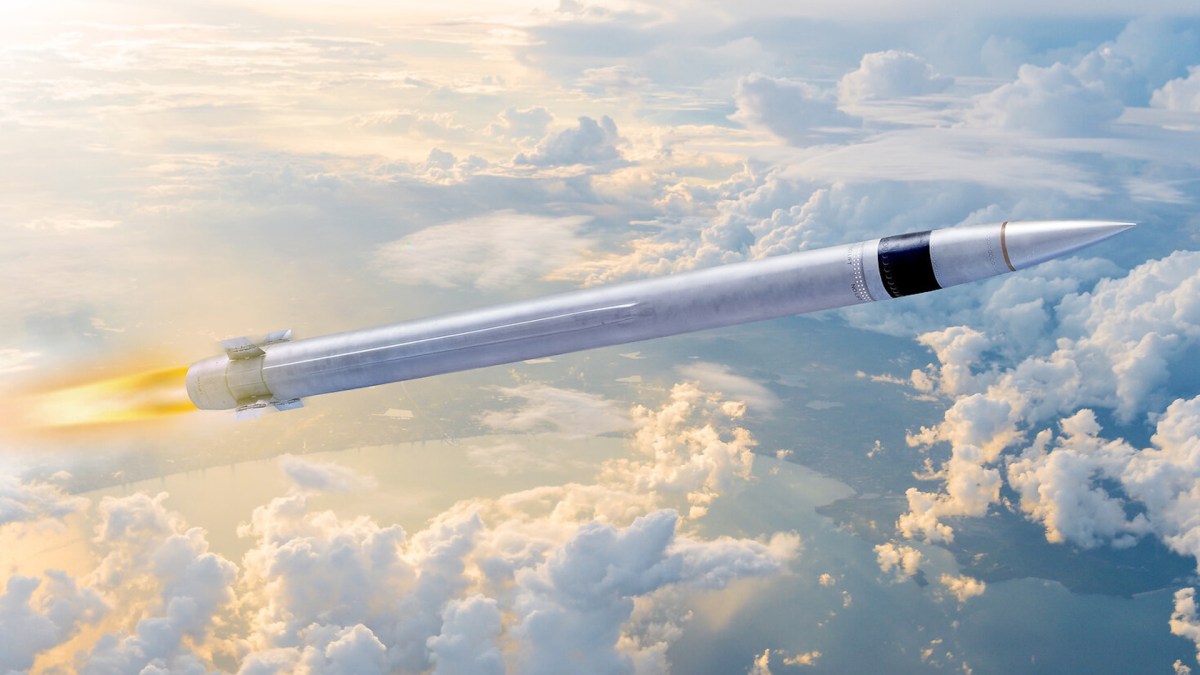
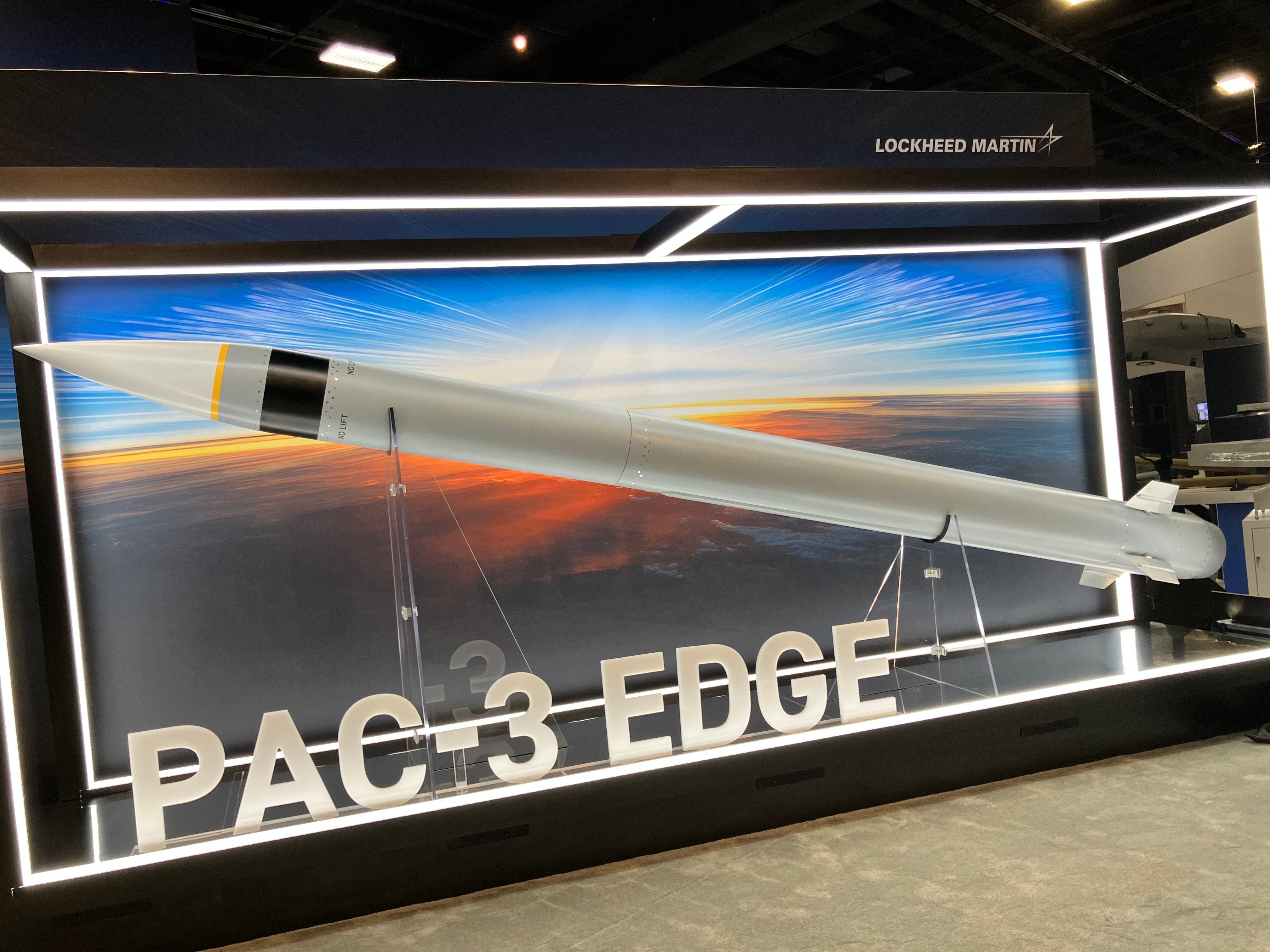
Lockheed Martin has unveiled PAC-3 Edge, a proposed new interceptor intended to sit at the top of the Patriot air-defense missile family. The company says the design is aimed at improving performance against increasingly demanding threats, including advanced ballistic and hypersonic missiles, as the US Army moves forward with its Future Interceptor competition.
The missile was displayed at the Association of the United States Army’s annual convention. Its public debut follows Lockheed’s October 9 announcement that it had been selected to advance to the next phase of the Army program alongside another, unnamed competitor.
If the effort proceeds on the company’s stated schedule, testing is expected to begin in 2027, with an initial deployment target of 2031. Those dates remain goals rather than a fielded capability, but the selection indicates the Army is again pursuing a larger improvement to the Patriot interceptor portfolio after changes to an earlier program.
A new top tier for Patriot
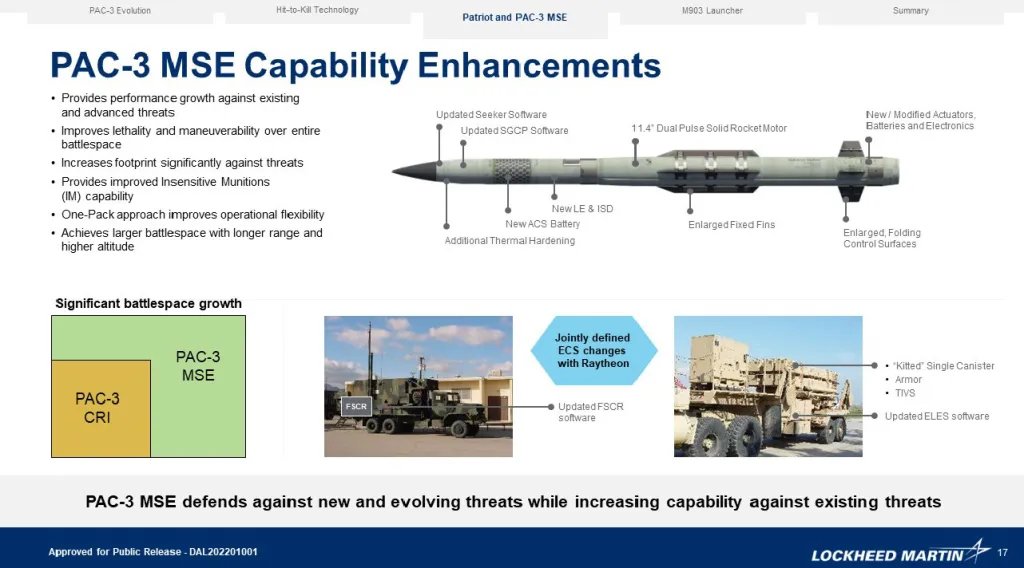
Patriot is one of the US Army’s central ground-based air- and missile-defense systems. The PAC-3 Missile Segment Enhancement, or MSE, is the current advanced interceptor within that family. Lockheed describes PAC-3 Edge as a higher-performance successor concept that builds on existing PAC-3 MSE technology while changing key parts of the missile.
According to the company, PAC-3 Edge incorporates a new seeker, an upgraded control system and a more advanced solid rocket motor developed with Northrop Grumman. Those subsystems are central to an interceptor’s ability to detect, track and maneuver against a target, though Lockheed has not publicly provided performance figures in the supplied material.
The company says the new interceptor is designed to provide more range, altitude and maneuverability than existing Patriot interceptors. The stated focus is on threats that have become harder to defeat, including advanced ballistic missiles and hypersonic systems. Such threats can combine high speed, changing trajectories and complex flight profiles, increasing the demands placed on sensors, command networks and interceptor performance.
Visible design changes
PAC-3 Edge also differs visibly from the PAC-3 MSE. The displayed missile does not have the MSE’s mid-body strakes and lacks the distinctive tapered section that separates the MSE’s narrower forward portion from its broader rear body. External shape alone does not reveal the full technical rationale for the redesign, but it is consistent with Lockheed’s description of a significantly upgraded interceptor rather than a minor modification.
The use of an advanced solid rocket motor is particularly notable because propulsion affects several elements of missile performance: how quickly an interceptor can accelerate, how much energy it retains during flight and the engagements it can attempt within the constraints of a defensive battery. The new seeker and control system are likewise intended to support engagements against more capable targets, according to the company.
Neither the article nor the company information supplied here establishes how PAC-3 Edge will compare with the competing Future Interceptor design. The competition is still moving through its next phase, and the system will need to complete testing before any deployment decision is realized.
The Army’s renewed interceptor push
The Future Interceptor competition reflects a renewed Army interest in a substantial upgrade for Patriot’s upper end. The service had previously abandoned its Lower-Tier Future Interceptor program in 2024, citing cost concerns. At that time, the Army emphasized incremental improvements to the PAC-3 MSE instead.
The emergence of the newer Future Interceptor competition suggests the requirement for a more significant jump in capability has returned. That shift arrives as air-defense planners confront a broadening set of threats, from ballistic missiles to more maneuverable high-speed weapons. The practical challenge is not just developing an interceptor with stronger specifications, but integrating it into a system that can identify threats, prioritize engagements and coordinate launches under real operational conditions.
For Lockheed, PAC-3 Edge also extends a long-running role in the Patriot missile ecosystem. The design’s reliance on elements of the current PAC-3 MSE could offer continuity in development, while the new seeker, controls and propulsion aim to create separation from the fielded variant.
What happens next
The next meaningful milestones will be testing and the Army’s eventual down-selection decisions. Lockheed says tests are expected to start in 2027. The results will matter more than the convention-floor display: an interceptor intended for advanced ballistic and hypersonic threats must demonstrate that its sensing, guidance, propulsion and maneuvering systems work together under realistic conditions.
The target for initial deployment in 2031 also places PAC-3 Edge in a long development window. Requirements, funding, test findings and the competing proposal could all shape the program before then. A company unveiling is an important signal of technical direction, but it is not a guarantee of procurement or operational success.
Still, the announcement clarifies Lockheed’s approach to the next stage of Patriot modernization. PAC-3 Edge is being positioned as a more capable interceptor built on the current PAC-3 MSE foundation, with a new seeker, control system and motor intended to meet a more difficult threat environment. For the Army, the competition will test whether that promise can become a deployable addition to one of its most important air-defense systems.
This article is based on reporting by twz.com. Read the original article.
Originally published on twz.com