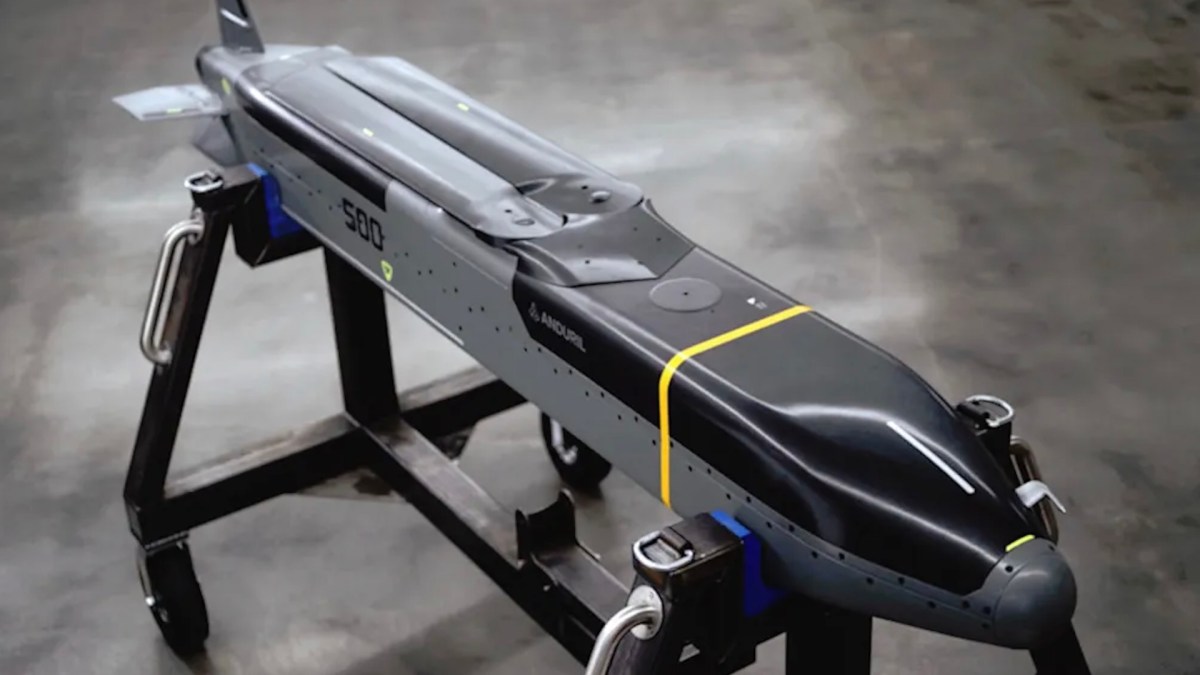
WARSAW, Poland — Ukraine's private drone and missile developer Fire Point is pushing ahead with an extended-range tactical ballistic missile after its FP-7 weapon was used in combat for the first time on Oct. 1, the company's chief executive said at the Helsinki Security Forum.
Speaking during a panel discussion on the opening day of the event, Oct. 2, Fire Point CEO Iryna Terekh said the version recently fired into Russian territory is designed for a maximum range of 300 kilometers. A longer-range variant is scheduled to follow before the end of the year, she added. Terekh described the milestone as entry into what she called a select league of operators fielding their own independent ballistic missiles, stressing that the weapon carries no external kill switch and therefore no requirement to ask anyone's permission to conduct self-defense.
Ukraine's Fire Point brings a homegrown ballistic missile online
The FP-7 has drawn public praise from Ukrainian President Volodymyr Zelenskyy, and Terekh said her firm needed roughly two years to move from concept to a combat-ready system. She attributed that pace to Fire Point's status as a private company, arguing it has cut through the bureaucratic layers that typically slow state-run development programs and has accelerated research and development across its missile range.
Cost is the other half of the pitch. Terekh claimed the weapon was manufactured several times more cheaply than comparable competitor products, a factor that matters considerably as Kyiv looks to scale production while managing constrained budgets and competing demands for resources. Taken together, the speed of development and the claimed cost advantage help explain why Ukrainian authorities handed a private firm responsibility for a key element of a multinational missile defense effort rather than routing the work through a traditional state design bureau.
Freyja prototype targeted for 2027
Fire Point intends for its flagship missile to become part of Freyja, a pan-European anti-ballistic missile defense program. According to Terekh, a prototype of that system is expected to be ready in the first half of 2027. If the schedule holds, it would represent an unusually rapid path from first battlefield use to integration inside a multinational defensive architecture — and it would give European planners a domestically rooted option as they reassess the depth of their air and missile defense inventories.

Europe pitches capabilities as hybrid threats intensify
The Helsinki gathering unfolded against a backdrop of what industry representatives characterized as intensifying Russian hybrid attacks, an environment that has European governments hunting for specific gaps in their force structures. Companies used the forum to pitch products tailored to those shortfalls, positioning new missiles, satellites and warplanes as answers to discrete capability problems rather than one-size-fits-all solutions.
Just as notable was the way firms described their working relationships. Rather than developing systems in isolation, European and American producers are increasingly pursuing partnerships, according to industry representatives at the event. That shift reflects both the sheer cost of modern weapon development and the political value allies place on interoperability — systems that can share data, munitions and logistics across borders are easier to justify to parliaments and easier to sustain in a prolonged crisis.
Moldova presses for deeper cooperation as drones cross its airspace
Moldovan President Maia Sandu brought the hybrid threat into sharp focus, telling the forum that Russian drones have entered Moldovan airspace more than 45 times this year, with eight of those incursions occurring in the single week before her remarks. She also cited a Russian strike last month that deliberately hit Ukraine's border crossings with Moldova, killing two people.
"Our answer is to grow stronger," Sandu said during an Oct. 2 joint press conference with Finnish President Alexander Stubb, pointing to investment in air defense, modernization of the army and higher defense spending. The posture is a delicate one: Moldova's constitution mandates neutrality, yet concerns about intensifying Russian hybrid threats and the war next door are driving its government to seek closer cooperation with NATO. Chisinau is effectively trying to deepen practical military ties without formally abandoning the neutrality its constitution requires.

Finland anchors the Nordic response
Finnish President Alexander Stubb officially inaugurated the forum, which also featured Sandu. Finland's own trajectory illustrates how quickly the regional security map has been redrawn: encouraged by Russia's full-scale invasion of Ukraine, Helsinki joined NATO in April 2023, abandoning decades of military non-alignment. Stubb appeared alongside Sandu in the panel discussion that brought both heads of state together, underscoring how the war has bound the security calculus of a Nordic NATO member to that of a neutral neighbor on Ukraine's southwestern flank.
What the announcements signal
- Ukraine now fields a domestically produced tactical ballistic missile with a 300-kilometer ceiling, and a longer-range version is slated for release this year.
- A private manufacturer, not a state bureau, delivered the system in about two years and claims a substantial cost advantage over competitors.
- The FP-7 is being positioned as a component of the pan-European Freyja anti-ballistic defense program, with a prototype expected in the first half of 2027.
- European and American defense firms are increasingly partnering on new products instead of developing them independently.
- Moldova is expanding air defense investment and army modernization while formally preserving its constitutional neutrality.

The road ahead
The coming months will test whether Fire Point's timelines survive contact with reality. An extended-range missile promised within the year would widen the set of targets Ukraine can reach, while the Freyja prototype schedule set for early 2027 will determine whether a startup-style developer can plug into a multinational program with its own procurement rules and certification demands. Terekh's emphasis on the absence of a kill switch signals how much political weight Kyiv attaches to owning the full stack of a long-range strike system.
For Europe, the broader significance lies in the direction of travel. Missile defense, drone countermeasures and air defense are competing for the same limited industrial capacity, and the forum's recurring theme — partnership over isolation — suggests governments increasingly accept that no single national industry can meet demand alone. Whether that cooperation translates into delivered systems, rather than announced intentions, is the question that will define the next phase of Europe's rearmament.
This article is based on reporting by Defense News. Read the original article.
Originally published on defensenews.com