Theodore Roosevelt arrives at a key Pacific port
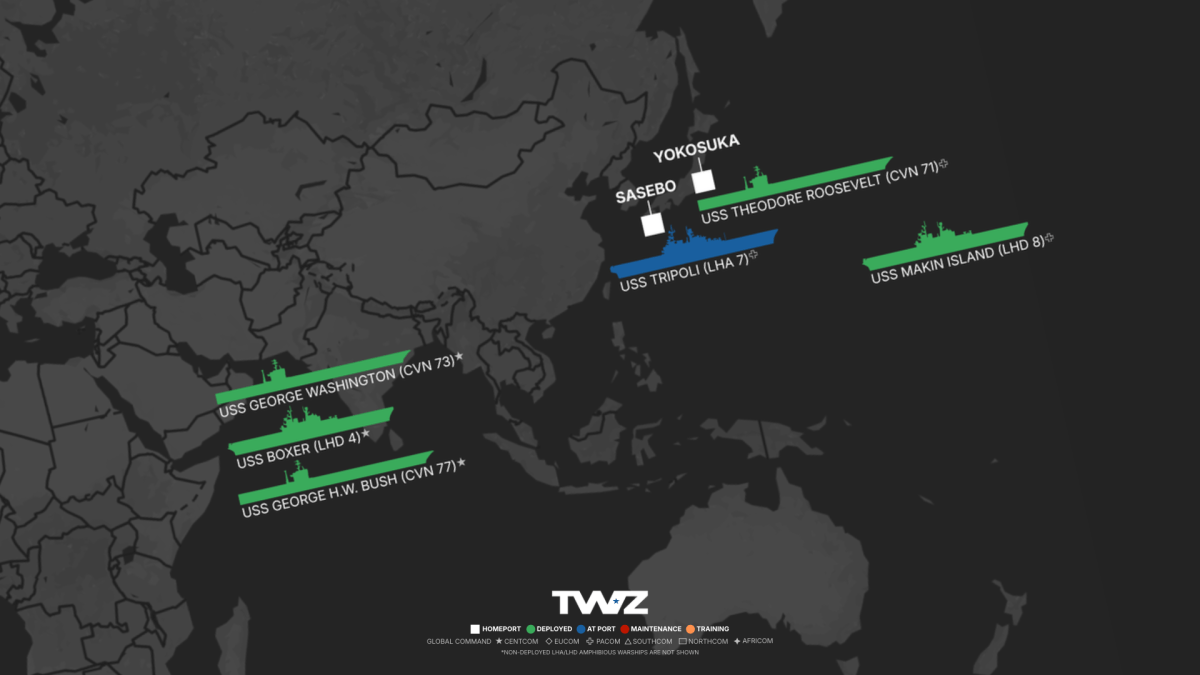
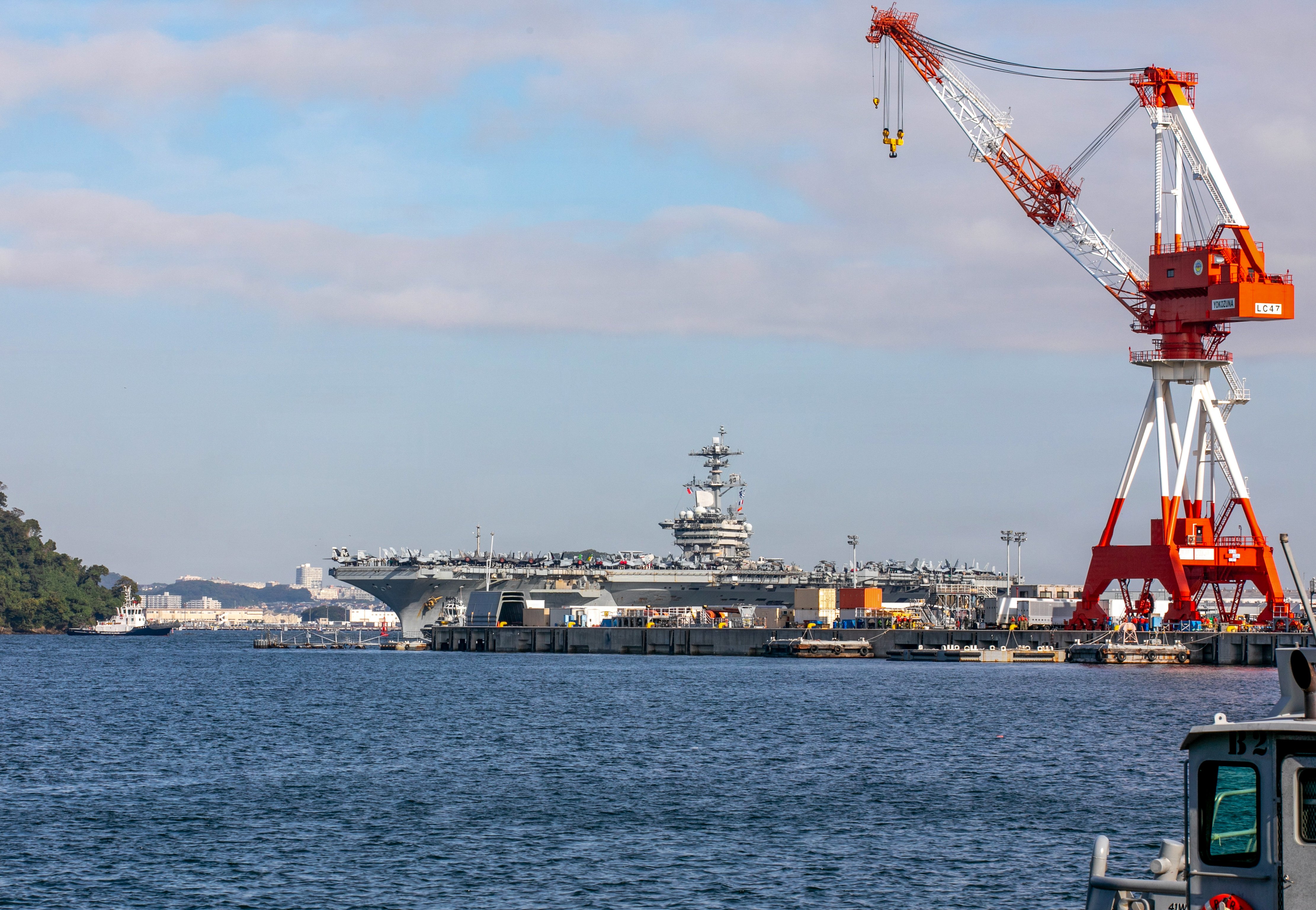
The aircraft carrier USS Theodore Roosevelt arrived at Yokosuka, Japan, on October 16 ahead of the combined U.S.-Japan exercise Keen Sword 27. Its arrival marks the first visit by a non-resident U.S. carrier to the strategically important naval port in more than four years.
Theodore Roosevelt is the flagship of Carrier Strike Group 9. It arrived with the guided-missile cruiser USS Chosin and the destroyer USS Decatur after completing a 19-day voyage from San Diego. The group maneuvered around a typhoon while crossing the Western Pacific, according to open-source reporting cited by The War Zone.
Yokosuka sits on Japan’s east coast and is home to USS George Washington, the carrier assigned to the United States’ only forward-based Carrier Strike Group. Bringing a second carrier into the port, even for a short visit, places Theodore Roosevelt in a location central to U.S.-Japan naval cooperation and Pacific operations.
Preparing for Keen Sword 27
The carrier strike group is expected to spend several days in port before taking part in Keen Sword 27. The exercise is described by the U.S. 7th Fleet as a premier joint-bilateral field training exercise intended to improve readiness and interoperability between the Japan Self-Defense Forces and U.S. military forces.
Interoperability is a practical measure of how effectively forces can operate together. For a carrier group and allied forces, that can involve coordinating planning, communications, movement and the use of naval and air assets. The stated purpose of Keen Sword is therefore not simply the presence of ships in the region, but training that improves the ability of the two countries’ forces to work together.
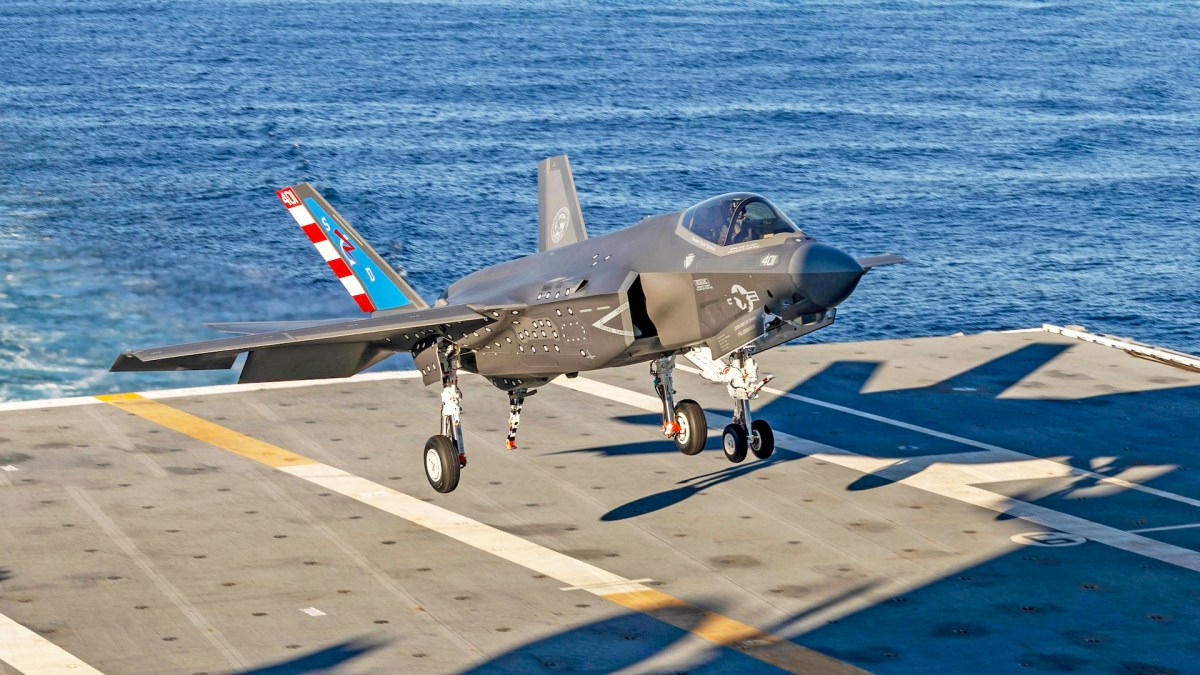
Theodore Roosevelt’s flight deck carried carrier-based aircraft, including F-35C fifth-generation fighters, when it pulled into Yokosuka. The F-35C is the carrier-capable version of the Joint Strike Fighter. Its presence underscores the role of aircraft carriers as mobile bases for fixed-wing naval aviation.
A first visiting carrier in four years
The visit has added weight because Theodore Roosevelt is not permanently based at Yokosuka. The port’s resident carrier, George Washington, anchors the forward-deployed U.S. carrier presence in Japan. A visit by another carrier group provides a visible example of the ability to move additional naval capability into the Western Pacific.
Theodore Roosevelt and Chosin had entered the area of responsibility of U.S. 7th Fleet and U.S. Indo-Pacific Command before arriving at Commander, Fleet Activities Yokosuka. The stop also follows a demanding transit from California, including the diversion around severe weather.
The visit itself is temporary, but it comes immediately before a major bilateral exercise. That sequence gives crews time in port for maintenance and preparations before the operational phase of the training begins.
Carrier movements extend beyond Japan
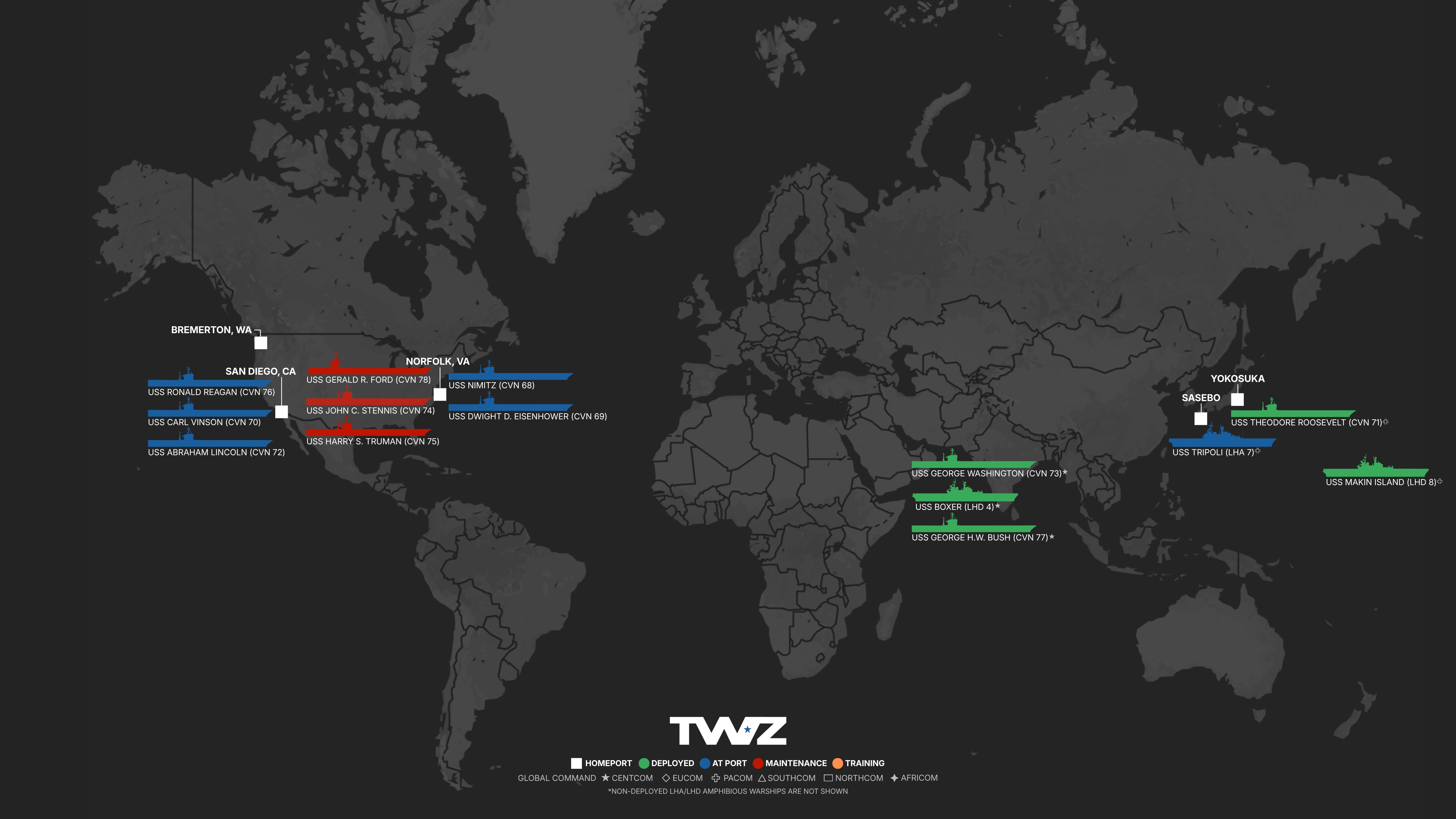
The Yokosuka arrival was one of several movements in the U.S. carrier fleet reported on October 17. USS George H.W. Bush departed Thailand after a five-day port call and returned to the Middle East. At the same time, USS Abraham Lincoln arrived home after a combat deployment lasting nearly 11 months.
Those movements point to the continuing rhythm of a global carrier fleet. Ships rotate between deployments, port calls, transit, exercises and returns home. The composition and location of the fleet can change quickly as carriers complete missions, enter new operational areas or prepare for scheduled training.
The report also noted that the United States was again positioning two aircraft carriers in the Middle East. In the Pacific, meanwhile, Theodore Roosevelt’s arrival adds a visiting carrier to a port already associated with the forward-based George Washington.
Why carrier deployments draw attention
Aircraft carriers bring together several capabilities in one mobile formation. The carrier provides a flight deck for aircraft, while escorting ships such as cruisers and destroyers form part of the wider strike group. The Roosevelt’s arrival with Chosin and Decatur illustrates that a carrier deployment is not solely about the carrier itself.
The carrier’s embarked aircraft are also central. The reported presence of F-35Cs gives the group access to carrier-based fifth-generation fighters during its Pacific deployment. At sea, the combination of shipborne aviation and escorts lets a carrier strike group operate over wide distances without relying on a single fixed base.
For allies, exercises such as Keen Sword create a setting to rehearse the coordination needed when forces with different national chains of command and equipment operate together. The exercise description emphasizes both readiness and interoperability, two goals that are especially relevant in a region where U.S. and Japanese forces maintain longstanding defense ties.
What comes next
Theodore Roosevelt is scheduled to leave its short Yokosuka stop and begin participation in Keen Sword 27. The exercise will test the combined U.S.-Japan relationship in a field-training environment, while the carrier group continues its Western Pacific deployment.
Elsewhere, the carrier picture will continue to evolve. George H.W. Bush has returned to the Middle East after its Thai port call, and Abraham Lincoln has completed a lengthy deployment and returned home. The movement of these ships is a reminder that carrier deployments are continuous operations rather than isolated events.
The Roosevelt’s visit is significant both for its timing and for its rarity: it is the first non-resident U.S. carrier to call at Yokosuka in more than four years. With a major bilateral exercise ahead, the stop places the carrier strike group at one of the most important locations for U.S.-Japan naval cooperation in the Pacific.
This article is based on reporting by twz.com. Read the original article.
Originally published on twz.com