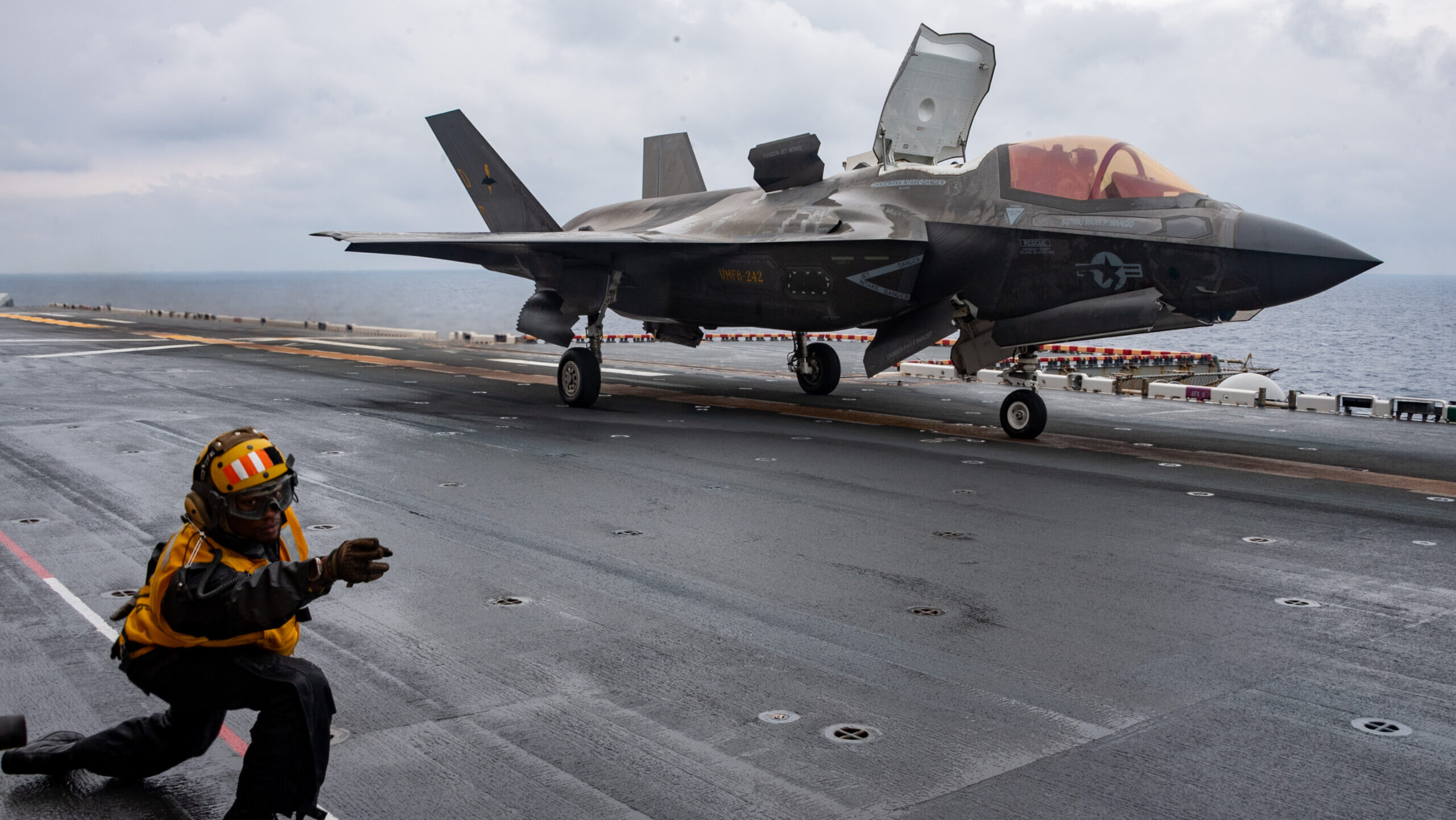
F-35 pricing turns upward as the program moves into new production lots
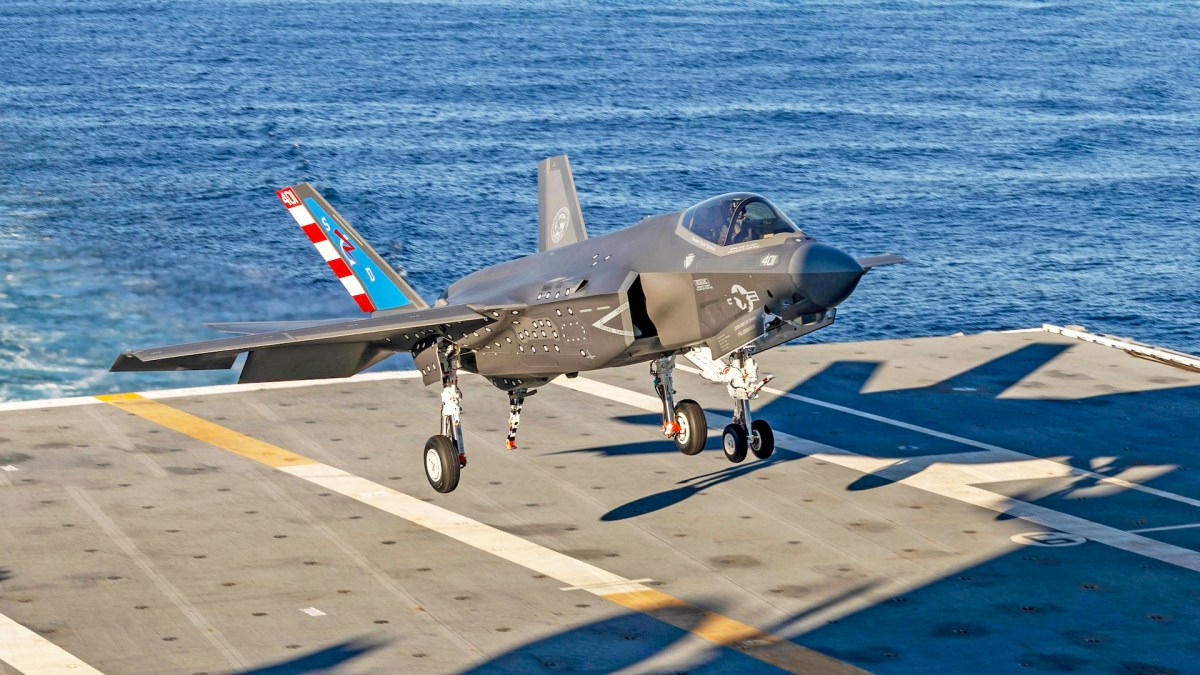
The Pentagon says the average flyaway cost of every major F-35 variant has increased in the aircraft’s latest production lots, a notable reversal for a program that spent years emphasizing declining unit prices as output scaled. The new figures, reported by Breaking Defense and confirmed by the F-35 Joint Program Office, show higher delivery-ready costs for the Air Force’s F-35A, the Marine Corps’ short-takeoff-and-vertical-landing F-35B, and the Navy’s carrier-capable F-35C.
For lots 18 and 19, which are scheduled to deliver over the next two years, the average flyaway cost of the F-35A rose to $92 million. That compares with $82.5 million for the most recent prior group of production contracts spanning 2023 to 2026, an increase of 11.5 percent. The F-35B climbed to $121.4 million from $109 million, a rise of 11.4 percent. The F-35C increased to $110.8 million from $102.1 million, an 8.5 percent gain.
Those changes matter because flyaway cost is one of the clearest public indicators of what it takes to field a combat aircraft in deliverable condition. The metric includes the equipment needed for delivery, not just the airframe itself. In the F-35’s case, that means the total is affected not only by Lockheed Martin’s work as prime contractor, but also by major government-furnished systems and supplier inputs outside the narrow scope of the main production contract.
Why the increases matter
The F-35 remains the backbone tactical aircraft program for the United States and a growing number of allied air forces. That scale means even single-digit percentage changes can translate into major budget effects across planned fleets. An 11 percent jump in the F-35A, the most widely purchased version, is especially significant because the jet has often been framed as moving toward more stable and predictable production economics.
The latest increase also reinforces how vulnerable major defense manufacturing programs remain to broader industrial conditions. According to Breaking Defense, the Pentagon previously attributed cost pressure on lot 18 to inflation, rising raw-material prices, and supply-chain disruptions. Those are not abstract forces for a modern fighter. They affect specialized alloys, electronics, propulsion components, labor, transportation, and the timing of upstream deliveries across a deeply interdependent supplier base.
Lockheed Martin pointed back to an earlier statement saying the program is moving into full-rate production while resuming higher-volume development deliveries and expanding globally. The company also said the focus of the program has shifted from proving the basic aircraft to modernization, readiness, sustainment control, and integration of new capabilities. That framing suggests a program that is no longer judged only by how cheaply it can build baseline jets, but by how effectively it can evolve and support a large international fleet.
What is inside the flyaway number
The details behind the price rise are not fully broken out in the supplied report, but the structure of the aircraft helps explain why the answer is unlikely to sit with a single subsystem. The flyaway figure includes government-furnished equipment such as the F135 engine built by Pratt & Whitney, an RTX subsidiary. It also includes other mission-critical systems supplied by outside firms, including Northrop Grumman’s upgraded radar.
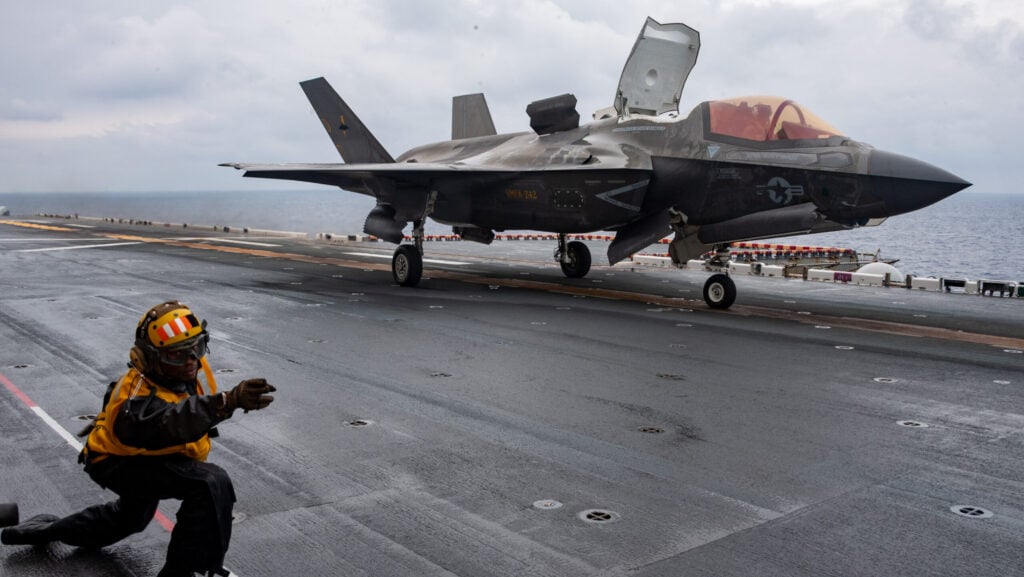
That matters because pressure on any of those elements can ripple into the final aircraft cost. Even when the prime contractor keeps its own production work relatively steady, engines, sensors, electronics, and specialized assemblies can all raise the delivered price. Breaking Defense noted that delays affecting the upgraded radar have already forced the Pentagon to accept some aircraft without that nose-mounted sensor, underscoring that schedule friction and configuration complexity remain part of the program’s reality.
The current figures therefore point to a broader truth about advanced combat aircraft procurement: once a program reaches this scale, “unit cost” is only a partial story. Delivery price reflects the health of a much wider industrial and integration system. In that sense, the F-35 increase is not just a fighter story. It is also a measure of the resilience, or fragility, of the defense manufacturing base supporting it.
Pressure beyond the United States
The cost shift has international implications as well. Breaking Defense reported that rising prices previously contributed to a dispute with Switzerland over its F-35 buy, ultimately ending with Bern reducing its planned purchase. That episode shows how even a globally established platform can encounter political and budget resistance when expected acquisition economics begin to move.
For partner nations and export customers, the attraction of the F-35 has always rested on a combination of stealth, sensors, interoperability, and long-term coalition relevance. But those advantages compete directly with affordability. If price growth continues, governments may face sharper tradeoffs between fleet size, upgrade scope, and the pace of procurement.
Within the United States, the question is similar. The F-35 is too central to simply walk away from, but persistent cost growth can reshape how aggressively the services buy, how they phase modernization, and what they defer elsewhere to protect fighter spending. Because the aircraft anchors future airpower planning across multiple services, its pricing trends carry consequences far beyond the production line.
A familiar challenge in a different phase
The new lot 18 and 19 prices do not mean the F-35 program is failing, but they do complicate the long-running narrative that maturity would naturally deliver lower costs. Instead, the program appears to be entering a phase where modernization demands, supplier constraints, and inflationary realities can outweigh the benefits of production experience.
That makes the latest numbers worth watching. The F-35 is no longer only a development saga or a scaling story. It is increasingly a test of whether the United States and its industrial partners can keep a complex, globally deployed combat aircraft affordable while simultaneously upgrading it for the next era of warfare.
This article is based on reporting by Breaking Defense. Read the original article.
Originally published on breakingdefense.com