The Army’s laser program crosses from prototype to production
The U.S. Army has taken a notable step in directed-energy weapons by awarding AeroVironment a $464.8 million production contract for the Enduring-High Energy Laser program, or E-HEL. According to the supplied source text from Defense News, the company described it as the first production contract for a directed energy system in U.S. military history. That makes the announcement more than another development milestone in counter-drone defense. It signals that at least one class of military laser has moved beyond experimentation and into planned fielding at scale.
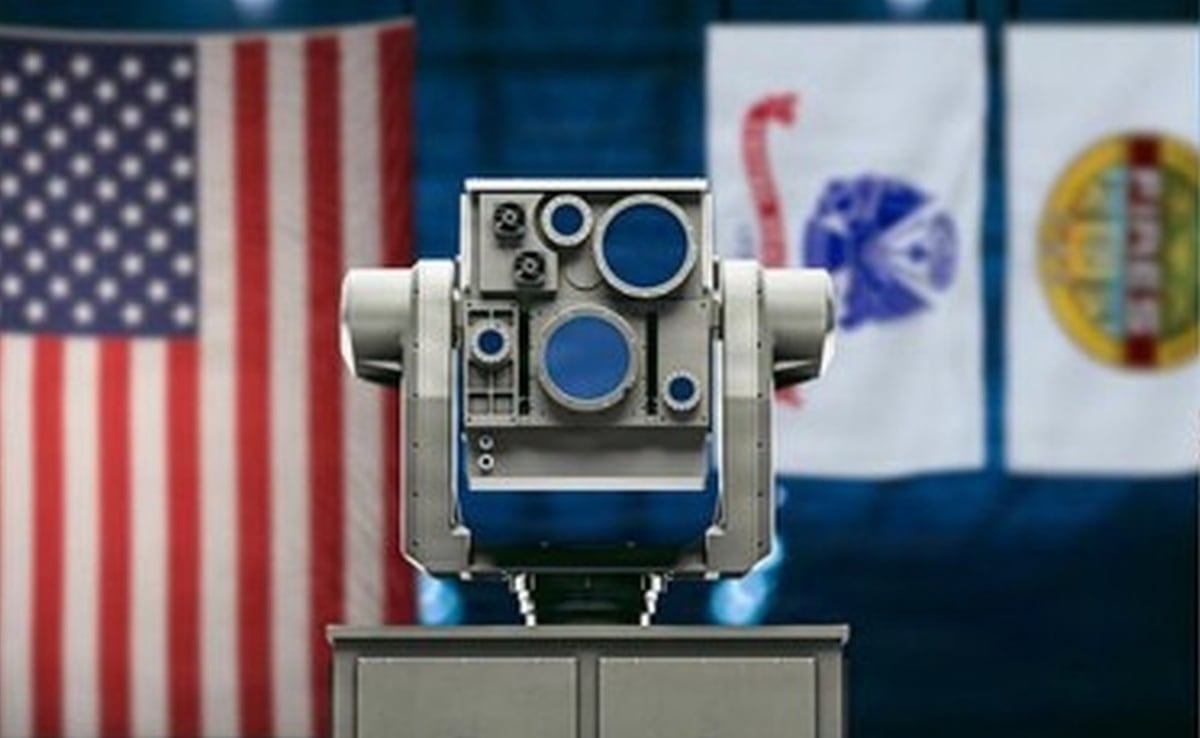
The contract was awarded this week under an Other Transaction Agreement and calls for delivery of dozens of 30-kilowatt LOCUST laser weapons. The systems are designed to defeat smaller unmanned aircraft, specifically targets that the Defense Department groups into classes one through three. As cited in the source text, that range extends from miniature systems comparable to the Air Force’s Wasp III up to larger drones like the Army’s RQ-7B Shadow.
At a time when militaries are looking for cheaper and more sustainable ways to counter large numbers of low-cost drones, the production decision stands out. Rather than using missiles to intercept unmanned aircraft, E-HEL uses a laser beam and can effectively replenish its magazine through the system’s power supply. That concept has been central to the appeal of directed energy for years: lower cost per shot, deep magazines limited by power rather than onboard munitions, and the potential to handle repeated drone threats without exhausting expensive interceptors.
Why this matters now
The military case for lasers has become more urgent as drone threats have multiplied across battlefields and airspace security environments. Small and medium unmanned aircraft are hard to ignore because they are relatively inexpensive, can appear in groups, and can strain conventional air defense systems built around more expensive missiles. The Army’s move into production suggests it believes at least one laser configuration is ready to contribute to operational counter-drone defense rather than remaining a technology demonstration.
The source text includes a statement from Army Vice Chief of Staff Gen. Christopher LaNeve, who framed the program in operational terms, saying it will help formations defeat unmanned systems and maintain an edge over adversaries. That reflects the Army’s broader challenge: integrating new defenses against fast-evolving drone threats while keeping them mobile enough for real deployments.
The E-HEL system appears designed with that practical requirement in mind. Unlike some earlier laser efforts tied closely to a specific vehicle, AeroVironment’s LOCUST X3 is described as platform-agnostic and able to fit on the Army’s Joint Light Tactical Vehicle, or JLTV. That flexibility may matter as the service works out where lasers fit in layered air defense and how they can be moved with frontline units.

A needed win after earlier disappointment
The production award also lands in a program area that has not had a simple path to success. Defense News notes that the announcement marks a much-needed win following soldiers’ disappointing feedback on the Army’s Directed Energy Maneuver Short-Range Air Defense, or DE M-SHORAD, performance in the Middle East. That earlier effort had been tailored for the Stryker combat vehicle, and its mixed reception raised questions about readiness, operational fit, and whether the Army could turn directed-energy promise into dependable field capability.
Against that backdrop, E-HEL carries significance beyond its contract value. It is a test of whether the Army can learn from prototype-era limitations and transition to a more usable system. The source text links the new program to the Army Multi-Purpose High Energy Laser prototypes currently in use by U.S. soldiers, suggesting E-HEL is not a clean-sheet leap but part of an iterative development path.
That continuity matters because military technology programs often fail not because the underlying physics are impossible, but because performance in realistic environments, mobility requirements, logistics demands, and operator expectations all expose gaps that early demos can hide. The Army’s willingness to sign a production contract indicates confidence that this program has cleared a higher threshold than earlier experiments.
Testing and domestic airspace validation
Another important part of the announcement is what enabled it. The source text says the contract follows successful LOCUST testing at White Sands Missile Range, led by Joint Interagency Task Force 401 and PAE Fires. Those tests reportedly demonstrated safe and effective counter-drone operations in U.S. airspace and directly enabled a Department of Defense and Federal Aviation Administration safety agreement validating the system for domestic use.
That detail is easy to miss, but it matters. Counter-drone weapons are not only judged by their ability to hit targets. They also have to operate safely in controlled environments and under airspace rules that are especially sensitive inside the United States. A validation pathway involving both defense and aviation authorities suggests the Army and its partners were addressing one of the harder transition problems for novel air defense systems: proving they can function in a regulated environment without creating unacceptable hazards.
For directed-energy systems, that kind of validation can be as important as raw power output. A weapon that works on a range but cannot be cleared for use in realistic settings remains operationally constrained. The White Sands testing and follow-on safety agreement therefore appear to have been key steps in turning a promising prototype into a producible program.

What production does and does not prove
The Army’s decision is consequential, but it does not settle every question about the future of combat lasers. Production means the service sees sufficient value to buy and field dozens of systems. It does not mean lasers will replace conventional air defense, nor does it guarantee that all deployment challenges have been solved. The source text supports a narrower conclusion: the Army has identified a counter-drone mission where a 30-kilowatt laser appears mature enough to warrant procurement.
That is still significant. Defense technology often advances through mission-specific adoption before broader expansion. If E-HEL performs as intended, it could strengthen the case for more directed-energy roles. If it underperforms, it will reinforce the view that lasers remain niche and difficult to operationalize. Either way, the production award turns the debate from theory to fielded evidence.
For AeroVironment, the contract is a major industrial milestone. For the Army, it is a strategic wager that counter-drone warfare needs a different cost and magazine equation than missile-based defenses alone can provide. And for the broader defense sector, it offers one of the clearest signs yet that directed energy is entering a more consequential phase: not just a research agenda, but an acquisition program tied to near-term operational demand.
That shift has been anticipated for years. With E-HEL, the Army is now committing real production funding to test whether lasers can become a durable part of modern air defense.
This article is based on reporting by Defense News. Read the original article.
Originally published on defensenews.com