The Army moves directed energy from prototype work into production
The U.S. Army has awarded what it describes as its first-ever production contract for a high-energy laser weapon, a milestone that pushes directed-energy systems from experimentation toward routine procurement. The contract, awarded to AeroVironment under the Enduring-High Energy Laser, or E-HEL, program of record, is valued at $464.8 million according to company executives and will deliver dozens of laser-based counter-drone systems over the next several years.
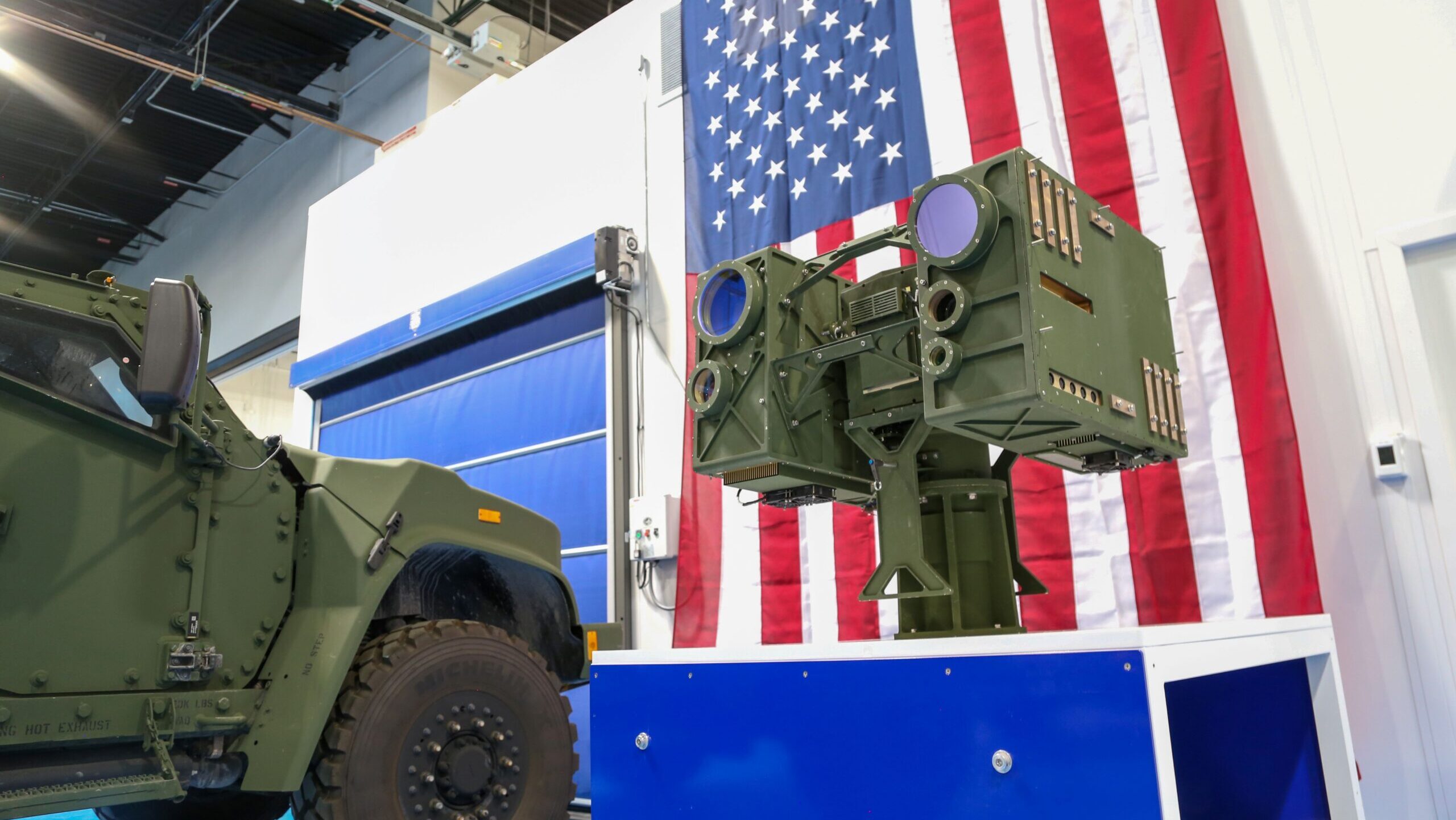
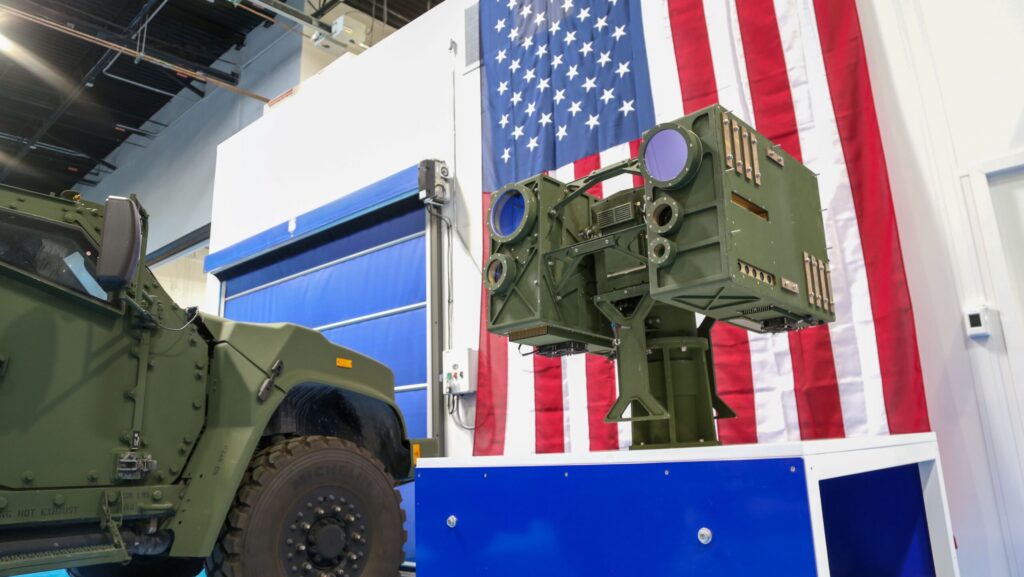
The system selected is AeroVironment’s LOCUST X3, a 30-kilowatt laser designed to defeat drone threats up to Group 3. In practical terms, that places the weapon in the Army’s rapidly expanding effort to counter uncrewed aircraft at lower cost than missile-based interceptors. The Army’s own framing of the award is significant: this is not another demonstration program or a limited technology experiment, but a production contract attached to a formal program of record.
That distinction matters because directed-energy weapons have spent years in a familiar cycle of tests, prototypes, and optimistic future timelines. The E-HEL award suggests the Army now sees at least one laser configuration as ready enough to begin fielding at scale.
Why lasers are attractive in counter-drone warfare
The case for a weapon like LOCUST X3 is straightforward. Drones are cheap, proliferating quickly, and increasingly central to modern battlefield operations. Defending against them with traditional kinetic systems can be effective, but it can also be expensive and logistically burdensome. High-energy lasers promise a different cost equation: once a system is powered and positioned, each engagement can be far less expensive than firing a missile at a relatively low-cost aerial threat.
That affordability has become more important as military planners adapt to the reality of mass drone attacks, loitering munitions, and persistent surveillance platforms. Systems that can handle repeated engagements without exhausting a stockpile of interceptors are especially attractive. The Army highlighted exactly that point in announcing the contract, saying directed-energy systems can defeat drones at much lower cost than more expensive kinetic weapons.
LOCUST X3 is powered by electric energy and generates what the Army described as a lethal high-energy laser beam. The intended mission is counter-unmanned systems defense, a role that continues to expand across theaters as both state militaries and non-state actors normalize drone use.

From small-batch production to broader deployment
AeroVironment executives indicated that initial capabilities will be delivered within a year. John Garrity, the company’s vice president of directed-energy systems, said the company had previously been scaling at tens of systems annually and can now produce into the twenties per year, with plans to move beyond that over the next 12 to 24 months.
Those production details offer a clearer picture of where the technology stands. The Army is not yet buying these systems in the hundreds, but it is ordering enough to require an industrial ramp rather than a laboratory workflow. Garrity also said he expects the systems to appear across combatant commands globally, reflecting how widely the demand signal for counter-drone tools has spread.
That expectation is credible on its face. Counter-drone defense is no longer a niche requirement tied to a single geography. It spans fixed-site defense, maneuver forces, logistics hubs, and expeditionary deployments. A laser weapon that can be fielded repeatedly across those environments would fill a gap between short-range guns, electronic warfare, and more expensive missile defenses.
A watershed moment, with caveats still to come
The Army’s acting chief of staff, Gen. Christopher LaNeve, described the program as a first-of-its-kind capability that will help formations defeat unmanned systems from the outset of operations. That language captures the Army’s broader ambition: to make directed energy a normal part of force design rather than a specialized add-on.
Still, the move into production does not erase the technical and operational questions that have long surrounded battlefield lasers. Their performance can be shaped by weather, atmospheric conditions, dwell time requirements, power availability, and the difficulty of engaging multiple targets in quick succession. None of those concerns disappears because a procurement milestone has been reached.
What changes with this contract is the burden of proof. Instead of asking whether the Army is interested in deploying lasers, the more relevant question now is how effectively these first production systems perform in operational use, and whether they can sustain readiness, maintenance, and deployment tempos that match conventional air-defense equipment.
The use of an Other Transaction Authority agreement also reflects the unusual path often taken by emerging defense technology. OTAs can speed acquisition and reduce some of the friction of traditional contracting channels, but they also draw attention to how the Pentagon is trying to move faster in areas where commercial iteration and battlefield urgency are outpacing older procurement models.

What the contract says about the next phase of air defense
The E-HEL award is important not because it proves every claim made about directed energy, but because it changes the status of the technology inside the Army. For years, lasers have been discussed as part of the future of air and missile defense. This contract makes them part of the present acquisition pipeline.
The immediate mission is narrow enough to be practical: defeating drones, especially those in the lower size classes that can overwhelm forces if engaged only with traditional interceptors. That is a smart entry point. It matches a real operational problem, fits the cost logic of laser engagement, and gives the Army room to prove the concept in a role where demand is already established.
If the first fielded systems perform well, the implications could extend beyond counter-drone missions. Production success would strengthen the argument for broader investment in mobile and layered directed-energy defenses. If performance falls short, the Army will have clearer evidence about where the limitations remain. Either way, the award marks a turning point: directed energy is no longer only a development story. It is now a procurement story too.
This article is based on reporting by Breaking Defense. Read the original article.
Originally published on breakingdefense.com