A large Navy engine contract arrives during a manufacturing transition
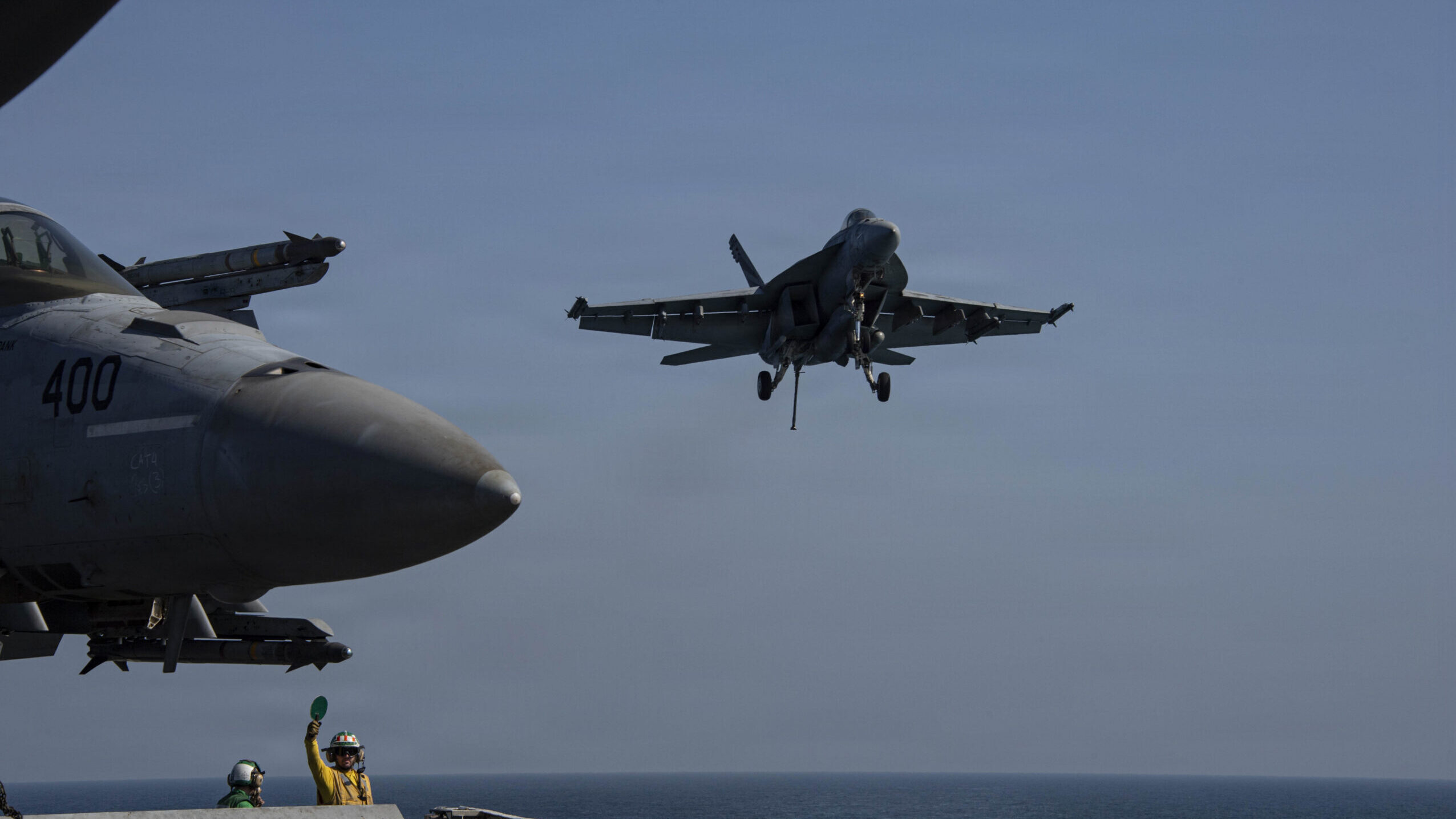
GE Aerospace has secured a Pentagon contract worth up to nearly $2.9 billion to supply parts for the F414 engine, the powerplant used in the Navy’s F/A-18 Super Hornet and EA-18G Growler fleets. On its face, the award is a substantial sustainment win tied to some of the U.S. military’s most important carrier-based aircraft. But the timing makes it more consequential than a routine support contract. The deal lands as GE is trying to rebalance its defense engine business around two different demands at once: sustaining the F414 for an aging but still heavily used naval fleet, and scaling production of the older F404 for a new generation of trainer aircraft.
That combination makes the award a useful snapshot of where military aviation procurement stands in 2026. Instead of moving cleanly from one engine generation to the next, the industrial base is being asked to do both legacy sustainment and renewed volume production at the same time. For GE, that means the contract is not just a revenue event. It is a test of whether the company can support aircraft that remain operationally central while retooling for higher-rate manufacturing elsewhere in its portfolio.
What the Pentagon awarded
According to a Defense Department announcement cited by Breaking Defense, the contract was issued as a performance-based logistics agreement and runs through August 2031 with no option periods. Performance-based logistics contracts generally pay suppliers against outcomes rather than simply the delivery of individual parts or services. In this case, the outcome focus matters because the Navy depends on the F414 to keep both strike and electronic attack aircraft ready for operations over the remainder of the decade.
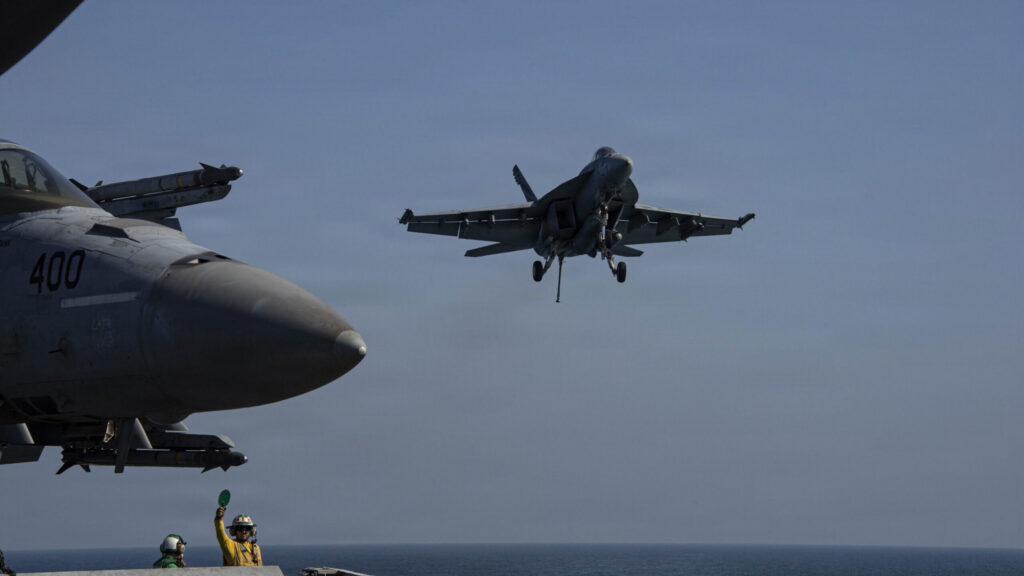
The F414 powers the F/A-18 Super Hornet fighter and the EA-18G Growler, two aircraft that continue to carry a significant operational burden for naval aviation. The article ties the award to the challenge of sustaining an aging fleet, which adds to the importance of dependable engine support. Even without new procurement headlines around those aircraft, the Pentagon still needs a parts and support pipeline robust enough to preserve readiness across years of ongoing use.
GE did not provide additional comment before publication, based on the source text. That leaves the contract notice and company remarks from a media tour as the clearest public signals of how management is thinking about the transition.
The bigger story is the F404 ramp
The more revealing part of the report is not only the F414 contract itself, but what GE executives said about the company’s production direction. Officials indicated that GE expects to roughly double F404 output over the next five years, driven by demand including the Air Force’s T-7 Red Hawk training jet. That is a notable shift because it suggests the company’s manufacturing mix is moving away from being dominated by the newer F414 and toward higher-volume production of an older design that is finding new institutional relevance.
Ryan Wood, GE’s executive plant manager for assembly and test operations, described the transition plainly: the company used to be “414 heavy” and is becoming “404 heavy.” That statement captures a broader defense-industrial reality. Programs do not always age out in a neat sequence. Sometimes the most urgent work is not the latest engine architecture, but the ability to build enough proven systems quickly and consistently for aircraft entering service now.
The T-7 context matters here. Trainer programs are often discussed as less glamorous than front-line fighters, but they place real demands on the supplier base because they require scalable production and long support tails. If the F404 becomes a higher-volume anchor for GE over the next several years, the company’s factory strategy, supplier relationships, and labor planning may all need to adapt accordingly.
Industrial base pressure is moving down the supply chain
GE’s leadership also signaled that the production challenge is not confined to final assembly. Amy Gowder, president and CEO of the company’s defense and systems business unit, said GE is exploring new ways to produce engines like the F404 at greater scale, including working with a different supply base that may be accustomed to higher-volume, commercial-off-the-shelf-style standards.
That comment is significant because it points to a recurring defense manufacturing problem: the bottleneck is often not the prime contractor’s intent to build more, but whether the supplier network can support the required pace. If GE is looking for suppliers used to higher throughput, it suggests that traditional defense sourcing practices may not be sufficient for the mix of affordability, speed, and volume now required.
In that sense, the F414 sustainment contract and the F404 ramp are linked. Supporting one engine family while expanding another puts stress on procurement planning, workforce allocation, and quality systems simultaneously. Performance-based logistics may help align incentives on the sustainment side, but it does not erase the underlying production complexity. The challenge is operational as much as contractual.
Why the Navy and Air Force implications differ
The Navy’s interest is stability. The Super Hornet and Growler fleets need dependable engine parts and support as they continue serving as core carrier air wing assets. Readiness, turnaround time, and predictable sustainment performance are the immediate priorities. A logistics contract running to August 2031 provides a long enough horizon to matter for planning, especially if it helps reduce disruption in a mature fleet.
The Air Force’s interest, by contrast, is expansion. The T-7 Red Hawk represents future training capacity, which means the F404 side of GE’s business is less about keeping a known fleet in the air and more about ensuring production can meet expected program demand. Those are different problem sets. One is primarily about sustaining installed capability. The other is about creating manufacturing headroom.
GE now has to execute both at once. That is why the contract is important beyond its dollar value. It highlights the way defense suppliers are increasingly judged not only on technical performance, but on whether they can manage portfolio transitions without allowing one program’s needs to undercut another’s.
A sign of how defense procurement is evolving
There is also a policy angle embedded in the award structure. Performance-based logistics has long been promoted as a way to tie contractor compensation more closely to outcomes that matter to the military, such as availability and readiness. A nearly $2.9 billion deal under that model shows the Pentagon remains willing to use long-duration, outcome-oriented contracts for critical aviation support. That matters for other suppliers watching how the department allocates risk and reward in sustainment.
At the same time, the article suggests that contracting innovation alone is not enough. The industrial base still has to absorb shifts in product mix, supplier strategy, and demand timing. If GE succeeds, it will demonstrate that a major propulsion manufacturer can sustain a front-line naval engine family while rapidly building capacity around another line. If it struggles, the issue will likely be less about the contract form than about the limits of manufacturing agility in the defense sector.
What to watch next
The immediate significance of the award is clear: the Navy has committed to long-run support for the F414-powered Super Hornet and Growler fleets, and GE has locked in a sizable role in that effort through 2031. The more strategic question is whether the company can execute this sustainment mission while transforming itself into a higher-volume F404 producer.
That answer will help shape confidence not just in GE, but in the broader proposition that the U.S. defense industrial base can flex across overlapping generations of aircraft programs. In 2026, the pressure is no longer simply to invent the next system. It is to build, supply, and sustain multiple eras of capability at once. This contract shows that GE is now squarely at the center of that test.
This article is based on reporting by Breaking Defense. Read the original article.
Originally published on breakingdefense.com