Pentagon launches plan to expand access to classified workspaces
The U.S. Defense Department is moving to build a nationwide network of secure facilities intended to make classified work more accessible to a broader pool of contractors, especially smaller businesses that have long struggled to clear one of the military market’s most stubborn practical hurdles: finding a place to handle sensitive information.
The initiative, called the Secure Space Network, will create around 50 Sensitive Compartmented Information Facilities, or SCIFs, across the country. According to the announcement, the program is designed to give more companies physical access to accredited classified environments, which are required for handling some of the Pentagon’s most sensitive programs.
That matters because the ability to win defense work is not determined only by technical talent or manufacturing capacity. For many firms, particularly smaller companies and newer entrants, access to secure space can be a gating factor. If a company cannot review classified materials, store them properly, or host protected discussions, it can be excluded from programs before competition meaningfully begins.
Why SCIF access matters
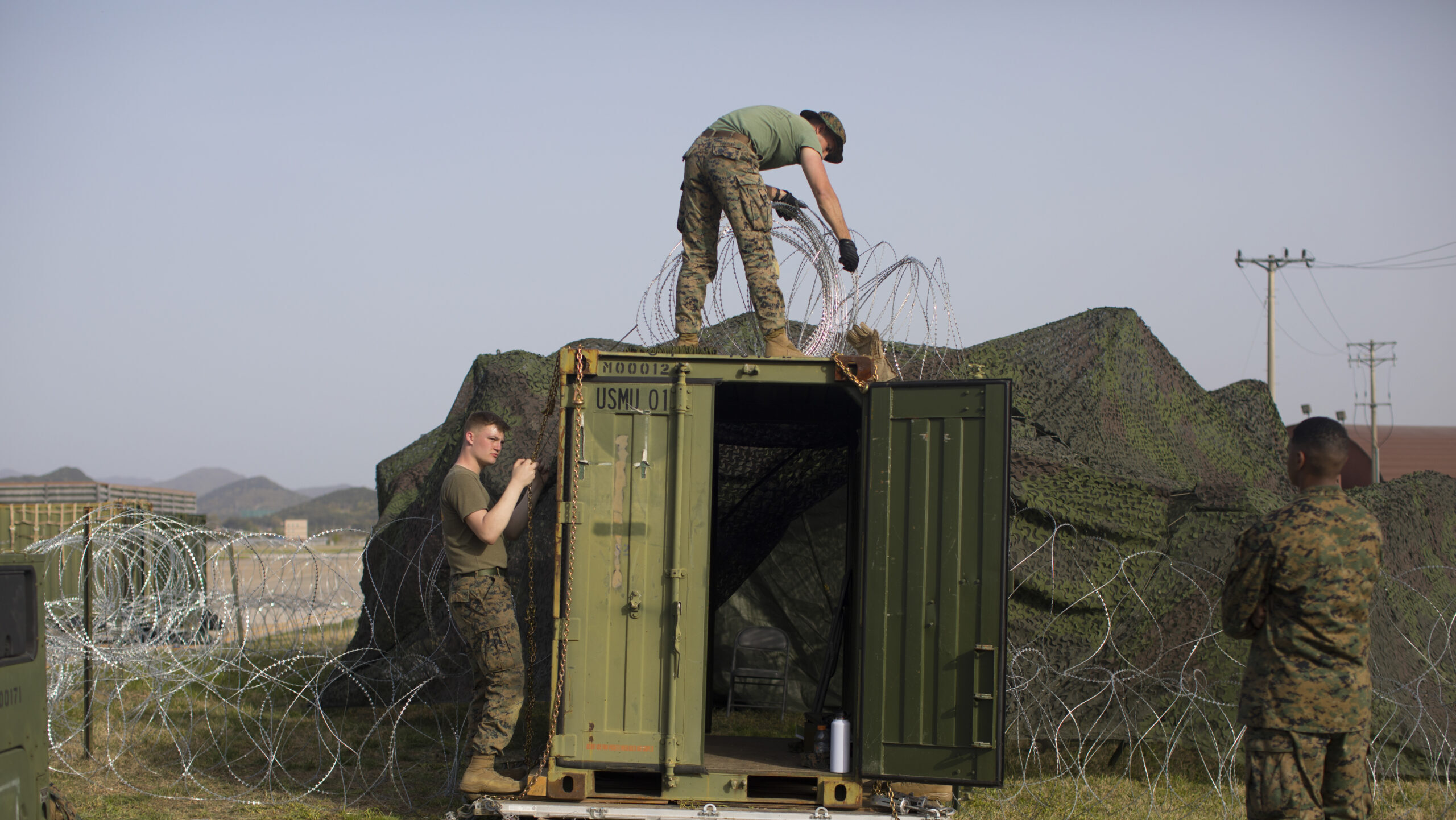
A SCIF is a hardened, accredited environment built to meet strict standards for processing, storing, and discussing sensitive compartmented information. The source text cites the National Institute of Standards and Technology definition of a SCIF as an area certified to meet intelligence-community security requirements. These spaces are designed to resist forced entry, audio interception, and electronic surveillance.
In practice, that infrastructure is expensive and difficult to establish. Large prime contractors and government facilities often have secure spaces already in place. Smaller firms frequently do not. That leaves them dependent on outside arrangements, limited local options, or exclusion from parts of the procurement pipeline.
The Defense Department’s framing is explicit: industry has identified access to classified environments as a major barrier to participation. The new network is meant to lower that barrier and enlarge the supplier base available for sensitive defense work.
That objective fits a broader shift underway in U.S. defense procurement. The Pentagon has been trying to pull more commercial technology firms, specialized manufacturers, and nontraditional vendors into its industrial base. But policy support alone does not solve basic infrastructure bottlenecks. Secure facilities are one of those bottlenecks, and they are especially relevant in sectors such as autonomous systems, advanced sensing, electronic warfare, cyber operations, and space-related defense programs.
A network, not a single buildout
The Secure Space Network is being positioned as more than a one-off construction effort. The source text says the initial production run is intended to establish a repeatable capability that can scale as requirements grow. The Pentagon also intends to build production capacity that can surge if demand for accredited workspaces increases quickly.
That language suggests the department is thinking about SCIF access as industrial infrastructure rather than isolated real estate. If implemented well, a repeatable model could reduce setup time, standardize deployment, and make it easier to place secure workspaces where specific missions or supplier clusters require them.
The facilities may be located on military installations, at industry-focused sites such as APEX Accelerators, and at other mission-relevant locations. That distribution model is significant. It implies the Pentagon wants secure access points closer to regional ecosystems where defense suppliers already operate or where it wants new capacity to emerge.
For small firms, geography can be as important as cost. A secure room hundreds of miles away is of limited operational value. A regional network of accessible accredited spaces could change the economics of participating in classified programs, proposal development, and protected collaboration.
What the move says about industrial policy
The office leading the effort is the Office of the Under Secretary of Defense for Acquisition and Sustainment’s Office of Industrial Base Growth. That is a useful clue to how the Pentagon sees the issue. This is not being presented mainly as a real-estate or compliance project. It is being framed as an industrial-base expansion tool.
The department’s public rationale is straightforward: make it easier for capable companies to contribute, strengthen the supplier base, and deliver needed capabilities faster and at greater scale. In other words, secure access is being treated as an enabler of competition, resilience, and speed.
That has strategic implications. U.S. defense officials have spent years warning about supply-chain concentration, fragile production capacity, and the difficulty of scaling advanced systems quickly. If classified access remains concentrated in a relatively small set of incumbents, the industrial base remains narrower than policymakers want it to be. Opening more secure work locations will not solve every bottleneck, but it addresses one that is unusually concrete.
It may also help firms move earlier into sensitive development programs. Many emerging defense technologies cross into classified territory before procurement reaches full scale. If smaller companies can engage sooner, the Pentagon may gain a larger pool of vendors during the stages when architectures, prototypes, and mission concepts are still taking shape.
Questions that remain
The announcement establishes intent, but several operational questions remain unanswered in the supplied material.
- How the facilities will be prioritized geographically and by mission area.
- What the access model will look like for private companies using shared secure infrastructure.
- How quickly the first facilities can be accredited and made available.
- Whether demand will outstrip supply if the network succeeds in attracting more nontraditional vendors.
There is also the question of whether shared SCIF access can be integrated smoothly into procurement workflows. Classified work often involves not only secure rooms, but also secure connectivity, approved devices, document controls, and program-specific handling rules. Physical space is foundational, but it is only one layer of the broader security stack.
Still, the Secure Space Network stands out because it addresses a problem defense startups and small suppliers have described for years in unusually direct terms. Rather than asking companies to overcome the secure-access barrier on their own, the Pentagon is proposing to build common infrastructure that reduces the burden up front.
If that buildout happens at the scale described, it could modestly but meaningfully shift who is able to compete for classified work. For a Defense Department seeking more suppliers, more regional capacity, and faster pathways from innovation to fielded capability, that is the point.
This article is based on reporting by Breaking Defense. Read the original article.
Originally published on breakingdefense.com