AST SpaceMobile lines up a recovery mission
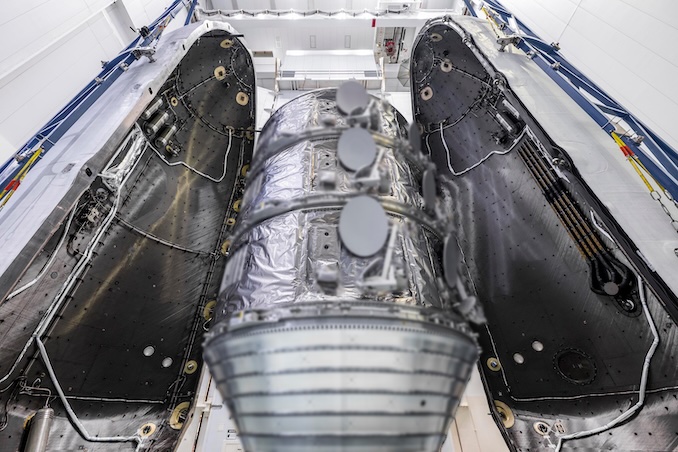
AST SpaceMobile is set to launch three Block 2 BlueBird satellites aboard a SpaceX Falcon 9, a mission that marks a significant attempt to regain momentum after the loss of BlueBird 7 last month. The company’s BlueBird 8, 9, and 10 spacecraft are scheduled to lift off from Space Launch Complex 40 at Cape Canaveral Space Force Station during a predawn window, with Spaceflight Now reporting a target time of 2:39 a.m. EDT on June 17.
The flight matters well beyond a routine rideshare or a simple fleet expansion. AST SpaceMobile is building a low Earth orbit constellation designed to deliver broadband connectivity directly to standard, unmodified smartphones in the United States and other markets. That ambition has put the company in a closely watched segment of the space industry, where satellite operators are racing to make direct-to-device connectivity commercially viable at scale.
In that context, the BlueBird 8, 9, and 10 mission is both an operational milestone and a test of resilience. A successful launch would help restore confidence after the BlueBird 7 mission failed to reach its intended result because of an upper stage anomaly on Blue Origin’s New Glenn rocket. By quickly moving to place three more satellites in orbit, AST SpaceMobile is showing that its deployment campaign is still active despite the earlier setback.
What is launching and why it matters
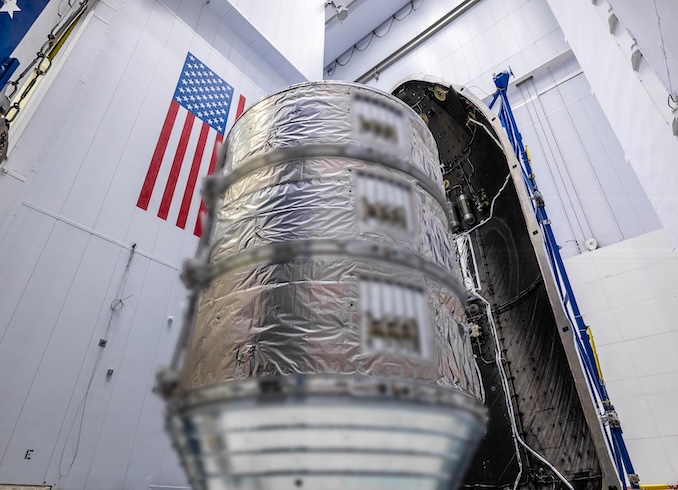
The three satellites on this flight are part of the company’s Block 2 BlueBird generation. According to the supplied source text, each is a six-ton spacecraft, underscoring the scale of the hardware AST SpaceMobile is sending to orbit. These are not small demonstration platforms. They are substantial assets intended to support the company’s broader architecture for space-based mobile broadband.
The company’s core proposition is unusual and strategically important: connecting directly with conventional smartphones rather than requiring users to adopt special satellite handsets or bolt-on accessories. If executed successfully, that approach could extend coverage into areas where terrestrial cellular infrastructure is sparse, damaged, or economically impractical to build. It also aligns with a wider industry push to blend satellite and terrestrial communications into a more seamless service model.
The launch is notable for another reason. SpaceX has previously launched AST SpaceMobile satellites, but this mission is described as the first carrying the Block 2 iteration of the BlueBird spacecraft. That makes it more than a replacement effort. It is also an early deployment of a newer configuration that could shape the next phase of the company’s network buildout.

SpaceX’s role and the mission profile
For SpaceX, the mission adds to the company’s dense launch cadence and its growing role as the default transportation provider for commercial satellite operators that need dependable access to orbit. The Falcon 9 assigned to the mission will use first stage booster B1077, which is slated for its 29th flight. That reuse figure illustrates how routine booster recovery and reflights have become in the Falcon program, even for missions carrying large commercial payloads.
After liftoff, the rocket is expected to fly on a north-easterly trajectory. A little more than eight minutes into the mission, B1077 is set to attempt a landing on the drone ship A Shortfall of Gravitas in the Atlantic. If successful, Spaceflight Now reports that it would be the 156th landing on that vessel and the 625th booster recovery for SpaceX overall, further extending the company’s lead in reusable launch operations.
The upper stage is scheduled to deploy the three satellites beginning about 54.5 minutes after liftoff, with the remaining spacecraft separating roughly five minutes apart. That staggered deployment sequence is standard mission practice, but it also highlights how precisely timed commercial satellite launches have become. Every release event has to be coordinated for orbital placement, vehicle performance, and spacecraft commissioning plans.
Weather looks mostly favorable
Launch weather appears supportive, though not completely risk free. The 45th Weather Squadron forecast a 90 percent chance of favorable conditions at the launch pad. Even so, meteorologists were monitoring a low to moderate risk of unacceptable weather conditions in the area of the drone ship used for booster recovery.
The main concerns cited in the source material were cumulus clouds and anvil clouds, along with lingering atmospheric moisture from previous thunderstorms in the Cape area. Those are familiar constraints in Florida launch operations, where the window can look excellent on one metric and still face complications tied to downrange recovery or specific cloud rules.
For AST SpaceMobile, the weather picture is important because schedule certainty matters after a recent mission loss. A clean launch opportunity helps the company avoid additional delays in getting replacement and expansion capacity on orbit.

A response to the BlueBird 7 failure
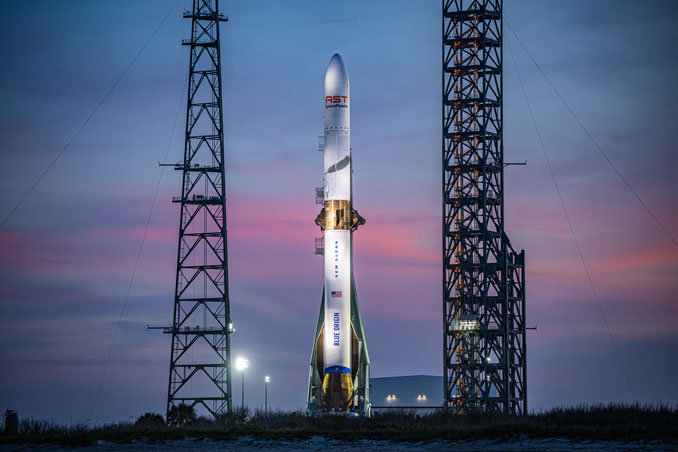
The broader backdrop is the failure of the BlueBird 7 mission roughly two months earlier. That spacecraft launched on Blue Origin’s New Glenn rocket. While Blue Origin recovered its first stage booster, the mission suffered an upper stage anomaly, preventing the intended outcome for AST SpaceMobile. In practical terms, the company lost a satellite and, with it, time in a competitive market.
That makes this Falcon 9 mission consequential in two ways. First, it replenishes capacity after an outright loss. Second, it demonstrates that AST SpaceMobile has an alternative path forward through another launch provider with an established record in commercial deployment. The ability to continue launching after a mission failure is often as important as the technical design of the satellites themselves. Investors, partners, and customers all look for signs that a company can absorb setbacks without stalling its roadmap.
There is also a symbolic dimension. Rather than returning with a single replacement spacecraft, AST SpaceMobile is attempting to send three satellites at once. That raises the stakes for the mission, but it also signals a more assertive recovery effort.
What to watch next
If the launch and deployments proceed as planned, attention will quickly shift from ascent to on-orbit performance. The immediate questions will center on spacecraft health, commissioning, and how quickly BlueBird 8, 9, and 10 can contribute to the company’s growing direct-to-smartphone network.
More broadly, this mission is a reminder that the direct-to-device satellite race is entering a more operational phase. Demonstrations and concepts still matter, but launch execution, satellite replacement, and deployment tempo are becoming the real tests. AST SpaceMobile’s latest mission fits squarely into that transition.
After the disappointment of BlueBird 7, the company now has an opportunity to shift the narrative. A successful Falcon 9 flight would not erase the earlier loss, but it would show that AST SpaceMobile can keep building its constellation and pursuing its central promise: broadband connectivity from space to the phones people already own.
This article is based on reporting by Spaceflight Now. Read the original article.

Originally published on spaceflightnow.com