Could primordial black holes ignite white dwarfs?
A new astrophysics study argues that one of the most elusive candidates for dark matter may leave a surprisingly visible calling card: Type Ia supernovae. The idea is that primordial black holes, if they exist in the right mass range, could pass through white dwarfs, heat stellar material enough to trigger runaway nuclear burning, and set off an explosion that astronomers could later identify by its remnants and chemical signatures.
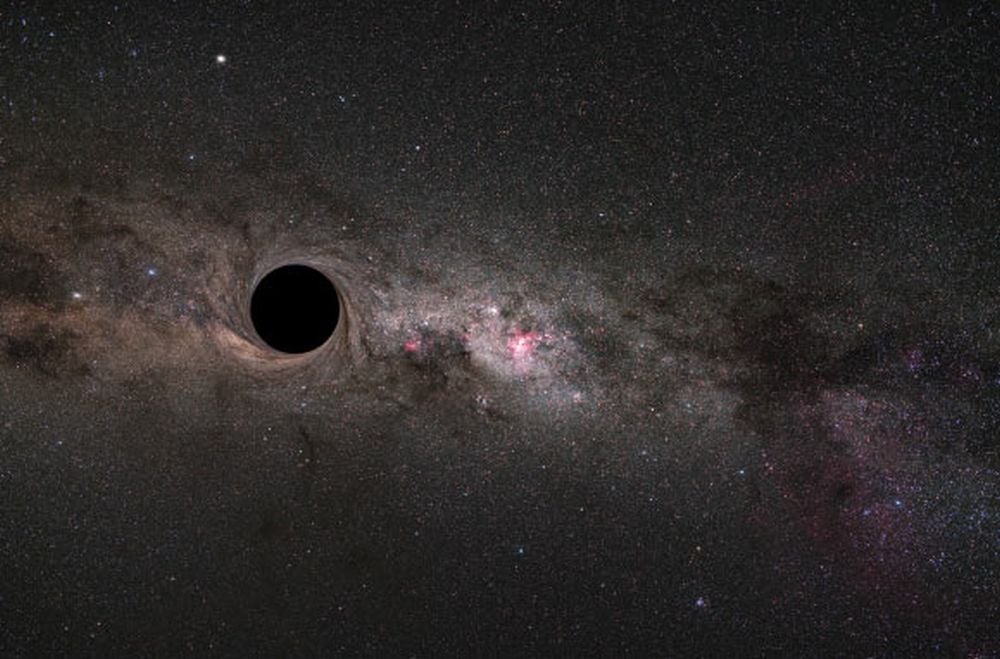
The work, published in The Astrophysical Journal according to the source report, focuses on asteroid-mass primordial black holes. These objects remain hypothetical. Unlike black holes formed by collapsing stars, primordial black holes would have formed shortly after the Big Bang from dense clumps of matter in the early universe. For decades, they have remained an intriguing explanation for at least part of dark matter, the unseen mass that appears to shape galaxies and cosmic structure but has not been directly detected.
What makes the new research notable is not simply that it keeps primordial black holes in play. It proposes a concrete observational path. Rather than trying to detect the black holes directly, astronomers could look for the effects they would have on other objects, especially white dwarfs.
Why white dwarfs matter in this theory
White dwarfs are dense stellar remnants left behind after stars like the Sun exhaust their fuel. In standard models of Type Ia supernovae, a white dwarf in a binary system accumulates matter from a companion star until conditions become unstable and a thermonuclear explosion follows. These explosions are especially important in astronomy because they are bright, widespread, and used as cosmic distance markers.
The new paper explores another route. If a primordial black hole falls into or passes through a white dwarf, its gravity can produce intense tidal heating in the star’s interior. According to the source text, once local material reaches roughly half a billion Kelvin, nuclear burning can begin. If the burning region is large enough, that can escalate into thermonuclear runaway and a Type Ia supernova.
In other words, the white dwarf would not need a conventional buildup of borrowed mass from a companion star to explode in exactly the same way. A tiny but extremely dense interloper could provide the trigger.
This matters because it turns a dark-matter question into an astronomical forensics problem. If primordial black holes can set off these events, then some fraction of observed supernovae or supernova remnants may already contain evidence of their existence.
From speculation to testable signatures
Primordial black holes have long attracted attention partly because they are difficult to rule out across every possible mass range. They are hypothetical, but they are not unconstrained fantasy. Researchers can compare the consequences of different primordial-black-hole populations against observations of stars, galaxies, lensing events, and the chemical history of the universe.
The new study adds another constraint channel by asking what repeated primordial-black-hole-triggered explosions would do to the Milky Way over time. If too many white dwarfs were ignited this way, the resulting supernova remnants and chemical abundances would not match what astronomers actually observe. If the numbers do line up in some range, that surviving range becomes more interesting as a viable dark matter candidate.
That is why the paper’s title, as cited in the report, emphasizes comparison with supernova remnants and galactic chemical evolution. The researchers are not only proposing a mechanism. They are trying to connect it to records the universe has already preserved: the debris fields left by past supernovae and the distribution of heavy elements those explosions helped create.
The logic is powerful because it uses ordinary astronomical evidence to probe an extraordinary hypothesis. A primordial black hole might be too small, dark, and rare to catch directly. But if it triggers a white dwarf explosion, the event does not stay hidden. It changes the sky.
What astronomers would look for
The report says such explosions should leave an observable signature. That does not mean every unusual Type Ia supernova automatically points to a primordial black hole. It means astronomers can look for patterns in the remnants, rates, and chemistry that differ from standard binary-star scenarios.
One likely line of inquiry is whether some Type Ia events seem to occur without the usual companion-star setup expected in traditional models. Another is whether the elemental yields from certain explosions fit better with an internal trigger caused by a passing compact object than with gradual accretion. Over time, surveys of supernova remnants, stellar populations, and galactic abundances could either strengthen or weaken the case.
Even a null result would be useful. If observations fail to support the expected signature, astronomers can exclude more of the primordial-black-hole parameter space. Dark matter research advances not only by discoveries, but by removing plausible options with better evidence.
The broader appeal of the study is that it gives a famously hard problem a falsifiable edge. Dark matter candidates are often discussed in terms of invisible particles or exotic objects that remain stubbornly beyond direct reach. This work reframes one candidate as something that may reveal itself through violent, measurable astrophysical events.
A small object with outsized implications
The concept also carries a certain scale shock. The objects under discussion are described as asteroid-mass primordial black holes, not giant monsters on the scale of stellar remnants or galactic cores. Yet because a black hole’s effect depends on density and gravity as much as size, an object that small could still catastrophically disrupt a white dwarf under the right conditions.
That asymmetry is part of what makes primordial black holes so compelling in theory. They could be cosmologically important while remaining individually hard to see. The challenge has always been turning that theoretical plausibility into observational leverage. By linking primordial black holes to Type Ia supernova triggers, the new study attempts exactly that.
No direct detection has happened here, and the source report is careful to note that primordial black holes remain hypothetical. But the research narrows the distance between speculation and measurement. It suggests that the search for dark matter may not depend only on underground detectors or particle accelerators. Some of the evidence could already be scattered across the remnants of exploded stars.
If the idea holds up, astronomers may be able to use one of the sky’s brightest events to investigate one of cosmology’s darkest mysteries. That would make Type Ia supernovae more than distance markers or stellar endpoints. They would become a potential test bench for the early universe itself.
This article is based on reporting by Universe Today. Read the original article.
Originally published on universetoday.com