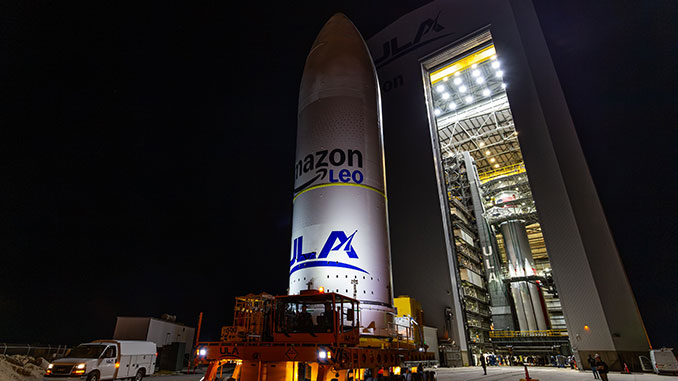
ULA targets a November 13 return for Vulcan
United Launch Alliance says its Vulcan rocket is scheduled to return to flight on Friday, November 13, ending a nine-month pause after recurring problems involving the vehicle’s solid rocket boosters. The planned Vulcan Leo 1 mission will carry 40 satellites for Amazon’s Leo internet service and will mark the heavy-lift rocket’s fifth flight since its 2024 debut.
The launch is significant for more than its payload. It will be the first Vulcan mission to use an updated nozzle design on the Northrop Grumman-built solid rocket motors involved in two previous in-flight anomalies. It will also be the first flight of Vulcan configured with six strap-on solid rocket boosters, a more powerful variant of the launch vehicle.
For ULA, the mission is a practical test of whether a rocket that continued to reach intended orbits despite earlier failures can now demonstrate a more reliable path forward. For Amazon, it is another launch in the build-out of its Leo satellite network, which already has nearly 400 satellites in orbit.
Two nozzle failures led to the stand-down
The immediate backdrop to the return-to-flight plan is a pair of nozzle incidents involving the 63XL Graphite Epoxy Motors used on Vulcan. On the rocket’s second flight, a nozzle on one of two solid boosters disintegrated. A similar issue occurred during Vulcan’s fourth flight, the USSF-87 mission in February 2026, when one of four boosters suffered a nozzle failure less than 30 seconds after liftoff.
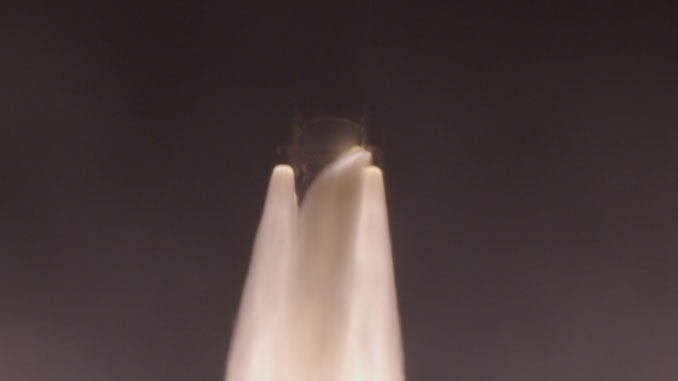
In both cases, the rocket’s methane-fueled first stage and hydrogen-fueled Centaur upper stage compensated for reduced and asymmetric thrust, allowing the missions to reach their planned orbits. That outcome avoided a mission loss, but it did not remove the engineering concern. A launch system designed for commercial, civil and national-security missions cannot treat repeat anomalies as routine, especially when the affected component is central to the vehicle’s lift capability.
After the February event, ULA, Northrop Grumman and the U.S. Space Force formed an industry-government team to investigate. ULA has not publicly detailed the investigation’s specific findings. The company said, however, that the group identified several potential contributors and addressed them with design and process changes to the nozzle.
An updated design moves from analysis to flight test
The November mission will use the improved nozzle design. ULA said further testing and analysis will continue in parallel with the flight, and argued that flying the revised hardware provides valuable data to validate the changes while supporting customers.
That framing captures the balance ULA is trying to strike. Ground tests remain essential, and Northrop Grumman conducted a 63XL motor test firing earlier in 2026 as part of the effort to resolve the issue. But a full launch exposes the rocket and its boosters to the integrated conditions that matter most: ignition, ascent loads, changing atmospheric pressure, interactions with the rest of the vehicle and mission-level guidance demands.
The new mission’s six-booster configuration adds another layer of importance. More boosters offer added performance, but they also create a demanding first minutes of flight in which the upgraded nozzle design must operate across multiple motors. A successful mission would not turn one flight into a complete reliability record, but it would give ULA its first flight data from the modified design and its first demonstration of this higher-booster-count version of Vulcan.
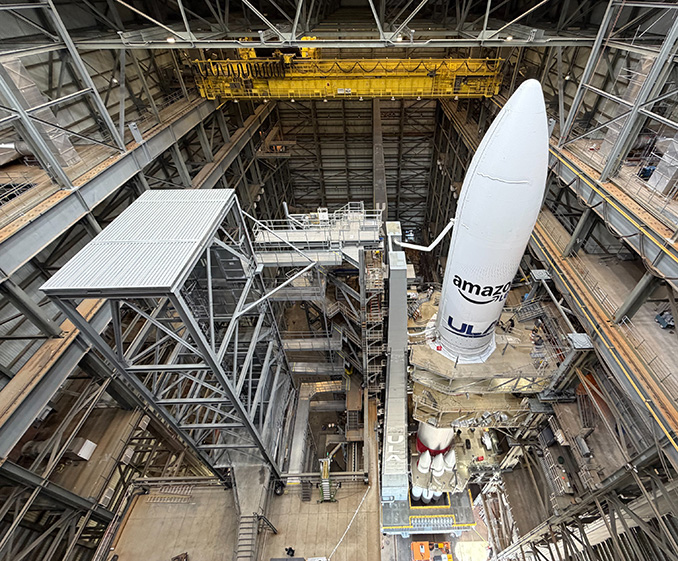
Amazon Leo adds commercial urgency
The payload is 40 satellites for Amazon Leo, the company’s broadband constellation. The satellites are expected to deploy from an adapter on Vulcan’s Centaur upper stage over roughly half an hour. Each successful batch matters to a network that needs a large on-orbit population before it can provide broad service.
Launch providers and satellite-constellation operators are tightly linked by schedule. A delayed rocket can ripple into deployment milestones, service planning and competitive positioning. At the same time, putting a major batch of satellites on a vehicle returning from a stand-down underscores the commercial value of bringing Vulcan back into service.
Vulcan’s next steps also have implications beyond Amazon. The U.S. Space Force is still being asked what work, if any, remains before the rocket is cleared again to fly national-security payloads. The answer will depend on the government’s assessment of the investigation, the design changes and the evidence generated by subsequent flights.
What to watch on launch day
- Whether the November 13 target holds as launch preparations progress.
- The performance of the updated solid-booster nozzles during the high-stress opening phase of ascent.
- How the six-booster configuration performs on its first Vulcan flight.
- The deployment of all 40 Amazon Leo satellites from Centaur.
- Any additional disclosure from ULA, Northrop Grumman or the Space Force about the earlier anomalies and national-security certification.
Vulcan’s return is therefore not simply another launch on a crowded manifest. It is a consequential validation flight for a rocket meant to serve a broad set of customers. Reaching orbit again would be important; demonstrating that the redesigned booster hardware works as intended will be the mission’s central technical measure.
This article is based on reporting by Spaceflight Now. Read the original article.
Originally published on spaceflightnow.com