NASA prepares to explain a new way of selecting science missions
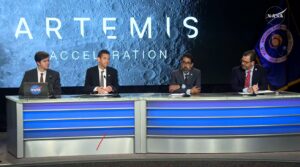
NASA’s Science Mission Directorate is preparing to describe a revised approach for competing future science missions, a change that could reshape how researchers bring ideas forward to the agency. The virtual town hall, led by Science Mission Directorate Associate Administrator Nicky Fox and other NASA science leaders, is scheduled for Monday, October 26.
The approach is called Competition Model 2.0. Its central premise is straightforward: mission proposals should initially compete on the strength of their scientific case, rather than requiring teams to produce extensive engineering, cost and implementation work before the agency is ready to make a selection.
That shift addresses a persistent tension in mission planning. Ambitious space-science concepts need careful technical definition, but generating that definition can demand significant time and funding from institutions and research teams. NASA’s existing two-step process has required concepts to progress through a lengthy path before final decisions are made.
A response to a burdensome process
Fox said the revised model begins with the idea of competing “on the science first.” In her description of the forthcoming framework, detailed engineering plans, cost estimates and implementation work would not be demanded until they are needed for a decision.
NASA has acknowledged concerns about the current process, including the years it can take to move mission concepts through two stages, contract-management difficulties, unpredictability and insufficient funding. The agency’s stated aim is to reduce the burden of advancing promising ideas while preserving a path to evaluate whether those ideas can ultimately be delivered.
That balance is important because a mission competition is not simply a contest of scientific ambition. Spacecraft, instruments, launch opportunities, operations and budgets all shape whether an idea can become a real mission. Deferring some of that work could make the early phase more accessible, while putting greater weight on NASA’s later reviews to ensure selected concepts are technically and financially viable.

Why the change matters
NASA science missions are a major route for investigating planets, the Sun, Earth, the wider solar system and the universe beyond it. The structure of competitions influences which institutions can participate and how much effort is spent before a proposal is selected.
A science-first opening may particularly matter for teams that have strong research questions but fewer resources to prepare detailed implementation packages at the outset. It could also allow NASA to consider a broader set of concepts before asking finalists to invest in more mature technical designs.
The model is not presented as abandoning practical scrutiny. Instead, it changes the sequence in which science, engineering and cost information are expected. The agency’s town hall is expected to provide the fuller details needed to judge how that sequence will work in practice, including how candidates will move through later phases.
A busy week for planetary science
The briefing coincides with the annual Division on Planetary Sciences meeting of the American Astronomical Society in Spokane, Washington. The meeting runs through the end of the week and is a regular venue for planetary-science research announcements and awards.
Among the honorees, The Planetary Society’s Casey Dreier and Jack Kiraly are set to receive the 2026 DPS Masursky Award for “Saving NASA Science.” The recognition follows their advocacy against proposed deep cuts to NASA science in the Trump administration’s fiscal year 2026 budget proposal.
For the space-science community, the timing underscores the connection between mission-selection rules and the wider funding environment. Researchers can produce new concepts only if they have a credible route to compete for missions and an agency budget capable of supporting them.
What comes next
The NASA town hall is open to the public and will be the first detailed opportunity for scientists and interested observers to hear how Competition Model 2.0 is intended to operate. The key questions will be whether the new approach shortens early proposal work, improves predictability and still supplies NASA with enough information to select missions responsibly.
If the model performs as intended, it could alter the entry point for future science missions: researchers would begin by making the clearest possible case for the discovery they want to pursue, with deeper implementation work following only when it can directly inform NASA’s choice.
This article is based on reporting by spacepolicyonline.com. Read the original article.
Originally published on spacepolicyonline.com