SpaceX sets a new recovery goal for Starship
SpaceX plans to attempt something it says has never been done with an orbital launch vehicle: recover both stages of Starship on a single test flight. Founder and chief executive Elon Musk announced the goal during the company’s third-quarter earnings call on October 20, saying the next test flight is targeted for November.
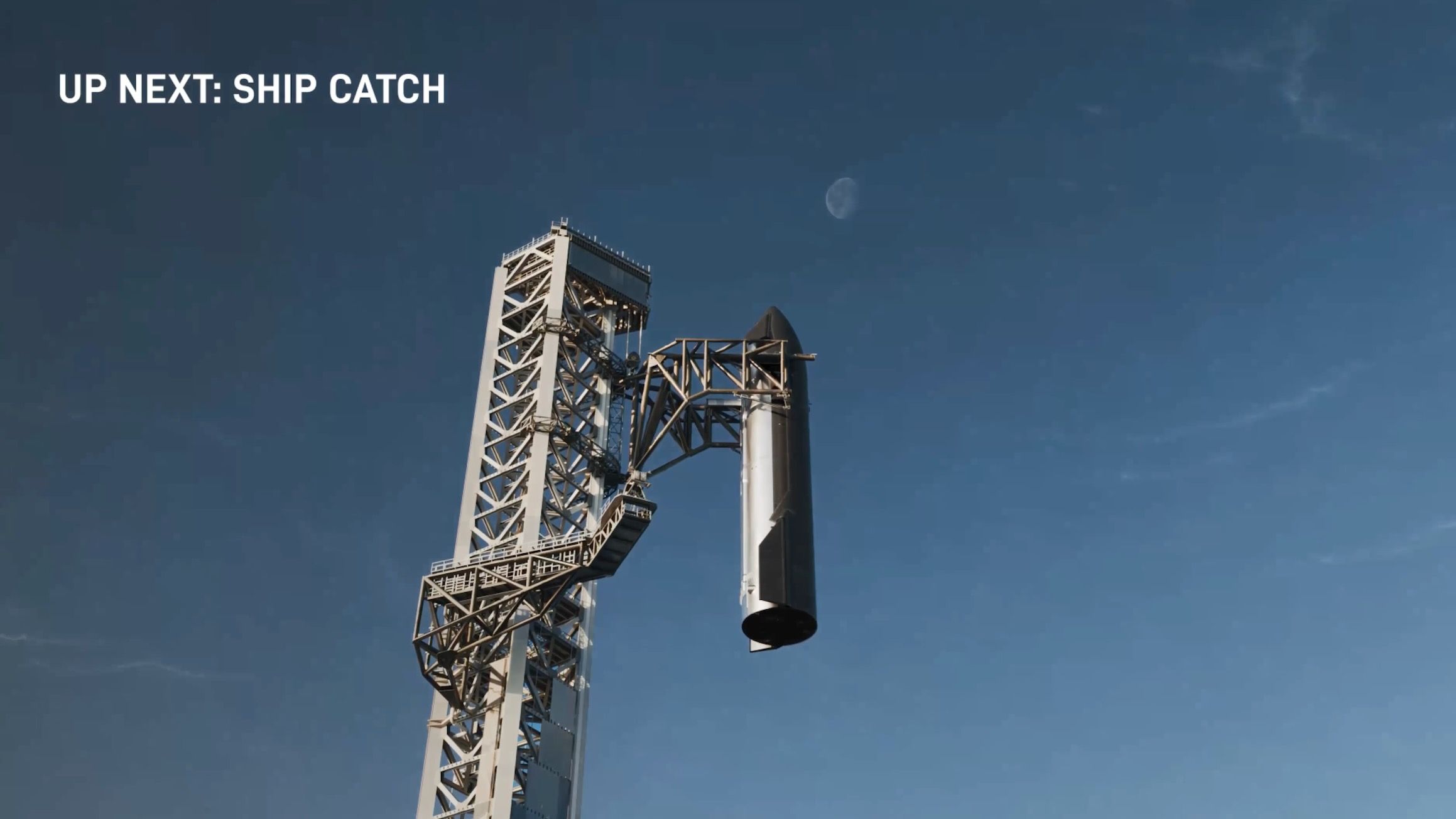
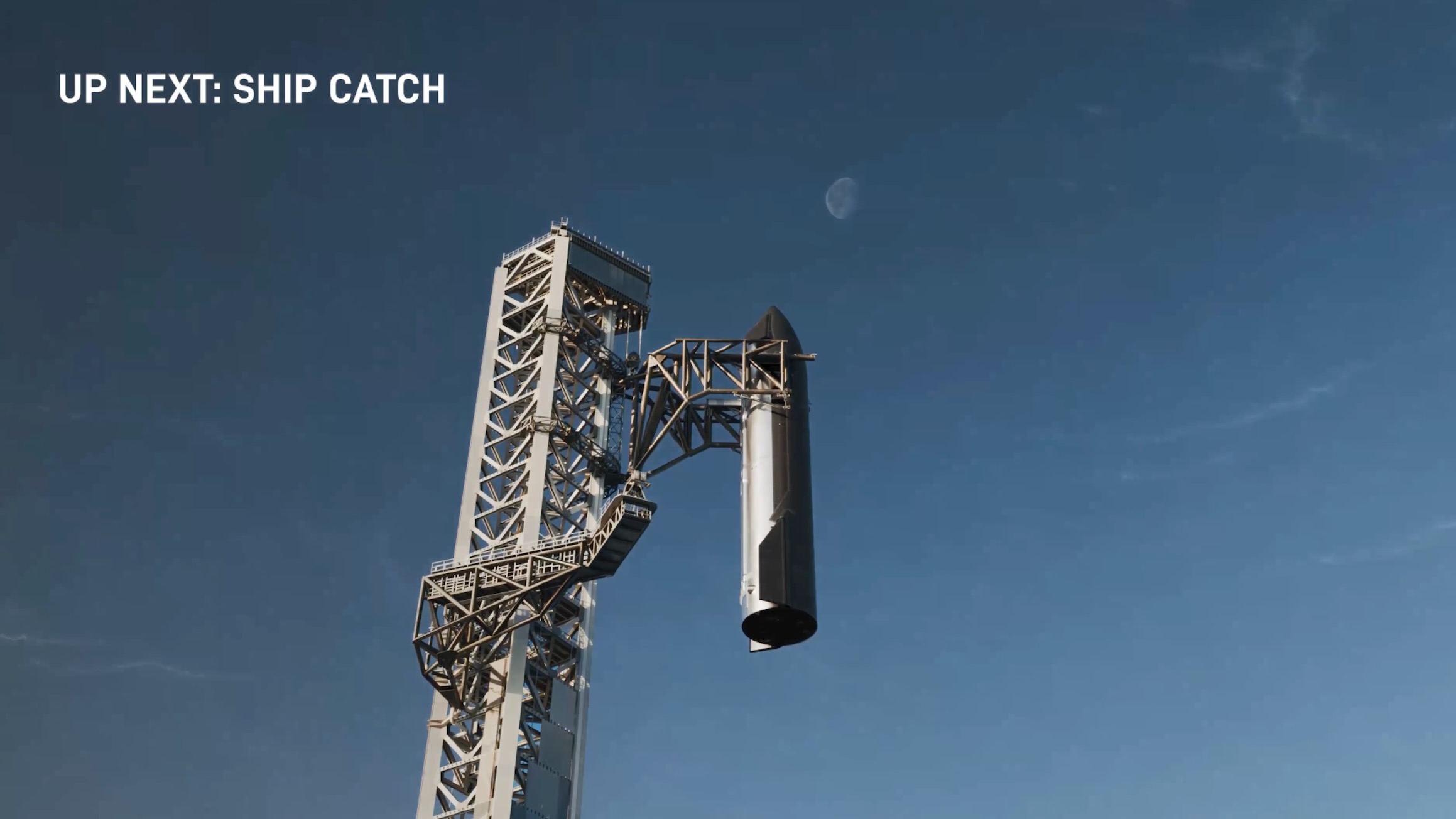
The planned attempt would involve catching the Super Heavy booster and the Ship upper stage at the launch tower using the tower’s mechanical arms, often referred to as “chopsticks.” If successful, it would extend SpaceX’s unusual recovery approach from the lower stage to the full two-stage system.
The company’s ambitions for Starship rest heavily on that outcome. Starship is designed for full and rapid reusability, and SpaceX argues that repeated reuse is essential to lowering the cost and increasing the flight rate needed for large-scale missions beyond Earth.
How the double catch would work
Starship consists of two stages. The lower-stage Super Heavy booster provides the initial thrust needed to leave the launch site. The upper stage, known as Ship, is designed to continue toward orbit and ultimately serve as a spacecraft.
Unlike SpaceX’s Falcon 9 and Falcon Heavy boosters, which return to landing pads or drone ships, Starship’s recovery concept brings the vehicles back to their launch tower. The tower’s arms would capture them directly, allowing SpaceX to inspect, refurbish and prepare the hardware for another flight without a conventional landing system at the recovery point.
SpaceX has already pursued tower-catch operations for Super Heavy. The next proposed milestone is to use the same basic approach for Ship as well. A successful double catch would therefore demonstrate recovery of both major components of the launch stack rather than recovery of only the booster.

Why full reuse is central to the program
Starship is the largest and most powerful rocket yet built, standing more than 400 feet, or 122 meters, when fully stacked. That scale is tied to an equally large operational ambition: a vehicle that can be turned around and flown repeatedly at a much higher cadence than conventional launch systems.
Musk described full recovery of an orbital launch vehicle as a major technological milestone. His broader argument is that sustained activity beyond Earth will require launch hardware that can be reused rapidly, rather than discarded after a single mission. SpaceX has linked the Starship program to long-term plans for missions to Mars and other large exploration efforts.
The economics are central. Reuse does not eliminate the technical challenges of operating a launch system, but it can change the cost structure if hardware can return in good condition and be readied efficiently for the next flight. The tower-catch concept is intended to support that faster inspection, refurbishment and relaunch cycle.
A difficult test, not a completed capability
The announced plan is an upcoming test objective, not an accomplished recovery. Musk said he viewed success as more likely than not, but the attempt remains subject to the uncertainties of developmental flight testing.
Recovering either stage requires precise guidance and control during descent. Recovering both on the same mission adds operational complexity, including the need to coordinate vehicle trajectories and tower operations. The test would be especially significant because Ship is the upper stage intended to reach orbital flight conditions before returning.
SpaceX’s approach also differs from the partial reusability of Falcon 9 and Falcon Heavy. Those systems recover their boosters, while their upper stages are expendable. Starship’s stated design goal is to make both stages reusable, which is why a successful double catch would represent a distinct step for the company.

What to watch on the next flight
- Whether the November target holds and the next Starship test flight proceeds as planned.
- Whether Super Heavy and Ship each return to the launch tower for capture attempts.
- How the hardware performs through ascent, descent and the final guidance phase.
- What SpaceX reports about inspection, refurbishment and potential readiness for reuse after the flight.
SpaceX has said it wants to operate Starship at an extraordinary cadence, with Musk previously envisioning more than 10,000 launches per year by 2030. That figure depends on far more than a single successful test: the vehicles would need to be reliable, recoverable and rapidly reusable at a scale not yet demonstrated.
Still, the proposed flight is a clear marker of the program’s direction. A double catch would not by itself prove routine reuse, but it would test the central premise of Starship’s architecture—that both stages can return to the launch site and become assets for the next mission rather than hardware lost after one flight.
This article is based on reporting by Space.com. Read the original article.
Originally published on space.com