The European-Chinese Smile mission has entered its science phase, marking a major operational milestone for a spacecraft built to observe how Earth responds to the stream of charged particles flowing from the Sun. On 23 September, the mission was declared ready to begin science operations after an in-space commissioning campaign that followed its May launch and arrival in its target orbit in June, according to the European Space Agency.
Smile is designed to investigate the connection between solar activity, Earth’s magnetic environment and the auroras. That work places it squarely in the expanding field of space-weather science, where researchers seek to better understand processes that can affect electronic infrastructure on Earth and in orbit. The mission carries four instruments intended to observe complementary parts of the interaction between the solar wind and Earth’s magnetic field.
From launch to science readiness
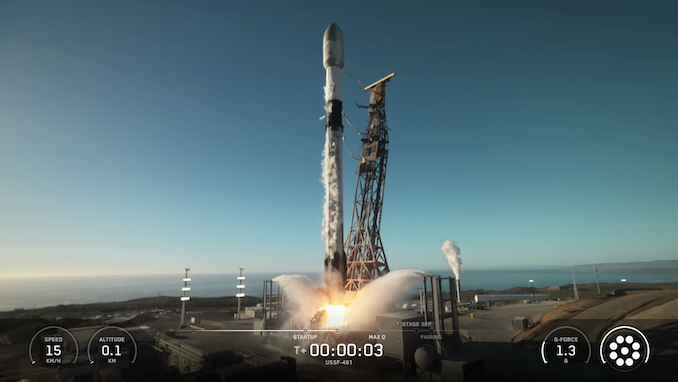
The spacecraft launched on 19 May and reached its target orbit for science operations on 20 June. ESA says teams in Europe and China then spent the following months commissioning the spacecraft: deploying mechanisms, powering on units, checking communications between spacecraft and ground, and resolving issues found in flight.
That process is essential because a spacecraft’s behavior in orbit cannot be assumed to match every aspect of ground testing. Instruments and systems must operate amid the thermal, radiation and optical conditions of space, while their data links and operating sequences must work reliably over long periods. Smile’s declaration of science readiness signals that the mission has completed enough of that preparation to begin its planned observations.
ESA described the milestone as the result of collaboration between the European and Chinese teams. The partnership is a notable feature of Smile itself: the mission combines contributions from both sides to study a global physical system that links the Sun and Earth.
Four ways to observe space weather
Smile carries four science instruments: a soft X-ray imager, an ultraviolet aurora imager, a magnetometer and a light ion analyser. Together, they are intended to collect information about solar storms, geomagnetic storms and the processes through which solar activity interacts with Earth’s magnetic field.

The ultraviolet aurora imager, known as UVI, has already returned the mission’s first publicly released footage. ESA says it is the first camera since 2008 to capture the full ring of northern lights around the North Pole in ultraviolet light. The instrument is now capable of recording auroras for up to 45 hours at a time, an observation duration the agency describes as record-breaking.
The footage was recorded on 24 July, about two weeks after UVI was activated. It showed activity in the auroral ring associated with a disturbance in Earth’s magnetic field caused by a rush of solar-wind particles. Auroras are among the most visible results of the Sun-Earth connection, but the processes behind them involve a much larger interaction between charged particles, magnetic fields and Earth’s upper atmosphere.
Smile’s soft X-ray imager, or SXI, has also been switched on and taken its first images. ESA says the camera was checked by observing the aftermath of a distant exploded star, confirming that it was operating as expected. The instrument is a key European contribution to the mission.
An issue discovered in orbit
The commissioning campaign also identified an optical issue when SXI is pointed toward Earth. ESA says the camera currently detects too much unwanted stray light in that configuration. The instrument itself is working well, but reducing that stray light is necessary to improve the observations Smile is meant to make of Earth’s near-space environment.
This is precisely the kind of challenge in-space commissioning is intended to uncover. The article does not describe the issue as a mission-ending fault; rather, it says teams are working to reduce the unwanted light. The discovery underscores that science operations can begin while engineers continue refining how instruments are used and calibrated in their actual operating environment.

For a mission focused on observing a system as dynamic as space weather, instrument performance and viewing conditions matter greatly. A soft X-ray image is valuable because it can help scientists study parts of the interaction between the solar wind and Earth’s magnetic environment that are not readily seen in visible light. Managing stray light is therefore important for converting a functioning camera into a dependable scientific observing tool.
Why Smile’s observations matter
Solar activity can drive disturbances in Earth’s magnetic field. Those disturbances are scientifically interesting in their own right, but they can also matter for technologies that depend on reliable electronic infrastructure. ESA says Smile will provide data on how solar activity interacts with Earth’s magnetic field, leads to auroras and can affect electronic infrastructure on and around Earth.
The mission is not presented as a single-purpose warning system. Its contribution is scientific: building better observations of the Sun-Earth relationship through coordinated measurements. The four-instrument payload gives researchers multiple perspectives on related processes, from auroral activity to magnetic and particle conditions.
The start of science operations therefore shifts Smile from preparation to data gathering. The first ultraviolet footage and X-ray test images offer early signs that the payload is beginning to produce observations, while the remaining engineering work on stray light shows the mission will continue to mature in operation.
A new phase for a joint mission
With commissioning largely complete, Smile can now begin the sustained observations for which it was built. Its science phase will give researchers new opportunities to examine how bursts of solar particles and energy affect Earth’s magnetic surroundings over time.
The mission’s early progress also illustrates the iterative nature of space science. Launch is only the beginning; a spacecraft must prove itself in orbit, instruments must be characterized under real conditions, and scientific capability grows as teams learn how to use the platform. Smile has now crossed that threshold, beginning a new joint effort to study the changing space environment around Earth.
This article is based on reporting by esa.int. Read the original article.
Originally published on esa.int