Crew-13 lifts off for the International Space Station
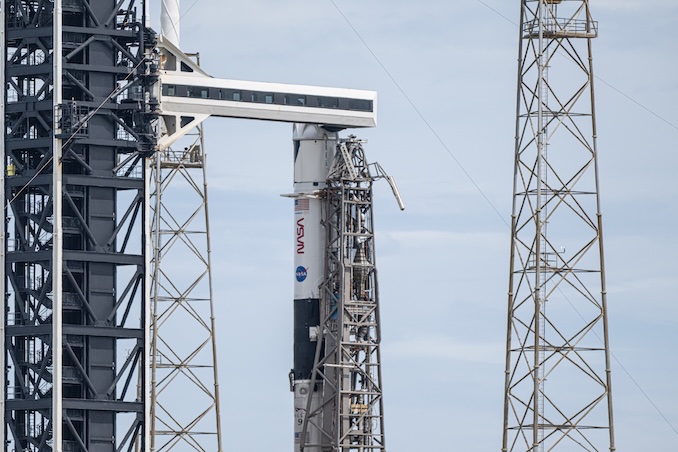
NASA and SpaceX have launched the Crew-13 mission to the International Space Station, sending four people aboard the Dragon spacecraft Grace for a planned six-month expedition. The mission lifted off on time from Space Launch Complex 40 at Cape Canaveral Space Force Station in Florida, according to Spaceflight Now’s launch coverage.
The flight continues NASA’s use of SpaceX’s Dragon spacecraft for crew rotations at the orbiting laboratory. It also brings together astronauts from the United States and Canada with a Russian cosmonaut, preserving the multinational character of station operations.
NASA astronaut Jessica Watkins leads the mission. She is joined by NASA astronaut Luke Delaney, Canadian Space Agency astronaut Joshua Kutryk and Roscosmos cosmonaut Sergey Teteryatnikov. Watkins is set to become the first NASA astronaut to make a second flight aboard a SpaceX Dragon spacecraft.
A short trip planned after launch
Dragon Grace was scheduled to dock with the International Space Station about eight hours after liftoff. If achieved, that would be the shortest transit time for a Dragon spacecraft to reach the station, according to the launch preview.
Such a rapid rendezvous depends on the spacecraft and station being in the appropriate positions for the mission profile. The short transfer is a notable operational detail, but the larger purpose remains routine crew transport: delivering a fresh crew for a long-duration expedition and supporting the continuity of research and station maintenance.
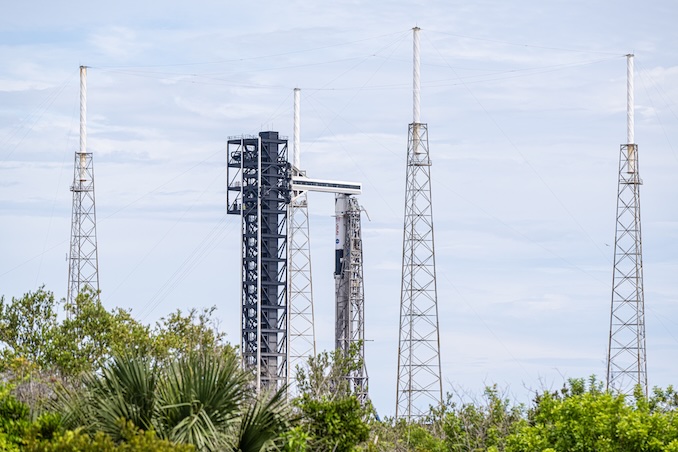
The mission was initially preparing for a Thursday morning launch window, with liftoff scheduled for 11:10 a.m. EDT. Weather officers had assessed a 55 percent chance of acceptable conditions and were watching clouds and rain moving in from the Atlantic coast. The eventual on-time launch cleared that immediate weather hurdle.
A reused Falcon 9 booster
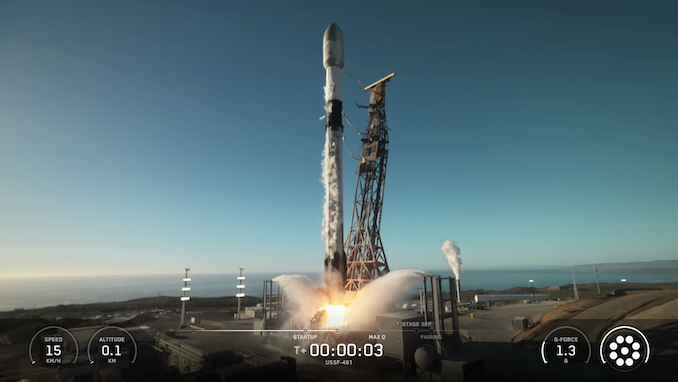
SpaceX launched Crew-13 using Falcon 9 first-stage booster B1101. The flight marked the booster’s third mission. Its prior flights included a Starlink mission carrying 29 V2 Mini satellites and NASA’s SpaceX Crew-12 mission using the Dragon spacecraft Freedom.
After separating from the upper stage, B1101 was to return to Cape Canaveral for a landing attempt at Landing Zone 40. The planned recovery illustrates the reusable-launch architecture that SpaceX uses across missions, including human spaceflight operations carried out under NASA’s commercial crew program.
Spaceflight Now reported that a successful recovery would have been the seventh landing at Landing Zone 40 and the 664th Falcon booster landing to date. The reuse of a previously flown first stage does not change the mission’s central objective, but it remains a defining feature of the launch system used to transport crew to the station.
An international crew for a six-month expedition
Crew-13’s composition reflects the long-running international partnership behind the space station. NASA astronauts Watkins and Delaney will fly alongside Kutryk of the Canadian Space Agency and Teteryatnikov of Roscosmos.
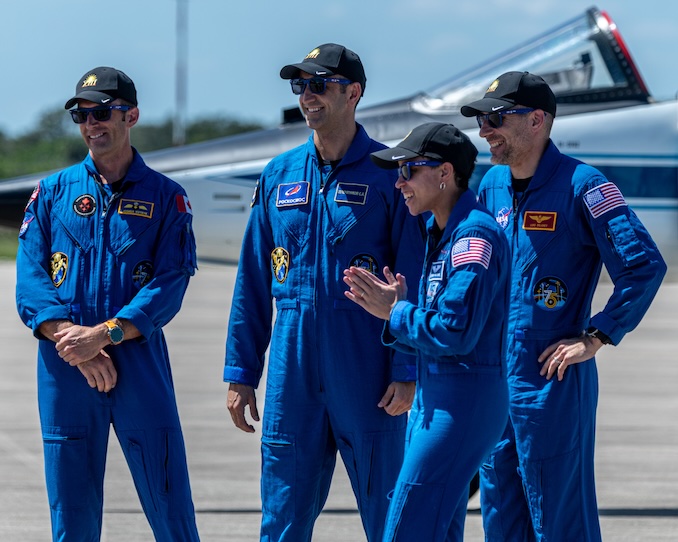
Watkins’ second Dragon flight is a milestone within NASA’s commercial crew era. The agency has flown astronauts aboard SpaceX’s Dragon spacecraft since the program began carrying operational crews to the station. A second flight by the same NASA astronaut aboard Dragon indicates how those missions are becoming an established part of the agency’s human-spaceflight rotation.
The crew will undertake a six-month expedition after arriving at the ISS. The supplied launch coverage does not detail their planned research portfolio, but station expeditions support the ongoing operation of the orbital outpost and its research work while crew members live and work in microgravity.

Why the mission matters
Crew rotations are less visually dramatic than a first launch or a lunar mission, yet they are essential to sustaining a permanently occupied laboratory in low Earth orbit. Each successful flight maintains the handoff of personnel needed to operate the station, conduct experiments and support the wider international partnership.
For NASA, Crew-13 also demonstrates the continued cadence of commercial crew transportation. SpaceX provides the rocket and Dragon spacecraft, while NASA integrates the mission into the station program. The participation of Canadian and Russian crew members shows that the ISS remains a shared operational platform even as the agencies involved pursue their own broader spaceflight priorities.
The launch of Dragon Grace adds a newly named spacecraft to that operational system. Its planned fast docking, the reuse of Falcon 9 booster B1101 and Watkins’ repeat Dragon flight each mark specific milestones within a mission whose most consequential achievement is reliable delivery of another international crew to the station.
This article is based on reporting by Spaceflight Now. Read the original article.
Originally published on spaceflightnow.com