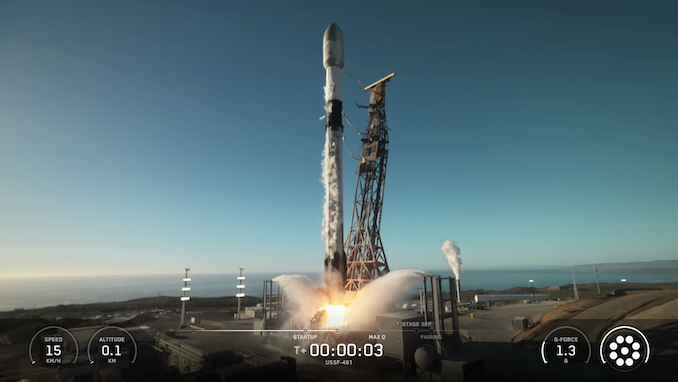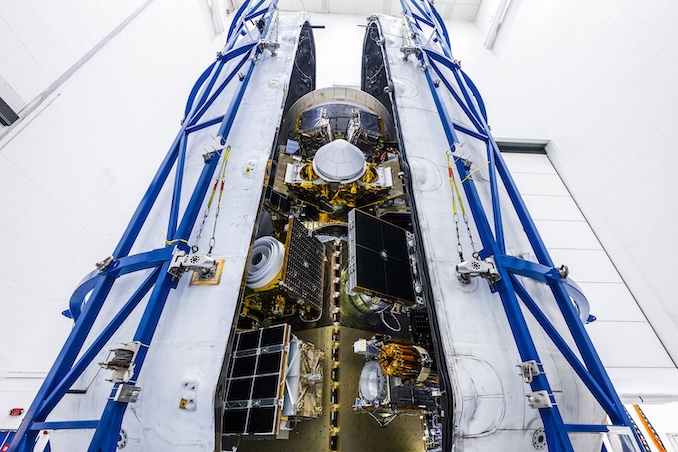
SpaceX is scheduled to launch its Bandwagon-5 rideshare mission from Cape Canaveral Space Force Station, carrying the company’s uncrewed Starfall reentry capsule alongside 31 other customer payloads. The mission is planned to lift off from Space Launch Complex 40 during a one-hour window opening at 6:30 a.m. EDT, or 1030 UTC.
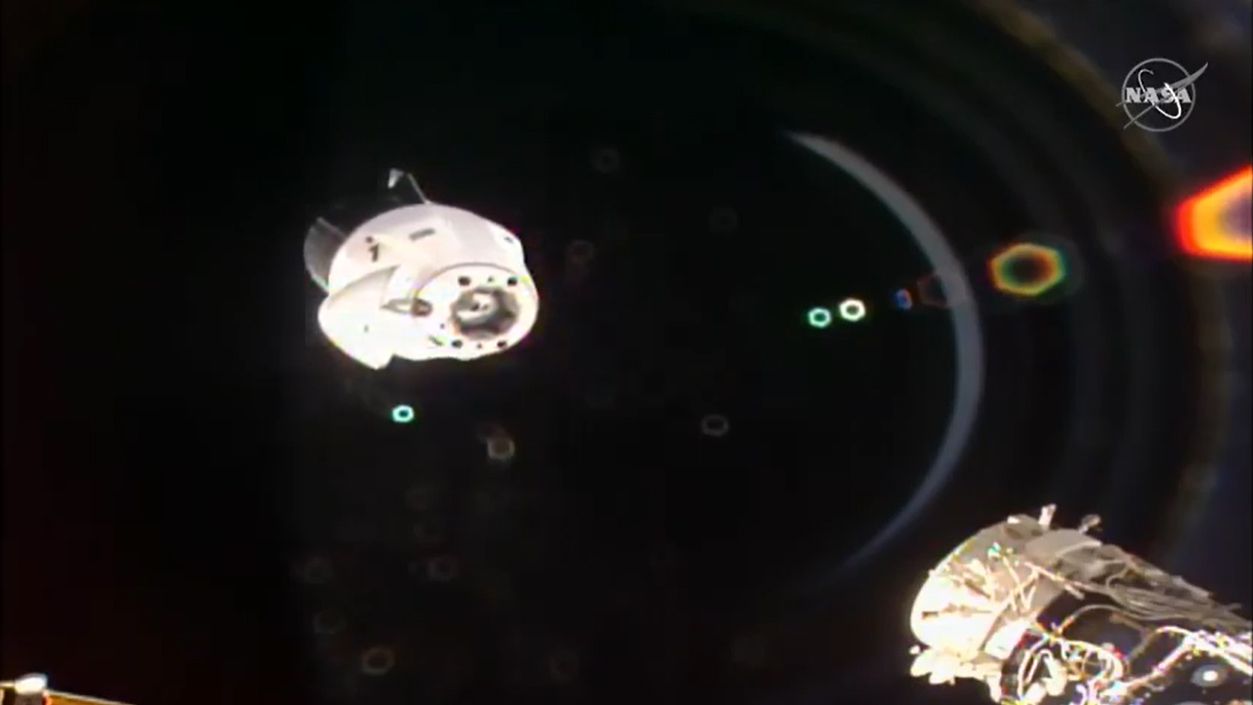
The flight would be Starfall’s second launch. SpaceX first flew the capsule in June, but disclosed little about it before that mission and did not say during its launch broadcast when the spacecraft would deploy. Its return on a multi-customer rideshare mission makes the capsule one of the more closely watched payloads on an already crowded Falcon 9 manifest.
A rideshare mission with 32 payloads
Bandwagon-5 is carrying 32 payloads in total. Twenty of the 31 payloads other than Starfall were manifested by Exolaunch, a multinational mission-management company. The published manifest includes four radio-frequency monitoring satellites for Virginia-based HawkEye 360, four communications satellites for Finnish microsatellite company Iceye, and six navigation satellites for California-based Xona Space Systems.
That combination illustrates the role of rideshare flights in placing multiple small spacecraft into orbit on a single launch. Rather than each customer needing a dedicated rocket, missions such as Bandwagon package spacecraft with different functions and operators under one launch campaign. The payloads described for this mission span radio-frequency monitoring, communications and navigation.
SpaceX said the Falcon 9 would head on a southeasterly trajectory after leaving the pad. The company plans to use booster B1085, which is set to make its 19th flight. Its prior missions include NASA’s Crew-9, Fram2, Firefly Blue Ghost Mission 1, RRT-1, SXM-10, SXM-11, MTG-S1, EchoStar25 and 10 batches of Starlink satellites.
Recovery conditions remain a factor
Nearly nine minutes after liftoff, B1085 is expected to target a landing on the droneship A Shortfall of Gravitas. If successful, the landing would be the vessel’s 167th and the 672nd Falcon booster landing overall, according to the prelaunch report.
Weather could complicate the plan. The 45th Weather Squadron forecast a 55% chance of acceptable conditions during the launch window. A cold front over southern Florida was expected to bring gusty winds at liftoff that were approaching launch constraints. Forecasters also identified a moderate to high risk that conditions at the booster recovery site would not be suitable.
Occasional coastal showers were possible in persistent onshore flow. Launch weather officers described the showers as generally shallow and low-topped, with a secondary concern for the cumulus cloud rule. Those conditions do not mean a cancellation is certain, but they leave the mission with a relatively narrow margin for a first attempt.
Why Starfall stands out
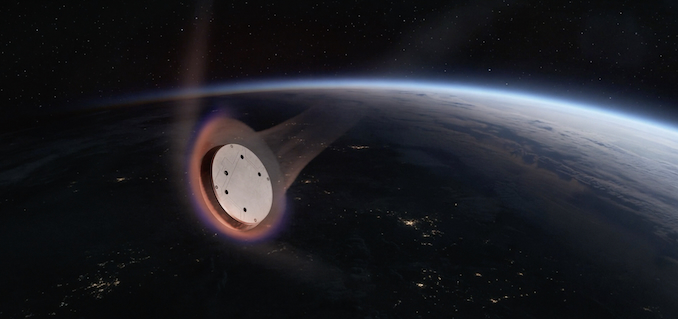
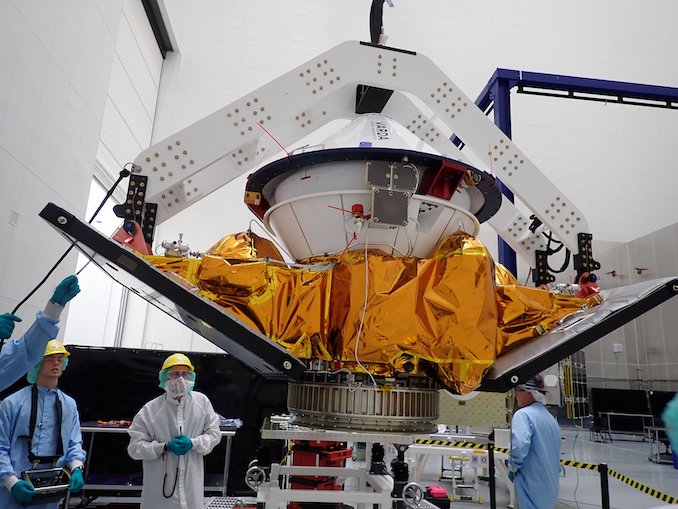
The launch is notable less for the number of satellites than for Starfall’s return. SpaceX has so far kept details of the capsule limited. On its first flight, the company revealed the spacecraft only close to launch and shared a rendering, without specifying its deployment time in the launch broadcast.
The mission description identifies Starfall as an uncrewed reentry capsule. Reentry hardware is distinct from an ordinary satellite because it is designed to come back through Earth’s atmosphere, where thermal protection, recovery operations and the control of the return trajectory become central concerns. The supplied prelaunch information does not provide a detailed technical description of the capsule or a stated objective for this second flight.
That lack of detail makes the scheduled launch significant as a continuation of a program that SpaceX has publicly acknowledged but not fully explained. A successful departure from Cape Canaveral would put the capsule back on its second known flight while delivering a varied group of commercial payloads.

What to watch
- Launch window: opens at 6:30 a.m. EDT from Space Launch Complex 40.
- Payload count: 32 total, including Starfall.
- Booster: Falcon 9 first stage B1085 on its planned 19th flight.
- Recovery: a planned droneship landing roughly nine minutes after liftoff.
- Weather: a 55% chance of acceptable conditions, with wind and recovery-site risks.
As of the prelaunch report, Bandwagon-5 remained a scheduled mission rather than a completed launch. Its outcome will depend on the final weather assessment, countdown operations and offshore recovery conditions. If it proceeds, the flight will pair a high-volume commercial rideshare deployment with another test of SpaceX’s still-sparsely described Starfall capsule.
This article is based on reporting by Spaceflight Now. Read the original article.
Originally published on spaceflightnow.com