Starlink mission retargeted after a scrub
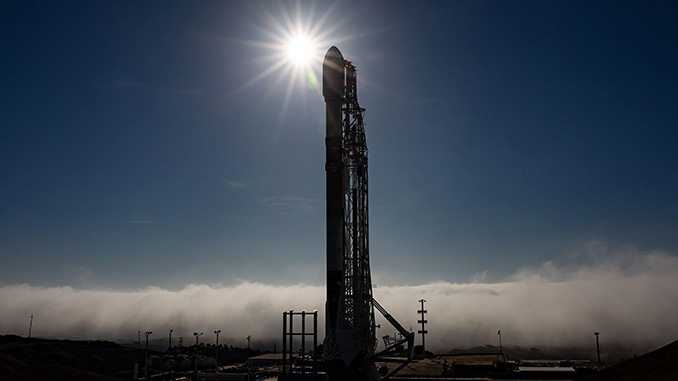
SpaceX scrubbed a planned Falcon 9 launch carrying 27 Starlink satellites from Vandenberg Space Force Base in California after encountering what appeared to be a technical issue that could not be resolved within the available launch window.
The company was aiming to launch on Tuesday afternoon. Spaceflight Now reported in an October 20 update that the mission was instead targeting Wednesday, October 21, with a launch window opening at 2:59 p.m. Pacific Daylight Time, or 2159 UTC. The rocket is planned to fly on a southeasterly trajectory after leaving the pad.
Launch delays are a routine feature of spaceflight, but the change is still meaningful in a high-cadence deployment programme. Each scrub requires teams to preserve the vehicle and payload for another attempt, work through the issue that prevented liftoff, and wait for the next acceptable combination of technical readiness and launch-range conditions.
A booster nearing a new reuse milestone
The flight is assigned to Falcon 9 first-stage booster B1063. If it launches as planned, the mission will be its 36th flight. That would make B1063 the second Falcon booster to reach three dozen flights, according to Spaceflight Now.
After stage separation, the booster is expected to attempt a landing on the droneship A Shortfall of Gravitas roughly eight and a half minutes after liftoff. A successful recovery would be the 229th landing on that vessel and the 673rd Falcon booster landing overall, the report said.
Those figures place the delayed launch in a broader operational context. The mission is not only a satellite deployment; it is also another use of a recovered first stage that has already flown dozens of times. Reusing a booster at that cadence depends on a launch system able to return, inspect, prepare and fly stages repeatedly, while maintaining enough schedule flexibility to absorb a technical hold.
For this mission, the immediate result of the scrub is straightforward: the satellite batch remains on the ground until the next attempt. But the choice to stand down rather than force a launch window is equally part of the system’s operating rhythm. The available source did not specify the underlying technical problem, so its cause remains unconfirmed.
Starlink’s expanding network
The delayed mission arrives as SpaceX continues to add satellites and customers to its Starlink network. During a third-quarter earnings call held on the day of the original launch attempt, SpaceX President and Chief Operating Officer Gwynne Shotwell said the service added 1.6 million customers during the three-month period.
Shotwell said Starlink was active in 174 markets globally and noted that the total did not include additional hundreds of thousands of enterprise subscribers and aviation customers. She also cited uses in schools and emergency response during natural disasters.
In an SEC filing referenced by Spaceflight Now, SpaceX said it closed the third quarter with more than 11,100 Starlink satellites in low Earth orbit. That figure includes 26 Starlink Version 3 satellites launched during Starship Flight 14, according to the report. The planned Vandenberg payload of 27 satellites would add another increment to that constellation once it reaches orbit.
The company reported connectivity revenue of $5.2 billion for the quarter, an increase over the earlier period cited in the filing. Taken together, the satellite count, market reach and customer additions illustrate the scale at which Starlink is being run: launches are simultaneously infrastructure expansion, capacity additions and support for a growing service business.
More capacity is the strategic objective
Shotwell said the Starship launch vehicle is expected to provide additional capacity across markets and enable sales in high-demand areas. She also argued that future communications demand may be driven by more than conventional person-to-person connections, naming connected cars, robots and the adoption of “super intelligence” as potential sources of much higher demand.
That framing helps explain why individual Starlink missions matter beyond their launch-day outcome. A constellation depends on continuing deployment, replacement and expansion. A one-day postponement does not alter that overall direction, but the frequency of flights and the reliability of reusable launch hardware determine how quickly capacity can be put into orbit.
The Vandenberg launch is set to use the West Coast site’s southerly access to orbit, with the booster returning to a droneship rather than landing back near the launch site. If the Wednesday attempt proceeds, the mission will combine a new Starlink payload with another test of mature first-stage reuse at the edge of a notable flight-count milestone.

What remains to be seen
The report describes the original stand-down as a technical issue that was not surmountable during Tuesday’s window, but it does not identify a fault or say whether additional changes are needed before launch. The Wednesday target therefore remains a planned opportunity, not a completed mission.
For now, the clearest development is operational: SpaceX has shifted the launch of 27 satellites by a day while preparing B1063 for its 36th flight. The next attempt will show whether the issue that ended Tuesday’s countdown has been cleared and whether the company can add another successful booster recovery to its record.
This article is based on reporting by Spaceflight Now. Read the original article.
Originally published on spaceflightnow.com