The final phase of a years-long power upgrade
NASA is approaching the end of a major effort to modernize the International Space Station’s power system. Two planned spacewalks are intended to install the seventh and eighth International Space Station Roll-Out Solar Arrays, known as IROSAs, completing an upgrade campaign that began in 2021.
The new arrays are designed to offset the loss of generating capacity from the station’s original solar wings, which have spent more than two decades in orbit. NASA says the full set of eight IROSA arrays will raise the orbiting laboratory’s available power from 160 kilowatts to about 215 kilowatts. That added capacity is intended to support station operations through its planned retirement and safe, controlled deorbit in 2030.
The next installation was scheduled for an Oct. 29 spacewalk, with a final outing planned for Nov. 5 if the work proceeds as expected. The pair of excursions would close a multiyear campaign to refresh one of the station’s most fundamental systems: its ability to produce electricity for the equipment, experiments and life-support infrastructure that keep the outpost operating.
Compact arrays designed for an aging station
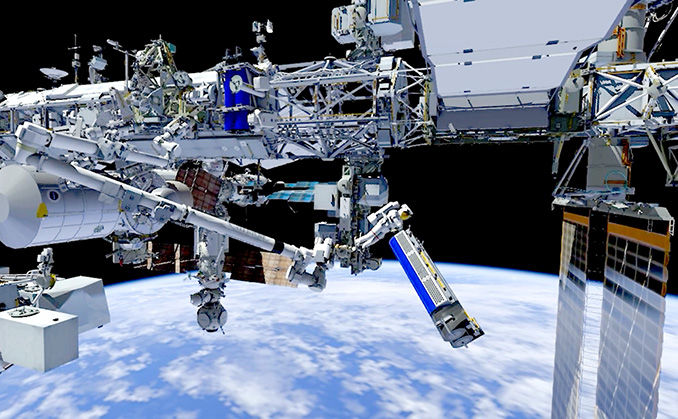
IROSAs differ from the ISS’s original solar wings in their rollout design. The arrays are delivered in a compact, rolled and folded configuration, then transported into position and unfurled outside the station. Their high-efficiency cells are intended to supplement the original arrays rather than replace the entire existing power system at once.
The need for the upgrade reflects a basic challenge of operating a long-lived spacecraft. Solar arrays generate less power as they age in the space environment. By adding the roll-out panels, NASA aims to recover power that has been lost as the original wings have degraded over time.

NASA Low Earth Orbit Program operations integration manager Gaurang Patel said at an Oct. 20 briefing that the roll-out arrays increase power-generation capability by up to 30 percent. The resulting total is significant because the ISS is expected to continue operating for several more years, even as NASA and its partners prepare for its eventual retirement.
A complex job outside the Quest airlock
NASA astronaut Anil Menon and Canadian Space Agency astronaut Joshua Kutryk were scheduled to leave the station’s Quest airlock at 8 a.m. EDT on Oct. 29. The outing was planned to last about six hours and 45 minutes and would be the 285th spacewalk devoted to ISS assembly, maintenance and upgrades.
The work requires more than simply attaching a panel. Menon is scheduled to carry out a series of maneuvers using the station’s robotic arm to move the rolled-up array to its installation location and prepare it for deployment. The task will be repeated for the eighth and final array during the planned Nov. 5 excursion.
Menon, a U.S. Air Force lieutenant colonel and emergency physician, has already completed three spacewalks since arriving at the station on a Russian Soyuz mission in July. The planned outing would be Kutryk’s first spacewalk. Kutryk, a Royal Canadian Air Force colonel and test pilot, arrived at the ISS on Oct. 1 as part of SpaceX’s Crew-13 mission.
For Canada, the event carries an additional milestone. Kutryk is set to become the fifth Canadian astronaut to walk in space and the first since David Saint-Jacques in 2019.

Power for the station’s final operational years
The value of the solar-array work is not confined to a single experiment or visiting spacecraft. Electrical power underpins nearly every aspect of ISS operations, from scientific payloads and communications to the systems needed for a continuously occupied orbital outpost. Maintaining available power is therefore a practical prerequisite for extending the usefulness of the station as it nears the end of its life.
NASA’s planned 2030 deorbit date gives the upgrade a defined purpose: the arrays are meant to help sustain the ISS through its final years rather than inaugurate a new era of expansion. That still makes the project consequential. The ISS remains a working laboratory in low Earth orbit, and the new arrays are intended to preserve operational margin as the older wings continue to age.
The campaign also illustrates the recurring maintenance burden of human spaceflight infrastructure. Even systems launched to operate for many years must be serviced, supplemented or adapted as their components degrade. On the ISS, that servicing takes the form of carefully choreographed work outside the spacecraft, where astronauts, robotics and ground teams must coordinate installation of large hardware in orbit.
What success would complete
If the two final arrays are installed and deployed as planned, NASA will have completed the eight-array IROSA upgrade program. The improvement would bring available station power to roughly 215 kilowatts, compared with 160 kilowatts before the campaign, while preserving the original arrays as part of the broader electrical system.
The planned spacewalks are therefore both a technical finale and an operational handoff. After years of launches, installations and external work, the power-system upgrade is intended to shift from a construction project to a capability the station can rely on through retirement. For an outpost that has remained in orbit for more than two decades, completing the work will be another example of how continued operation depends on renewing the hardware that makes the mission possible.
This article is based on reporting by Spaceflight Now. Read the original article.
Originally published on spaceflightnow.com