Mercury’s weak magnetosphere may be doing more than scientists expected
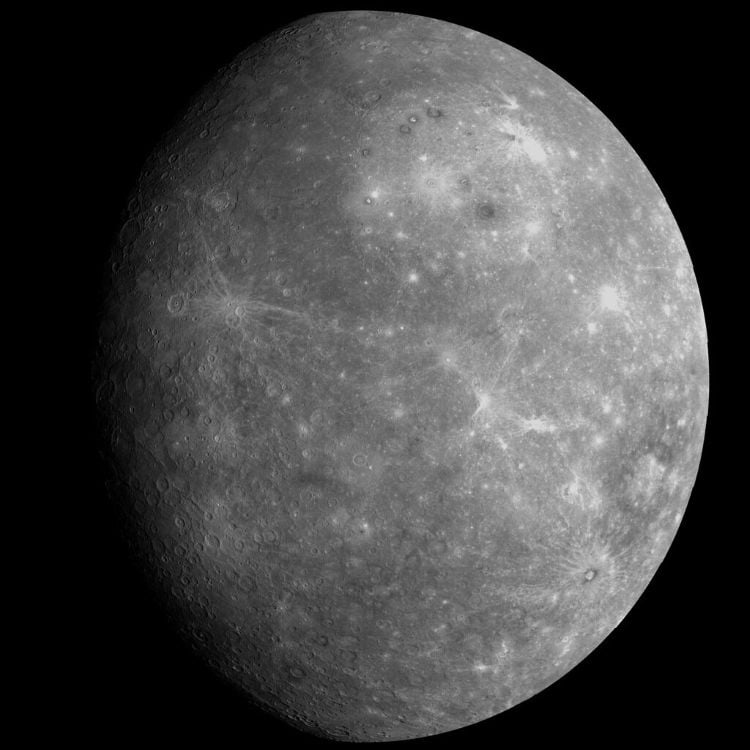
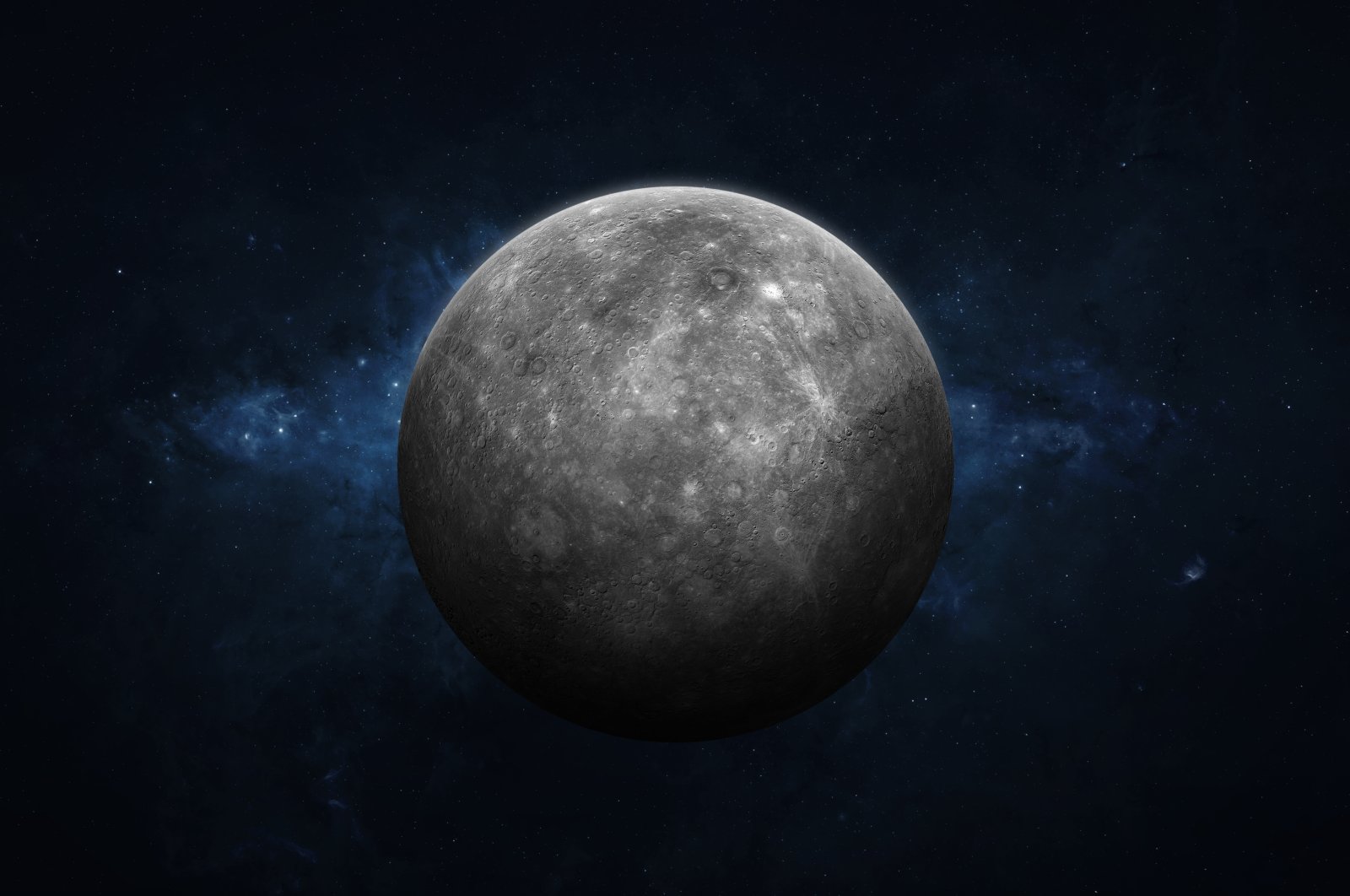
Mercury is the smallest planet in the Solar System and the closest one to the Sun, which makes it an unlikely place for long-lived magnetic shielding. Its magnetic field is only about 1% as strong as Earth’s, and for decades that weakness helped drive a basic assumption: Mercury probably could not trap enough charged particles to form radiation belts comparable in principle to Earth’s Van Allen belts.
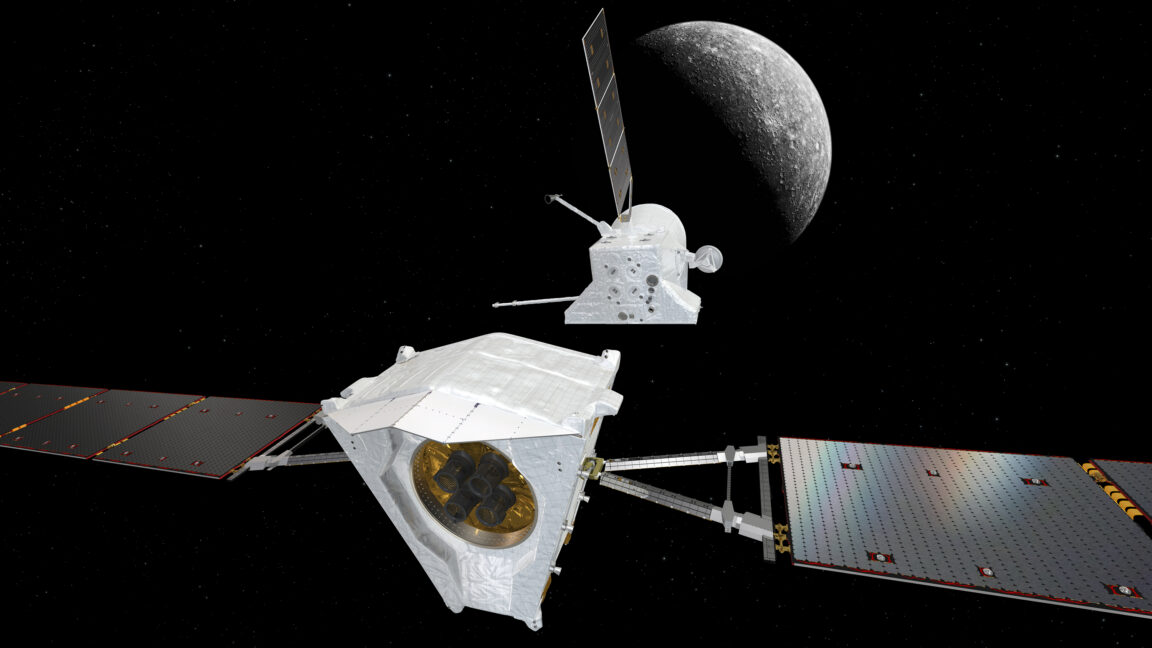
A new study highlighted by researchers analyzing data from NASA’s MESSENGER mission argues that assumption needs revision. Using spacecraft observations, updated analysis methods, and computer modeling, the team found evidence that Mercury can periodically capture solar-wind particles and form short-lived radiation belts during parts of its orbit. The belts are not permanent, and they are far less stable than Earth’s. But their apparent existence would still mark a meaningful shift in how scientists understand the innermost planet’s space environment.
The result matters because Mercury has often been treated as a borderline case in planetary magnetism. It has a global magnetic field, but a weak one. It sits in an extreme solar environment, where the Sun’s particle stream and magnetic influence are far more intense than at Earth. That combination raises a difficult question: does Mercury’s field merely deflect and channel particles for brief moments, or can it actually trap them in a structured way? According to the new work, the answer appears to be yes, at least intermittently.
How the researchers approached a decades-old debate
The question is not new. Observations dating back to Mariner 10 in 1974 helped establish that Mercury has a magnetic field at all, a finding that surprised scientists because of the planet’s small size and unusual interior evolution. But the idea that Mercury might host radiation belts remained controversial. Later spacecraft data did not settle the issue cleanly, and the planet’s constantly changing interaction with the solar wind made interpretation difficult.
For the new study, researchers combined archival measurements from MESSENGER with newer analytical techniques and simulations designed to test whether Mercury’s magnetosphere could trap charged particles under realistic conditions. Rather than assuming a steady, Earth-like system, the team modeled a more dynamic scenario in which trapping depends on where Mercury is in its highly elliptical orbit and how solar-wind conditions vary over time.
That orbital detail turned out to be important. Mercury’s distance from the Sun changes significantly over the course of its year, exposing it to different magnetic and particle conditions. The analysis found that radiation belts are more likely to appear when Mercury is near aphelion, its farthest point from the Sun, and less often near perihelion, when it is closest.
According to the findings summarized in the source report, the radiation belt exists about half the time near aphelion and about 20% of the time near perihelion. Each episode appears to last on the order of 8 to 12 hours. That is a very different regime from Earth, where radiation belts are persistent features, even though their intensity can fluctuate with space weather.

Why radiation belts on Mercury are surprising
On Earth, radiation belts form when the planet’s magnetic field captures charged particles and holds them in donut-shaped regions around the planet. These belts play a dual role. They are part of the protective system that helps shield Earth from harmful space radiation, but they can also create hazards for satellites and spacecraft that pass through them.
Mercury has never seemed like an obvious candidate for the same phenomenon. Its magnetic field is weak, its magnetosphere is compressed by the nearby Sun, and the entire system is exposed to extreme and rapidly changing space weather. In simple terms, Mercury looks too small and too battered by the solar environment to sustain orderly particle trapping for long.
That is what makes the new conclusion notable. Instead of showing that Mercury behaves like a smaller Earth, the study suggests something more nuanced: the planet can generate temporary radiation belts under the right conditions, even if those belts are unstable and short-lived. In that view, Mercury is not an exception to the broader physics of magnetized planets. It is an extreme test case.
The result also supports a more dynamic picture of the inner Solar System. Planetary magnetic fields are not static shields with fixed behavior. Their interaction with the solar wind depends on field strength, planetary size, orbital geometry, and the changing output of the Sun. Mercury compresses those variables into a particularly harsh environment, which makes it valuable as a natural laboratory for understanding magnetospheres under stress.
What this means for future missions and planetary science
The implications extend beyond one planet. If Mercury can intermittently form radiation belts despite its weak field, scientists may need to refine how they think about particle trapping around other bodies with marginal or unusual magnetospheres. The finding could also influence how researchers interpret past measurements and design future observations.
Mercury remains relatively underexplored. Only a small number of spacecraft have visited it, and much of what is known comes from limited mission windows. That makes every improvement in data analysis more valuable, especially when it reveals structure that older interpretations may have missed.
For mission planners, short-lived radiation belts are also more than a theoretical curiosity. Any localized or periodic concentration of energetic particles can matter for spacecraft operations, instrument calibration, and risk assessment. Even if Mercury’s belts are transient, understanding when they appear and how intense they become could help shape observation strategies for future missions studying the planet up close.
More broadly, the study reinforces a recurring lesson in planetary science: worlds that seem simple at first glance often turn out to be physically complex. Mercury was once easy to summarize as a scorched, airless, geologically quiet rock orbiting close to the Sun. Over time, researchers have found a planet with a global magnetic field, volatile-rich polar regions, unusual surface chemistry, and now stronger evidence for intermittent particle trapping in near-planet space.
That does not make Mercury Earth-like. If anything, it makes the planet more distinct. Its radiation environment appears to be governed by short bursts, orbital dependence, and rapid changes that would be considered extreme by terrestrial standards. But that is precisely why the result matters. It expands the known range of how planetary magnetic systems can behave.
The next step will be further confirmation, ideally through additional direct observations and continued modeling. For now, the new analysis suggests that Mercury’s magnetic field, weak though it is, may be capable of organizing solar-wind particles into brief but meaningful radiation belts. On the innermost planet, even a fragile magnetic system may be enough to produce phenomena once thought impossible there.
This article is based on reporting by Universe Today. Read the original article.
Originally published on universetoday.com