Each day, NASA's Astronomy Picture of the Day (APOD) brings a new view of the cosmos to millions of viewers. On August 22, 2026, the featured image offered a breathtaking all-sky panorama of meteor activity, captured during the peak of the 2026 Perseid meteor shower. The composite, assembled from data collected by dedicated cameras at an observatory in Czechia, does more than just display a stunning night sky—it provides a scientific window into the distribution and origins of meteors streaking across Earth's atmosphere.
A Night of Remarkable Meteor Activity
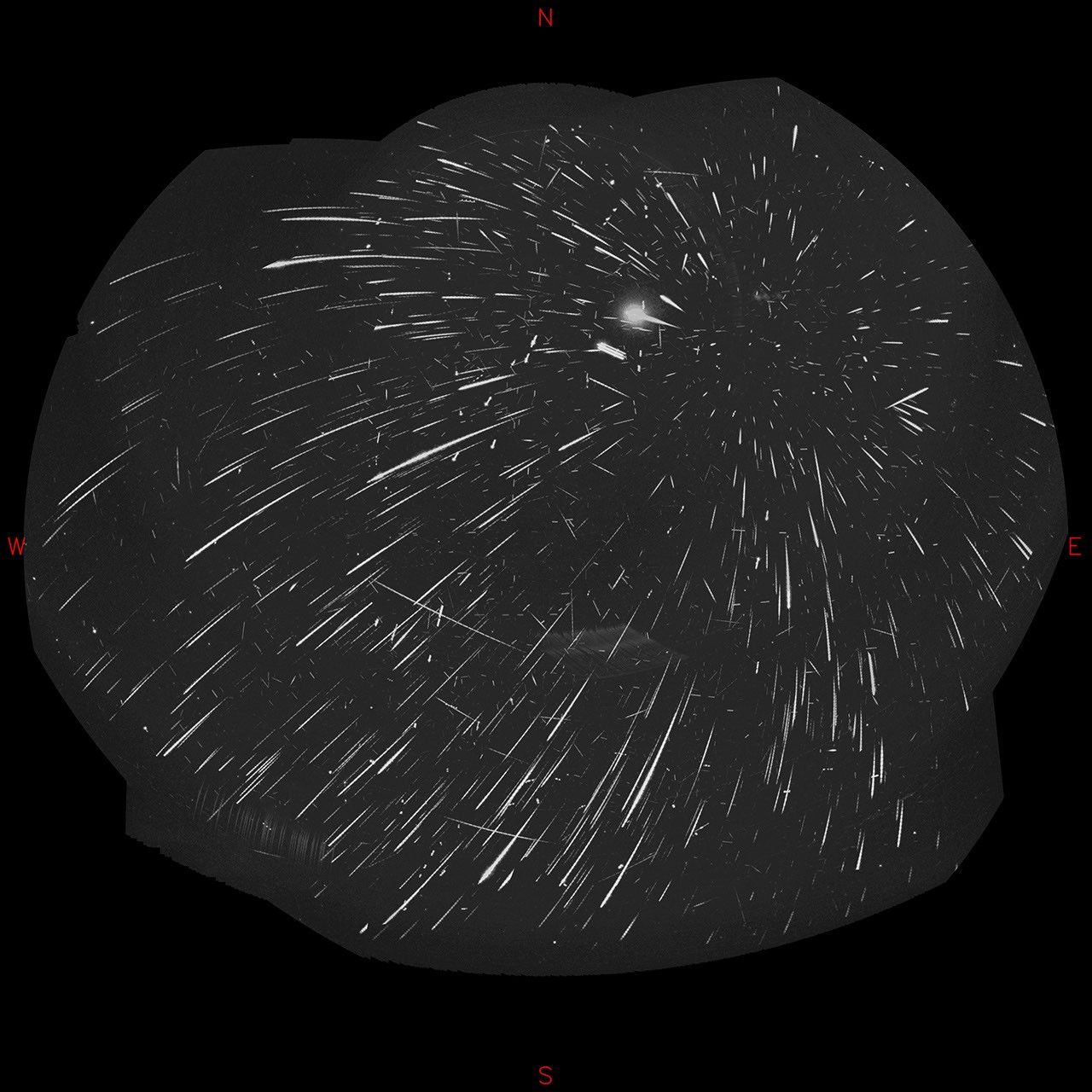
The imagery was recorded on the night of August 12-13, a period that coincided with the annual Perseid shower's peak. Over the course of that single night, four dedicated meteor-monitoring cameras aligned and combined their views to produce a continuous, all-sky observation. The total count reached an impressive 1,706 individual meteors. Because the observing date matched the peak of the Perseids, the vast majority of these meteors belonged to the Perseid stream, making them easy to spot in the final composite.
Perseids are among the most popular meteor showers of the year, known for their reliability and high rates. Their overwhelming numbers in this composite make them particularly noticeable. The shower's name comes from the constellation Perseus, which is also the location of its radiant point—the point from which the meteors appear to originate.

How the All-Sky Composite Was Made
The image was not a simple snapshot. It involved the alignment and combination of images from four dedicated meteor-monitoring cameras, each positioned to cover a portion of the sky. By merging the data, astronomers created a seamless, all-night, all-sky view. This technique allows for a comprehensive record of meteor trails, revealing not only the bright, frequent Perseids but also fainter, less active streams that might otherwise go unnoticed.
- Four dedicated meteor-monitoring cameras were used.
- Images were aligned and combined to create a single all-sky view.
- The observation covered the entire night of August 12-13.
- The final composite shows 1,706 meteors.
The Radiant: A Common Origin
One of the most striking features of the composite is the way the Perseid meteor trails seem to radiate from a single point in the sky. This radiant is located in the upper right of the image, within the constellation Perseus. The effect is a consequence of perspective: because all Perseids enter Earth's atmosphere from the same direction in space, their paths appear to diverge from that common point when viewed from the ground. The text notes that the radiant is quite convincingly demonstrated by the overwhelming numbers of Perseids.

Revealing the Less Obvious Showers
The all-sky approach does more than showcase the Perseids. By carefully examining the directions of meteor trails, astronomers can identify other, less active showers that occur on the same night. In the composite, cross-cutting trails reveal the presence of Kappa Cygnids, a meteor shower whose radiant lies in the constellation Cygnus. These meteors are fewer in number but can be distinguished because their trails do not point back to Perseus.
Additionally, the image reveals a weak source of meteors known as the antihelion complex. This region, located near the constellation Aquarius and opposite the Sun in the sky, is not a traditional meteor shower but rather a diffuse source of meteor activity. Its identification in the composite demonstrates the power of all-sky monitoring to pick out subtle patterns in the night sky.
Why This Image Matters
The APOD feature is more than just a pretty picture. It highlights the ongoing work of observatories like the Valašské Meziříčí Observatory, whose staff and collaborators operate dedicated meteor-monitoring equipment. The credit line in the APOD gives thanks to Jakub Koukal, who captured the data, as well as to the APOD team of editors and contributors. This particular image is a testament to the value of persistent sky surveillance, which not only fascinates the public but also contributes to our understanding of meteor streams and their parent bodies.
For the casual viewer, the composite serves as a reminder of the dynamic nature of our solar system. Every streak of light represents a tiny particle, often no larger than a grain of sand, burning up at high speed as it enters Earth's atmosphere. When aggregated over a single night, these tiny particles paint a picture of the debris fields our planet encounters on its annual journey around the Sun.

Looking Ahead
The APOD for August 22, 2026, also teases tomorrow's image, described as an "interplanetary road trip." This keeps viewers engaged with the daily rhythm of the cosmos. For now, the "Mostly Perseids" image stands as a striking record of a peak night during one of the most beloved meteor showers of the year.
In conclusion, the APOD image offers a comprehensive look at the Perseid meteor shower's peak, captured with precision and artistry. It illustrates how combining scientific rigor with aesthetic presentation can inspire a sense of wonder about our universe. The image also underscores the importance of professional observatories and their contributions to both scientific knowledge and public engagement with the night sky.
This article is based on reporting by science.nasa.gov. Read the original article.
Originally published on science.nasa.gov