ULA investigates its first launch failure in 30 years
United Launch Alliance is investigating low performance in Vulcan’s first-stage booster after the rocket failed to deliver 40 satellites for Amazon’s Leo internet constellation to orbit on November 15. The incident was the first launch failure in ULA’s 30-year history, according to the company’s public account reported by Space Policy Online.
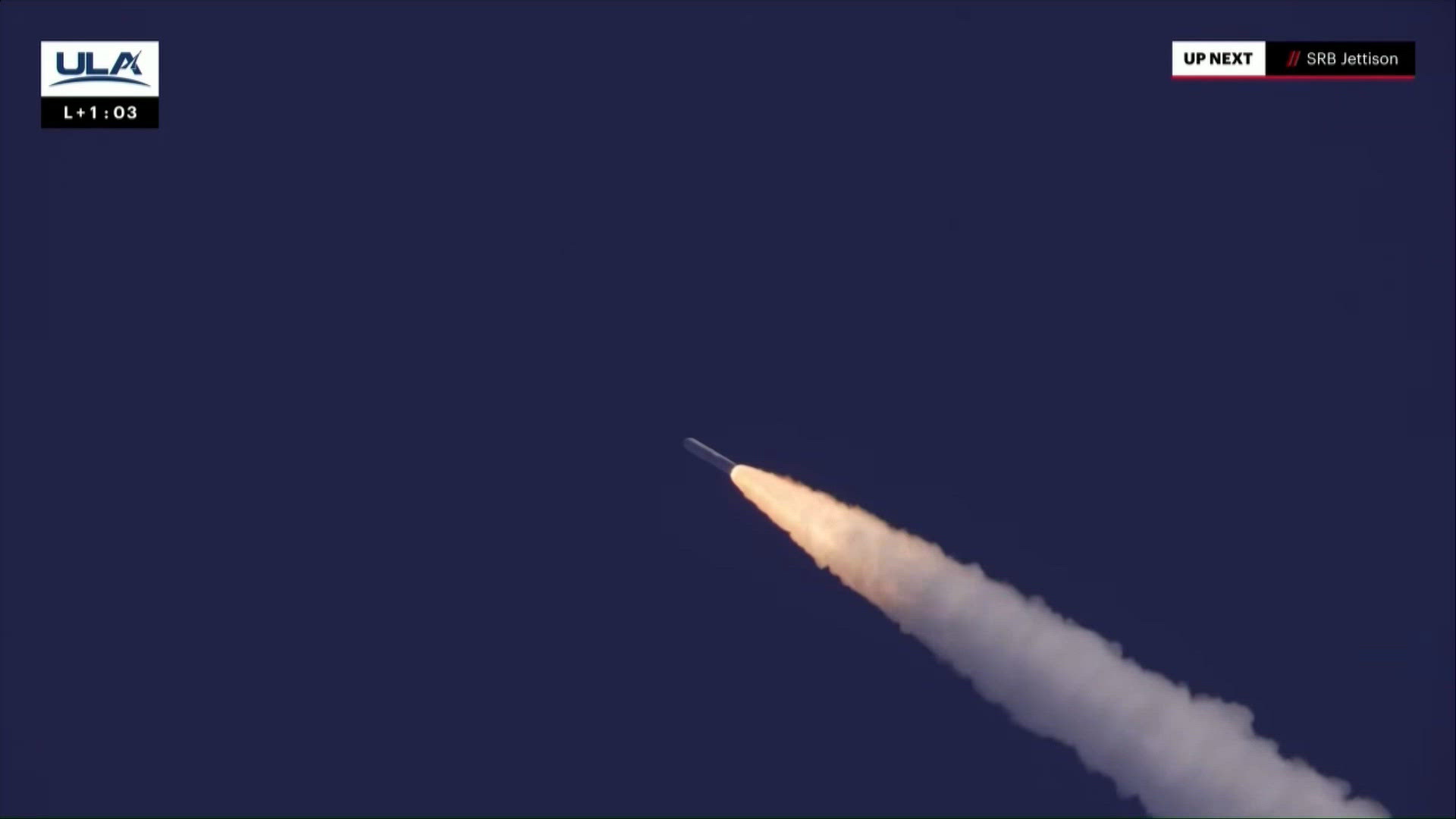
The mission, known as Amazon Leo 1, lifted off at 12:40:30 p.m. Eastern time. Its early ascent appeared nominal, including the performance of the rocket’s six solid rocket boosters. But the flight later diverged from expectations. About nine minutes into the launch, altitude shown on ULA’s webcast remained far below orbital altitude and the webcast’s status shifted from “live data” to “no data.”
ULA ended its webcast and announced at 1:30 p.m. that an anomaly had occurred around 10 minutes into flight. The company said the payloads were not delivered to orbit. In an update the following day, ULA said early indications were that the vehicle experienced “low booster performance,” referring to the liquid-fueled core stage rather than the six solid rocket boosters.
What is known about the flight
Vulcan was carrying 40 satellites for Amazon Leo, the satellite internet project formerly called Project Kuiper. The launch was ULA’s 10th mission for Amazon Leo, but the preceding nine launches used Atlas V, the older ULA rocket that Vulcan is intended to replace.
During the Vulcan mission, the webcast displayed an altitude of 94 kilometers, or 58 miles, at roughly nine minutes and 26 seconds after liftoff. That altitude was far short of the orbital trajectory the mission needed to reach. ULA subsequently confirmed that the satellites had not been delivered to orbit.
Low booster performance is an initial diagnosis, not a final cause. The description narrows attention to the vehicle’s first-stage core, but it does not itself identify a failed component, a software issue, an operational condition, or a manufacturing problem. The investigation must determine how the core stage underperformed, how the anomaly developed through the flight, and whether the issue affects other vehicles or engines.
The six solid rocket boosters appeared to perform as planned, ULA said. That distinction is important because Vulcan’s side-mounted solids have been a previous focus of concern. On two earlier Vulcan launches, the solid rocket boosters malfunctioned. Those issues did not appear to recur on Amazon Leo 1, according to ULA’s preliminary description.

Attention turns to the BE-4-powered core stage
Vulcan’s core stage uses two BE-4 liquid methane and liquid oxygen engines built by Blue Origin, the space company founded by Jeff Bezos. The engines had performed as planned on Vulcan’s four previous flights and on three New Glenn launches, according to the report.
That history makes the preliminary diagnosis consequential but not conclusive. A first-stage performance shortfall could involve the engines, their propellant systems, the vehicle’s controls, or other core-stage hardware and operations. Publicly available information in the initial report does not establish which of those possibilities, if any, is responsible.
There was already a relevant engineering thread before this mission. In May, a New Glenn rocket exploded on its launch pad during a pre-launch test. ULA President Mark Peller told Aviation Week & Space Technology before the Vulcan launch that the New Glenn incident was traced to a BE-4 main oxidizer valve. He said changes had subsequently been made for the Vulcan flight because that valve is common to BE-4 engines used on both rockets.
The shared valve context is not proof that it contributed to the Vulcan failure. It does, however, explain why the investigation will attract scrutiny beyond ULA. The BE-4 is used on Vulcan and Blue Origin’s New Glenn, so any finding that reaches a common engine design or production element could carry implications for more than one launch system.
A setback for Amazon Leo deployment
The immediate mission impact is straightforward: 40 Amazon Leo satellites were not placed into orbit. Satellite broadband constellations depend on repeated, reliable launches to build and maintain coverage, which makes a failed delivery significant even when an operator uses more than one launch provider or rocket family.
ULA had already launched nine Amazon Leo missions on Atlas V, and Vulcan is replacing that rocket in the company’s lineup. The failure therefore comes during a transition from a long-established vehicle to the newer Vulcan system. For ULA, returning Vulcan to flight will involve not only identifying and correcting the cause but also rebuilding confidence in the rocket’s operational readiness.
For Amazon, the timing and consequences for constellation deployment cannot be determined from the initial report. The source does not state whether the lost satellites were recoverable, whether replacements are ready, or whether future launches will be rescheduled. What is clear is that the mission failed to accomplish its orbital-delivery objective.

Why the investigation matters
Launch failures are engineering events with multiple layers: the direct physical cause, the contributing conditions, the adequacy of detection and response, and the corrective actions needed before another flight. ULA’s language is appropriately preliminary. “Early indications” of low booster performance provide a direction for the inquiry, not its endpoint.
The investigation will need to reconcile telemetry, vehicle behavior, engine and stage performance, manufacturing records, and any ground-test findings. It will also have to establish whether the observed issue is unique to the mission or reflects a fleet-wide risk. Until that work is complete, assigning the failure to a specific BE-4 component would go beyond the available evidence.
The episode also illustrates why launch providers treat the first minutes of flight as an integrated system challenge. Solid boosters, liquid engines, valves, propellant flow, guidance, structural loads, stage sequencing, and telemetry must perform together. On this flight, ULA says the solid rocket boosters performed as planned while the core stage showed low performance. Understanding how that difference emerged will define the recovery effort.
The path to return to flight
ULA has not yet announced a final root cause or a return-to-flight timeline in the supplied report. The company’s next steps will depend on the investigation’s findings and on the corrective actions required. A narrow, isolated issue could lead to a limited modification and verification campaign. A broader issue involving common engine hardware or processes could demand a more extensive review.
For now, the confirmed facts are limited but significant: Vulcan launched Amazon Leo 1, failed to place 40 satellites into orbit, and is being investigated for low first-stage booster performance. The mission marks a historic break in ULA’s launch record and a high-stakes test for the company’s replacement for Atlas V.
This article is based on reporting by spacepolicyonline.com. Read the original article.
Originally published on spacepolicyonline.com