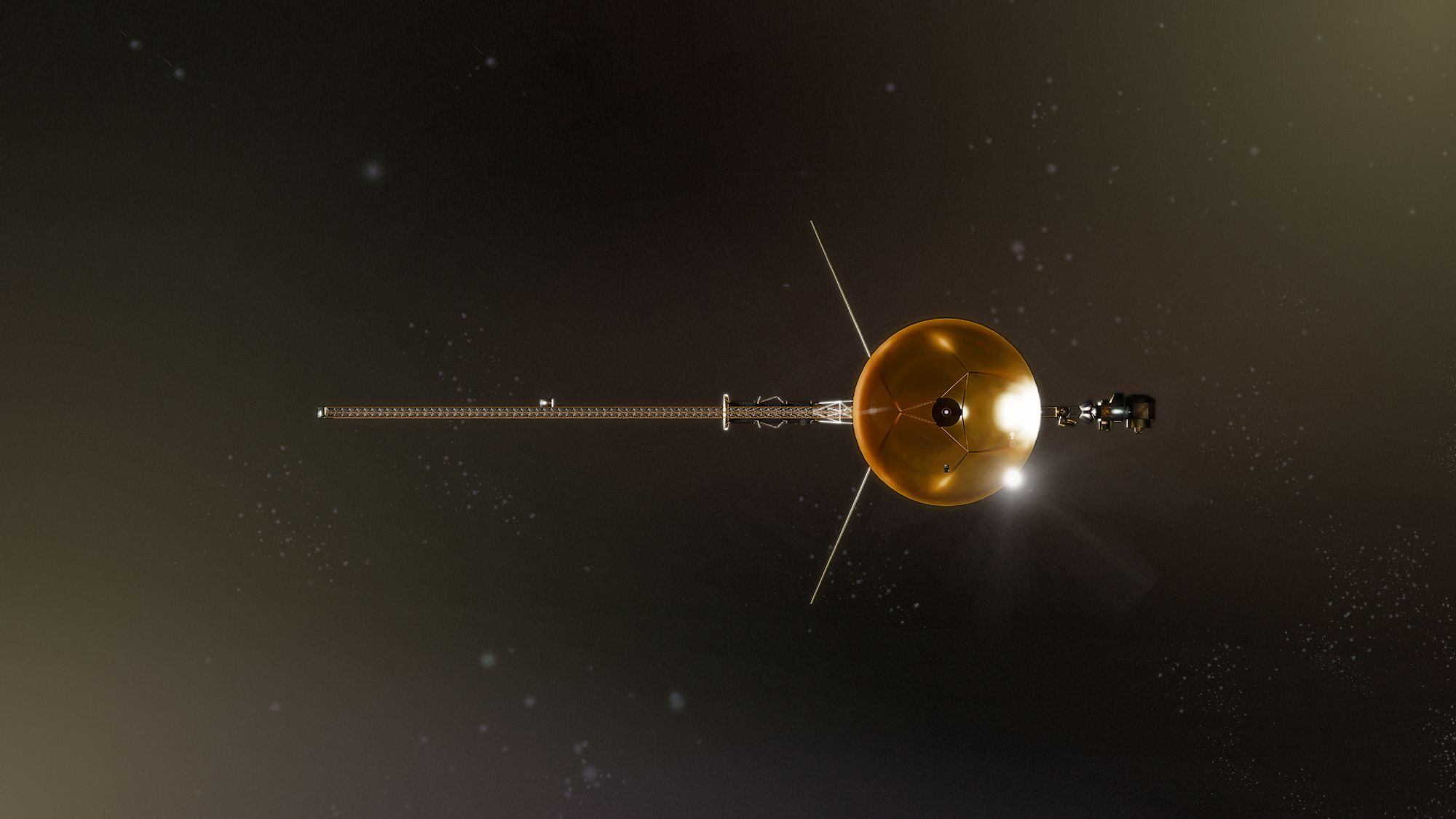
NASA’s Voyager 1 is about to cross a distance threshold that is easy to state but difficult to grasp: one light-day from Earth. The agency says the spacecraft will reach that mark on Nov. 18, nearly 50 years after it left Kennedy Space Center in Florida.
A light-day is the distance light travels in 24 hours. At that separation, a radio signal from Earth takes a full day to arrive at Voyager 1, and the spacecraft’s reply takes another day to return. The milestone puts the mission at roughly 16 billion miles, or 26 billion kilometers, from Earth.
A distance measured in time
Space missions are often described in miles or kilometers, but Voyager 1’s distance is increasingly more meaningful in terms of signal travel time. At one light-day, the unavoidable delay becomes part of every exchange with the spacecraft. Engineers cannot conduct a rapid back-and-forth conversation with it; even the simplest request and response spans about two days.
NASA said the crossover is scheduled for 5:16:07 a.m. EST, or 101607 GMT. During the event, Voyager 1 will be in contact with the Madrid station of the Deep Space Network, the three-antenna network used to monitor deep-space missions.
The spacecraft is the farthest human-made object from Earth. From Earth’s perspective, it is traveling through the constellation Ophiuchus. Its continuing communication with the Deep Space Network is what allows the mission to remain connected across an interstellar-scale distance.

Nearly five decades in flight
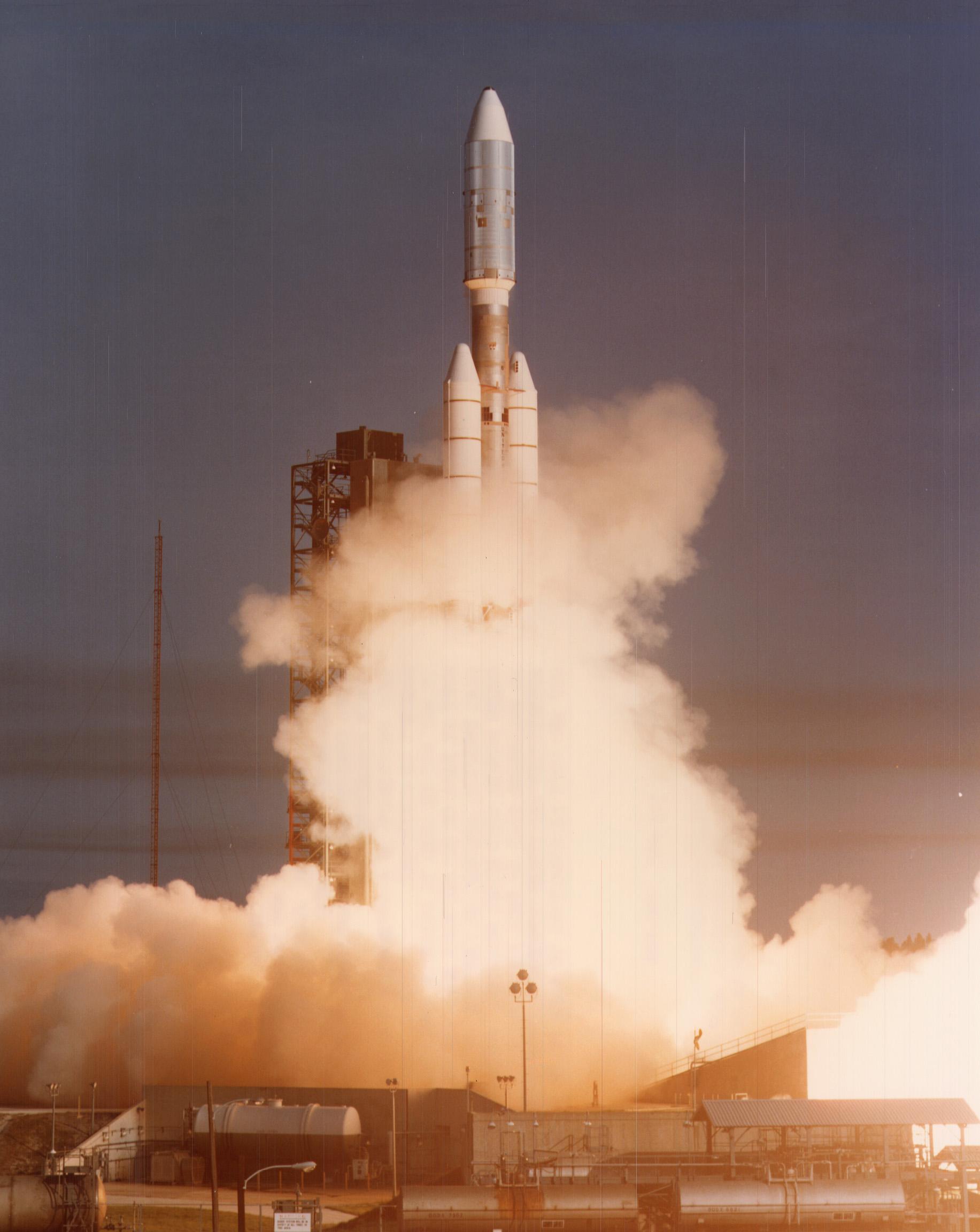
Voyager 1 launched on Sept. 5, 1977, a few weeks after its twin, Voyager 2. When it reaches one light-day, it will be 49 years, two months and 11 days old. The date also begins a year of celebrations leading toward the Voyagers’ 50th anniversaries in August and September of the following year, according to NASA official Jeffrey Hayes.
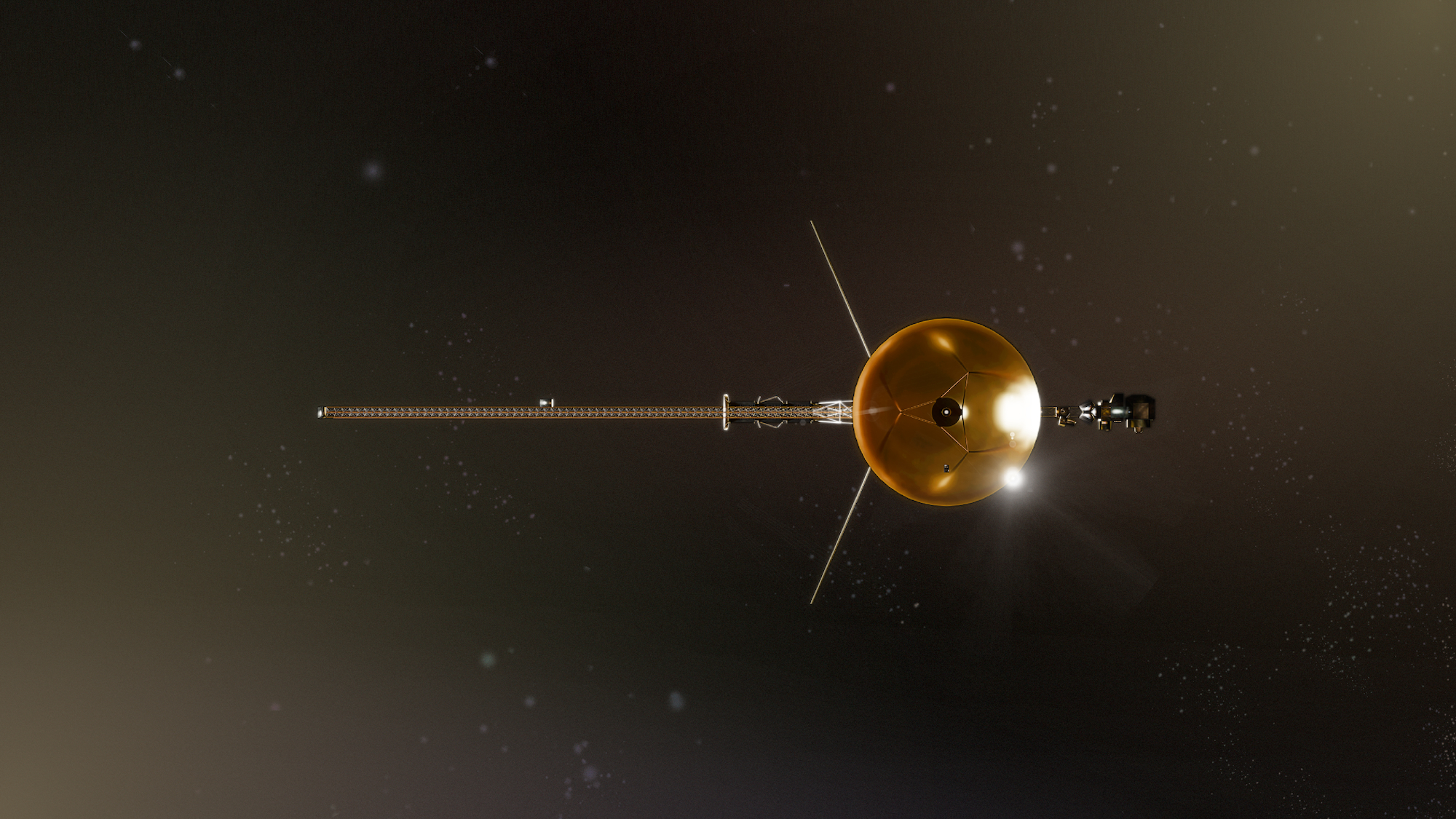
The mission’s longevity gives the coming milestone an unusual character. It is not a new launch, a brief flyby or a one-time observation. It is the latest marker in a journey that has remained active for almost half a century, extending humanity’s operating reach farther from Earth than any other spacecraft.
Voyager 2 is also far from Earth, at about 13.5 billion miles, but Voyager 1 remains the more distant of the pair. Together, the missions are enduring reminders that deep-space exploration depends not only on spacecraft hardware, but on ground systems that can send, receive and interpret faint signals over enormous distances.
Why the Deep Space Network matters
The one-light-day crossing is a spacecraft milestone, but it is also a communications milestone. NASA’s Deep Space Network is the link between Earth and missions operating far beyond the vicinity of the planet. For Voyager 1, that connection now has to bridge a distance at which the speed of light imposes a full-day wait in each direction.
The Madrid station’s scheduled contact during the crossover illustrates how operations continue at this scale. The passage of a radio signal is not symbolic; it is the practical means by which engineers remain in touch with a spacecraft that cannot be reached or repaired in person.
As the distance grows, every contact reflects a delay that cannot be engineered away. Commands, telemetry and any response remain bound by physics. That makes Voyager 1 an especially vivid demonstration of a basic constraint facing all far-flung exploration: distance is experienced not only as space, but as time.

A milestone ahead of a major anniversary
NASA describes the light-day mark as a major milestone and a reason to celebrate. It arrives as the agency prepares for the 50th-anniversary period of the Voyager missions, which began in 1977 and went on to become synonymous with exploration at the edge of the solar system and beyond.
The number itself offers a useful perspective. A one-way message will take 24 hours to reach Voyager 1. An answer needs another 24 hours to come home. In the time required for a two-day round trip, Earth will have rotated twice, while the spacecraft continues moving deeper into space.
That delay also makes the spacecraft’s continuing operation extraordinary in a practical sense. Voyager 1 was built in an era when the tools, computing and communications systems of modern spaceflight did not exist. Yet NASA and the Deep Space Network still maintain contact with it across a distance now measured in light-days.
The value of a simple benchmark
One light-day is not a destination in the conventional sense. Voyager 1 will not arrive at a new world or perform a maneuver to cross it. The milestone is a measurement of how far a continuing mission has traveled from the planet that launched it.
Still, that measurement captures the mission’s significance. Voyager 1 has transformed from a spacecraft sent outward from Earth into the most distant active human emissary. Its Nov. 18 crossover will mark the point at which even a radio message, traveling at light speed, needs a day simply to catch up.
For NASA, the occasion opens the countdown to a half-century of Voyager exploration. For everyone else, it provides a rare unit of distance that can be felt intuitively: Earth and its farthest spacecraft are about a day apart at the speed of light.
This article is based on reporting by Space.com. Read the original article.

Originally published on space.com