Starship’s 15th integrated flight test reaches orbit
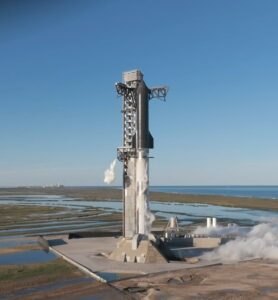
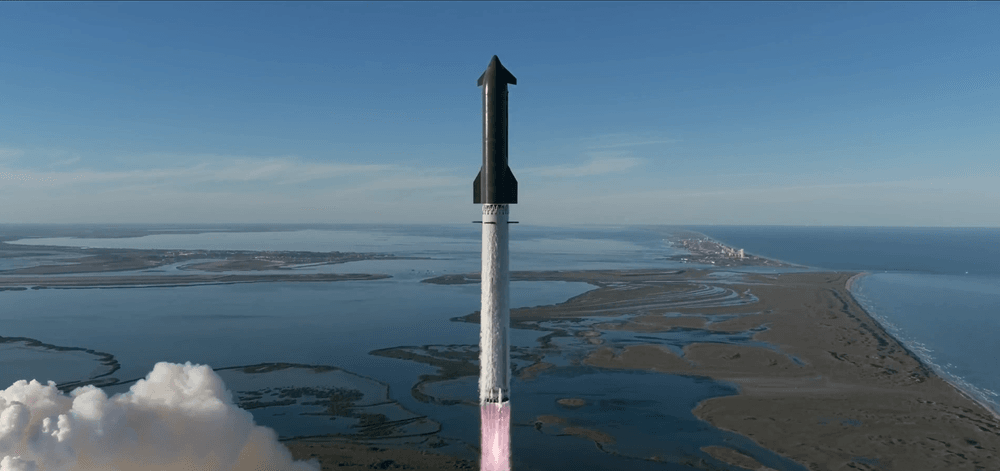
SpaceX launched its 15th Starship Integrated Flight Test from Starbase, Texas, on November 13, sending the upper-stage Starship vehicle into orbit and deploying 26 Starlink V3 satellites. The launch marked another operational step for the company’s fully reusable launch-system concept, although a planned recovery maneuver for the Super Heavy booster was abandoned during the flight.
The vehicle lifted off at 5:47 p.m. Eastern time. SpaceX’s architecture uses two stages: the Super Heavy booster, commonly called Booster, and the upper-stage vehicle called Starship or Ship. While the name Starship is often used for the entire stack, the upper stage is also intended to reach orbit, return to Earth and eventually fly again.
According to the report, the booster recovery plan changed after liftoff. Rather than attempting to return the first stage to the Starbase launch tower for a catch, SpaceX used an offshore divert and the booster splashed down in the Gulf. SpaceX had not publicly detailed what triggered the change at the time of publication.
A tower catch remains the central recovery test
SpaceX has previously caught Super Heavy boosters at the launch tower on three flights: IFT-5, IFT-7 and IFT-8. The maneuver is a defining part of the company’s reusability strategy because it is designed to return the large booster directly to the launch site, potentially shortening turnaround time between missions.
The IFT-15 mission was intended to attempt another booster catch, but the offshore diversion showed that the flight profile included an alternative recovery path when conditions did not support the tower approach. The booster did not make the planned return to the tower on this flight.
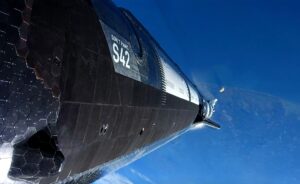
The upper stage, Starship 42, continued its mission after stage separation. The vehicle entered orbit and released 26 Starlink V3 satellites, a payload demonstration that moves Starship beyond earlier test profiles focused primarily on ascent, reentry and controlled splashdown.

Starship’s planned return from orbit
Starship 42 was scheduled to complete 14 Earth orbits over roughly 22 hours before returning toward Starbase the following afternoon. If the mission proceeded through its planned gates, the vehicle could attempt a launch-tower catch at about 4:17 p.m. Eastern time.
The report noted that SpaceX built multiple decision points into the mission, allowing it to bring the vehicle back early if needed. Such gates are significant because the return sequence combines orbital flight, reentry, controlled descent and a highly precise final approach to tower-mounted catching hardware.
IFT-14, flown in September, was the first Starship test to reach orbit. That flight achieved orbit and made a controlled landing in the Indian Ocean, despite not completing every objective exactly as planned. IFT-15 extended that record by reaching orbit again and deploying satellites while setting up a later attempt to recover the upper stage at Starbase.
Why IFT-15 matters
The mission illustrates both progress and the remaining complexity of a launch system designed for repeated use of both major stages. Reaching orbit and deploying a Starlink payload are concrete demonstrations of capability. The scrubbed booster catch, however, also highlights the tight margins involved in returning a large rocket stage to a tower at the launch site.
- Starship IFT-15 launched from Starbase, Texas, on November 13.
- The mission reached orbit and deployed 26 Starlink V3 satellites.
- The Super Heavy booster’s planned tower catch was replaced by an offshore diversion and Gulf splashdown.
- Starship 42 was scheduled for up to 14 orbits before a possible Starbase return attempt.
SpaceX’s next public details on the booster diversion and upper-stage return will be important for assessing the mission’s final outcome. For IFT-15, the orbital insertion and satellite deployment already represent a meaningful advance, while recovery remains the major test of whether the system can meet its reusability ambitions.
This article is based on reporting by spacepolicyonline.com. Read the original article.
Originally published on spacepolicyonline.com