Ukraine’s drone campaign is moving deeper into the waters around Crimea
Ukraine’s drone war is no longer confined to trenches, artillery lines, and the sky above front-line positions. A new phase is unfolding around occupied Crimea, where Ukrainian units operating far from the front are increasingly targeting vessels and other sea-borne assets tied to Russia’s war effort. According to reporting published by Defense News from a Reuters visit to southern Ukraine, these forces say they have struck more than 180 vessels and related targets over the past three weeks.
The campaign marks a meaningful shift in how Kyiv is trying to pressure Moscow. Rather than focusing only on military formations near the line of contact, Ukrainian forces are attempting to disrupt the logistics, transport links, and operating freedom that help sustain Russia’s hold on Crimea and support its broader campaign in southern Ukraine. The strategy is to make occupation more expensive, less predictable, and harder to maintain.
Crimea is emerging as a central pressure point
Crimea has long held outsized strategic value in the war. Russia seized and annexed the peninsula in 2014, years before its full-scale invasion of Ukraine in 2022, and it remains a military and transit hub for Russian operations. Supplies, fuel, equipment, and troop support all depend on functioning links between Crimea, occupied southern Ukraine, and Russia itself.
The recent drone effort appears designed to stress that network from multiple directions at once. The Reuters report says Ukrainian forces have already targeted road and rail links in the occupied south, helping create fuel shortages and a state of emergency in Crimea while also damaging power and gas facilities. The extension of attacks to oil tankers, dry cargo ships, and other vessels broadens the pressure campaign from land routes to maritime traffic.
That shift matters because it threatens one of Russia’s remaining advantages: the ability to move goods and support through waterways connected to the Sea of Azov and the Black Sea. If those routes become riskier, slower, or more expensive to use, Moscow must devote more resources to protection, rerouting, and repair.
Drone units far from the front are shaping the battlefield
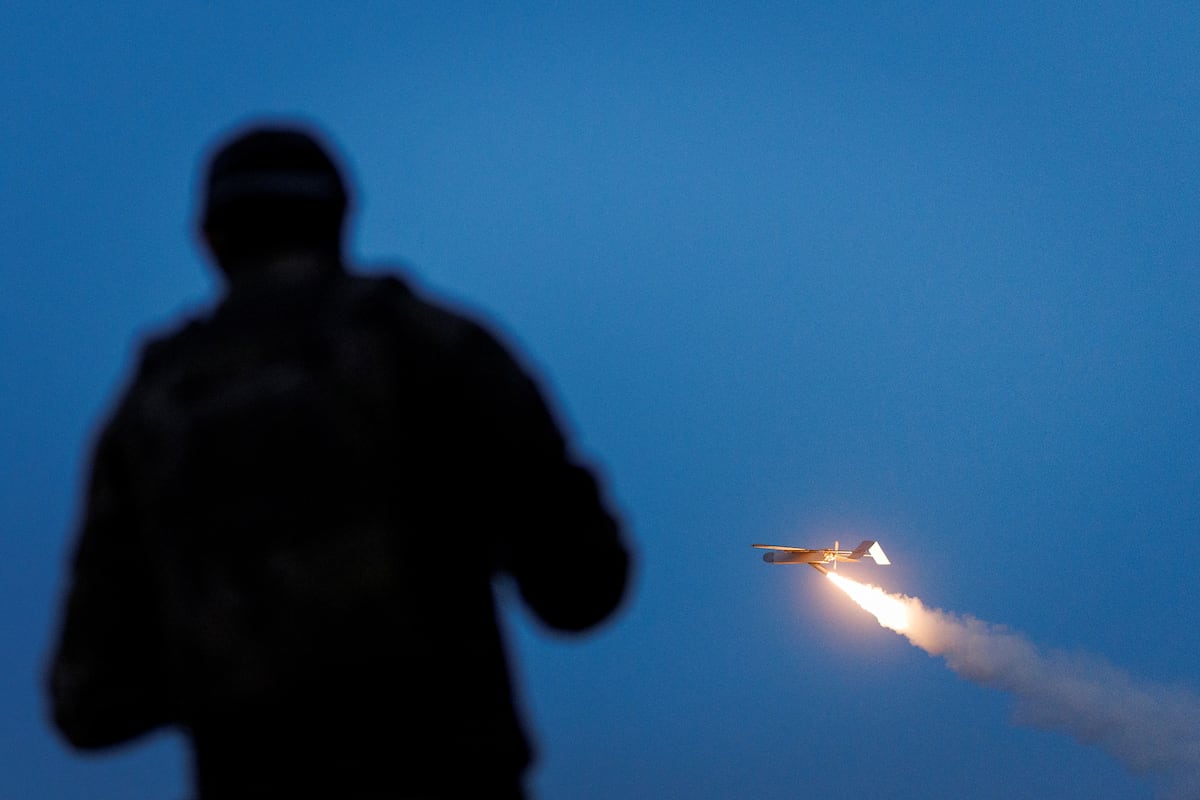
One of the more striking details in the report is where these attacks are being launched from. Reuters describes drone teams working from the sweeping steppe of southern Ukraine, well behind the front line, launching strike drones every few minutes. That speaks to both the scale and rhythm of the campaign. This is not portrayed as a sporadic raid, but as a sustained operational effort.
The battalion commander identified by the call sign “Ray,” from the brigade known as Magyar’s Birds, described the pace plainly: the unit works day and night without time off. In a war increasingly shaped by remote systems, endurance and tempo can be as important as a single dramatic strike. Constant attacks force an opponent to stay dispersed, consume air defenses, and treat a wider area as contested.
The unit said it struck a cargo vessel and a floating crane in the Black Sea as well as a power substation in southern Crimea. Reuters noted that it could not independently verify those specific claims. That caveat is important. In wartime, operational reporting often combines observable events, official claims, and information that remains difficult for outside reporters to confirm in real time.
The Sea of Azov and Black Sea are becoming a linked theater
The report describes a campaign that began in the Sea of Azov and is now expanding into the Black Sea. That widening geography suggests Ukraine is trying to knit together separate pressure zones into one larger maritime contest. The Sea of Azov is especially important because it receives shipping from Russia’s southern grain-producing regions via the Don River. Disruption there can ripple outward into logistics and commerce.
According to the report, forces under commander Robert “Magyar” Brovdi have said they are averaging roughly six vessel strikes per day in this phase of the campaign. Even if individual claims remain hard to verify independently, the operational objective is clear: choke Russian shipping, complicate resupply, and undermine the sense that Crimea’s surrounding waters are secure rear areas.
The Kerch ferry crossing and related maritime links matter in this context because they help connect Crimea to Russian-controlled territory and to Russia itself. Every threat to those corridors increases friction for military planners. A vessel delayed, rerouted, or damaged can have effects beyond the immediate strike, especially when it is part of a larger chain moving fuel, equipment, or construction capacity.
The campaign is also colliding with commercial shipping
The maritime contest is not unfolding in isolation. The Reuters account says Russia has stepped up strikes on Ukrainian ports and international cargo ships in recent weeks, while Kyiv’s agriculture minister said shipowners had temporarily suspended vessel arrivals at Black Sea ports used for agricultural exports. That detail shows how quickly the military duel at sea can spill into commercial shipping and export flows.
For Ukraine, that creates a difficult balance. Expanding the reach of drone strikes can impose real costs on Russian forces, but the broader security environment in the Black Sea also affects Ukraine’s own economy, especially agricultural exports. For Russia, raising the danger level for merchant traffic can increase pressure on Ukraine, but it also underlines that the Black Sea remains contested rather than stabilized.
The result is a feedback loop: more attacks lead to more caution from shipowners, more strain on trade routes, and more strategic value attached to controlling maritime access. In that sense, the Black Sea is not just a naval arena. It is also an economic battlefield.
A low-cost technology is redefining strategic reach
The broader significance of this campaign lies in what it says about modern warfare. Ukraine is using drones not only as tactical tools but as instruments of theater-level disruption. Relatively small, remotely operated systems are being used to threaten shipping, infrastructure, and operational depth far from the front. That changes how rear areas are defended and how vulnerable logistics chains can become.
Crimea appears to be the focal point because it combines symbolic value, military utility, and geographic leverage. If Ukraine can steadily raise the cost of occupying and supplying the peninsula, it can force Russia to devote more manpower and matériel to defense, potentially reducing pressure elsewhere.
What remains uncertain is whether the campaign can produce lasting operational effects at the scale Ukraine wants. Independent verification is limited, maritime conditions are complex, and Russia will adapt. But the direction is unmistakable: the war around Crimea is becoming more distributed, more technological, and more maritime. The sea lanes that once looked like supporting infrastructure are increasingly part of the main fight.
This article is based on reporting by Defense News. Read the original article.
Originally published on defensenews.com