Work continues at a hardened Iranian airbase
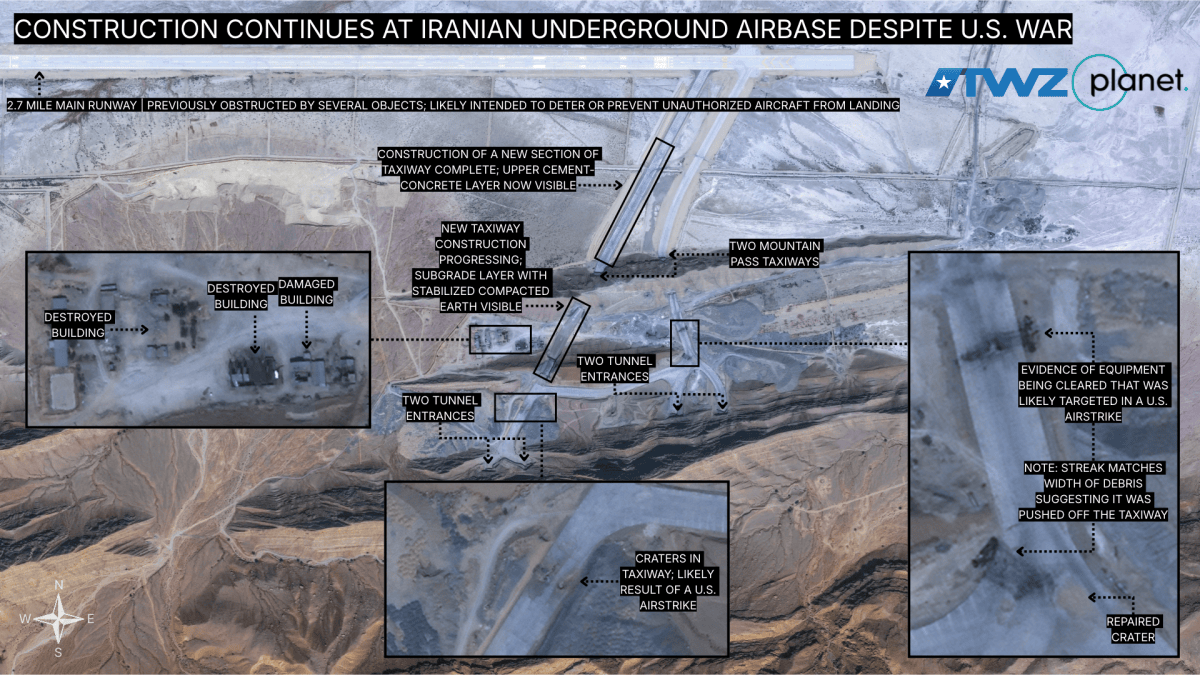
Satellite imagery reviewed by The War Zone indicates that Iran is continuing construction at Eagle 44, an underground airbase in Hormozgan province, despite the facility having absorbed at least three rounds of airstrikes this year.
High-resolution images captured by Planet Labs in late September show a newly completed section of taxiway, the removal of runway obstacles and the clearing of wrecked equipment from pavement areas. Several support buildings still appeared destroyed or damaged in the imagery, while construction activity was continuing.
The images offer a snapshot of recovery and rebuilding at a site designed around survivability. Eagle 44 is a hardened installation carved into the side of a mountain, with underground hangars and taxiway tunnels that can shelter aircraft. The facility has also been associated with drones and potentially with cruise and ballistic missiles.
What the imagery shows
The most concrete indicators of activity in the late-September imagery are changes to the base’s operating surfaces and surrounding infrastructure. A new taxiway section had been completed. Equipment that had been wrecked was no longer left on the pavement. Obstacles previously placed to obstruct the runway had also been removed.
Those changes do not by themselves establish the full operational status of the base. The report notes that several support structures remained damaged or destroyed. Nor do the images resolve which aircraft, if any, are currently based there. But the visible work indicates that the site has not simply been abandoned after the strikes.
That distinction is important at a hardened airfield. Underground shelter, dispersed internal routes and protected access points can make a facility more resilient than a conventional open ramp. Repairing taxiways, clearing debris and restoring access can be meaningful steps even when visible buildings still bear damage.
A base built around concealment and protection
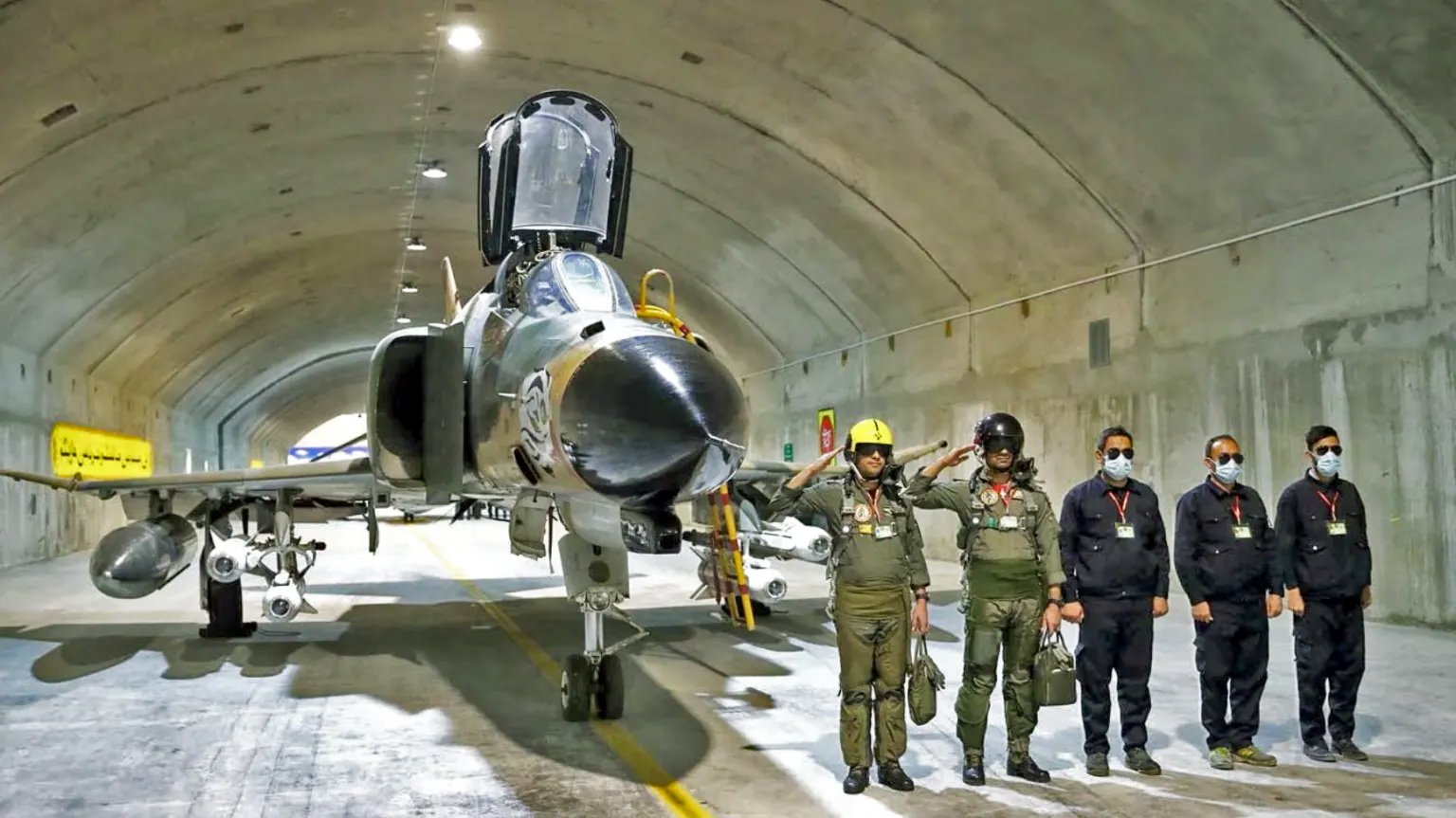
Eagle 44, also known as Oghab 44, was publicly unveiled by Iranian state media in February 2023. Its name refers to the 44th anniversary of Iran’s 1979 revolution. Footage released at the time showed Islamic Republic of Iran Air Force F-4D/E Phantom II aircraft operating at the facility.
The aircraft shown were depicted carrying a mixture of weapons, including AGM-65 Maverick air-to-ground missiles, laser- and electro-optically guided bombs, unguided bombs and Iranian-made anti-ship missiles. One-way attack drones were also visible in the background of the released material.
The base is operated by the Islamic Republic of Iran Air Force rather than the Islamic Revolutionary Guard Corps Aerospace Force. That organizational detail matters because Iran’s military aviation and missile capabilities are divided among services with distinct roles. The available imagery nevertheless points to a site whose underground architecture could support more than one type of air or strike activity.
Recovery amid questions about Iran’s air power
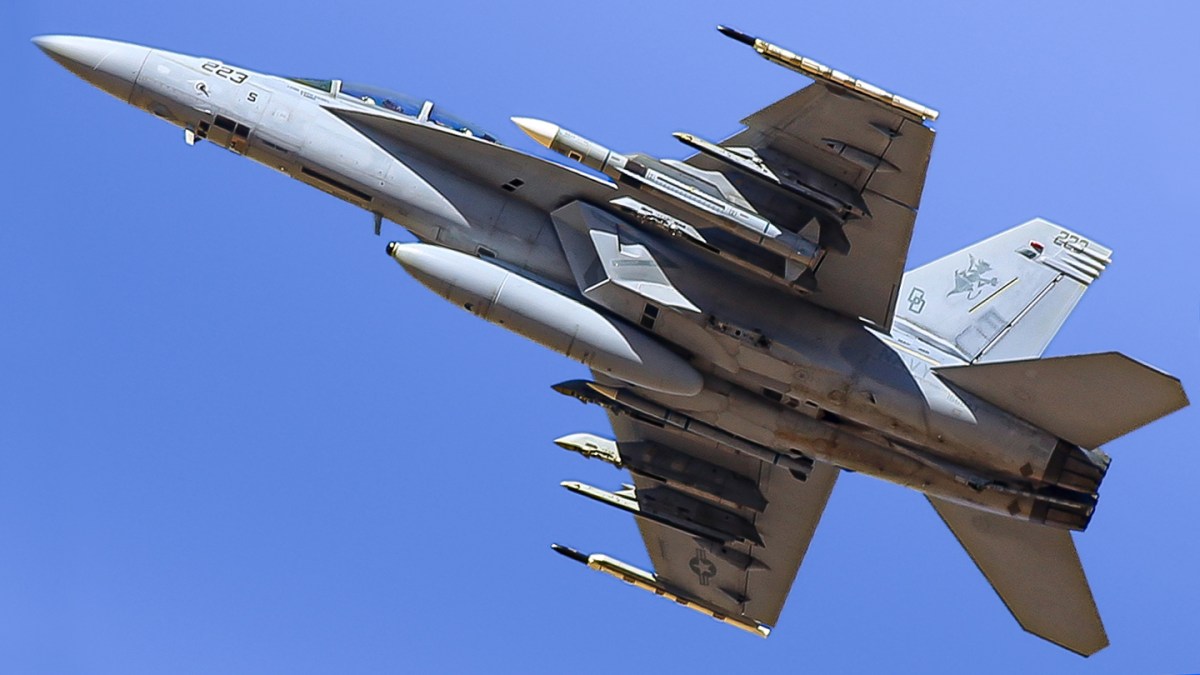
The rebuilding effort is taking place while the Pentagon and the Trump administration have said little remains of the Iranian air force for such a facility to protect, according to the report. The actual number of operational aircraft available to use Eagle 44 is unclear.
The F-4 Phantom II has long been among the most numerous combat aircraft in Iranian service. The report says the air force had roughly 60 examples at the time Eagle 44 was unveiled, while emphasizing that it is unknown how many remain today and how many are operational. The late-September images cannot settle that question, but they show that Iran is investing effort in restoring part of the infrastructure needed to use the location.
In military terms, physical reconstruction and combat capability are related but not identical. A repaired taxiway does not demonstrate that a wing is ready to fly missions. Conversely, continuing work at the base signals that Iranian planners place value on preserving or recovering the site’s utility despite recent damage.
Why Eagle 44 matters
Underground airbases can complicate assessments of both damage and recovery. Surface imagery can reveal construction, destroyed buildings and cleared pavement, but it provides only a limited view of tunnels, underground hangars and the equipment or activity they may contain. That makes visible logistics work particularly useful as an indicator of intent: clearing a runway or completing a taxiway is a practical investment in future access and operations.
The facility’s location in Hormozgan province also places it in southern Iran, near strategically significant Gulf and maritime approaches. Its reported ability to shelter fighter aircraft, drones and possibly missile-related assets gives it relevance beyond conventional airfield operations.
The satellite evidence does not show a fully restored base. It does show a mixed picture: damaged structures remain, while operational surfaces and construction areas are being addressed. For analysts, that is a reminder that the effect of strikes on hardened facilities cannot be judged solely by initial damage imagery. The pace and scope of reconstruction are part of the strategic picture as well.
This article is based on reporting by twz.com. Read the original article.
Originally published on twz.com