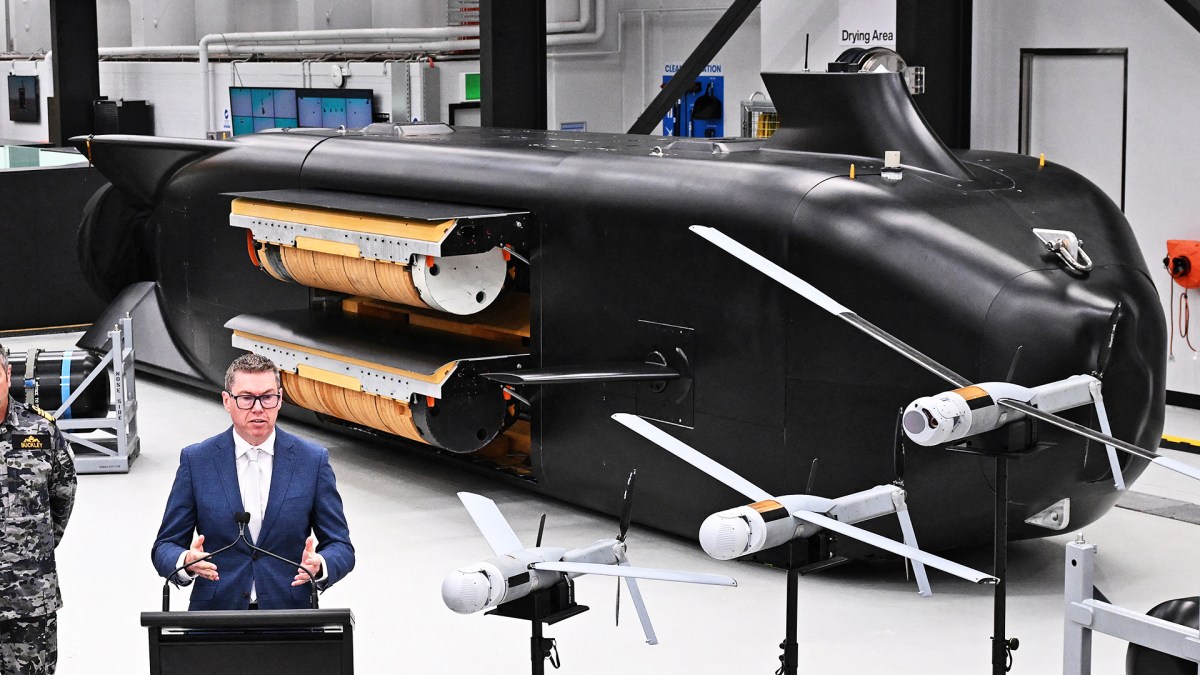
Australia has offered its clearest public look yet at the modular payload concept behind Ghost Shark, its extra-large autonomous underwater vehicle. Newly released photographs show the vehicle with its payload bay open, while government and industry details point to missions ranging from intelligence collection to mine deployment, seabed resupply and the launch of aerial drones.
Ghost Shark is being developed for the Royal Australian Navy as an extra-large autonomous underwater vehicle, or XL-AUV. Australian authorities had previously said the platform was intended for persistent intelligence, surveillance, reconnaissance and strike missions. The new information makes the proposed mission set more concrete while also emphasizing that much of the capability depends on what is placed inside the vehicle’s payload bay.
A vehicle designed around adaptable payloads
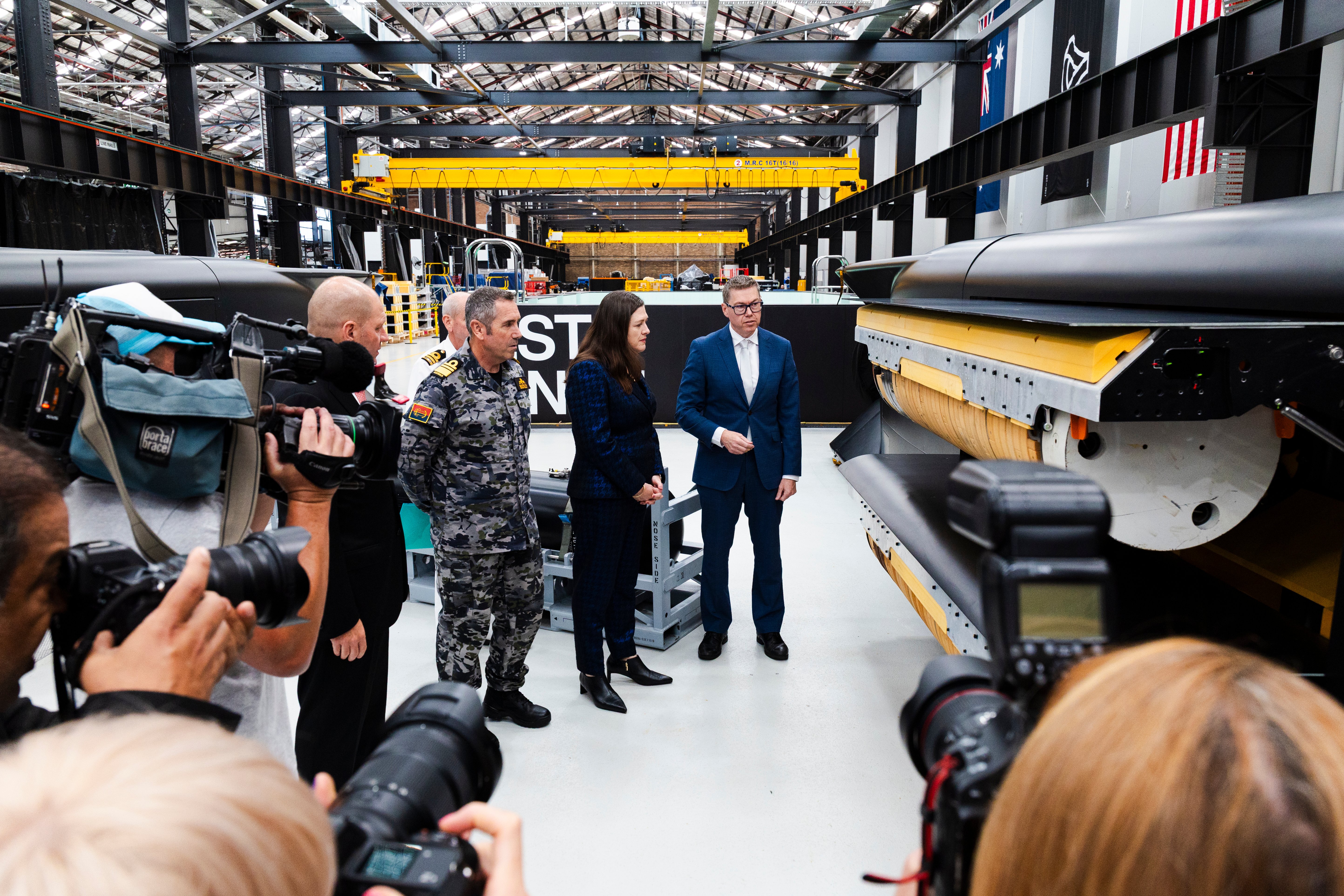
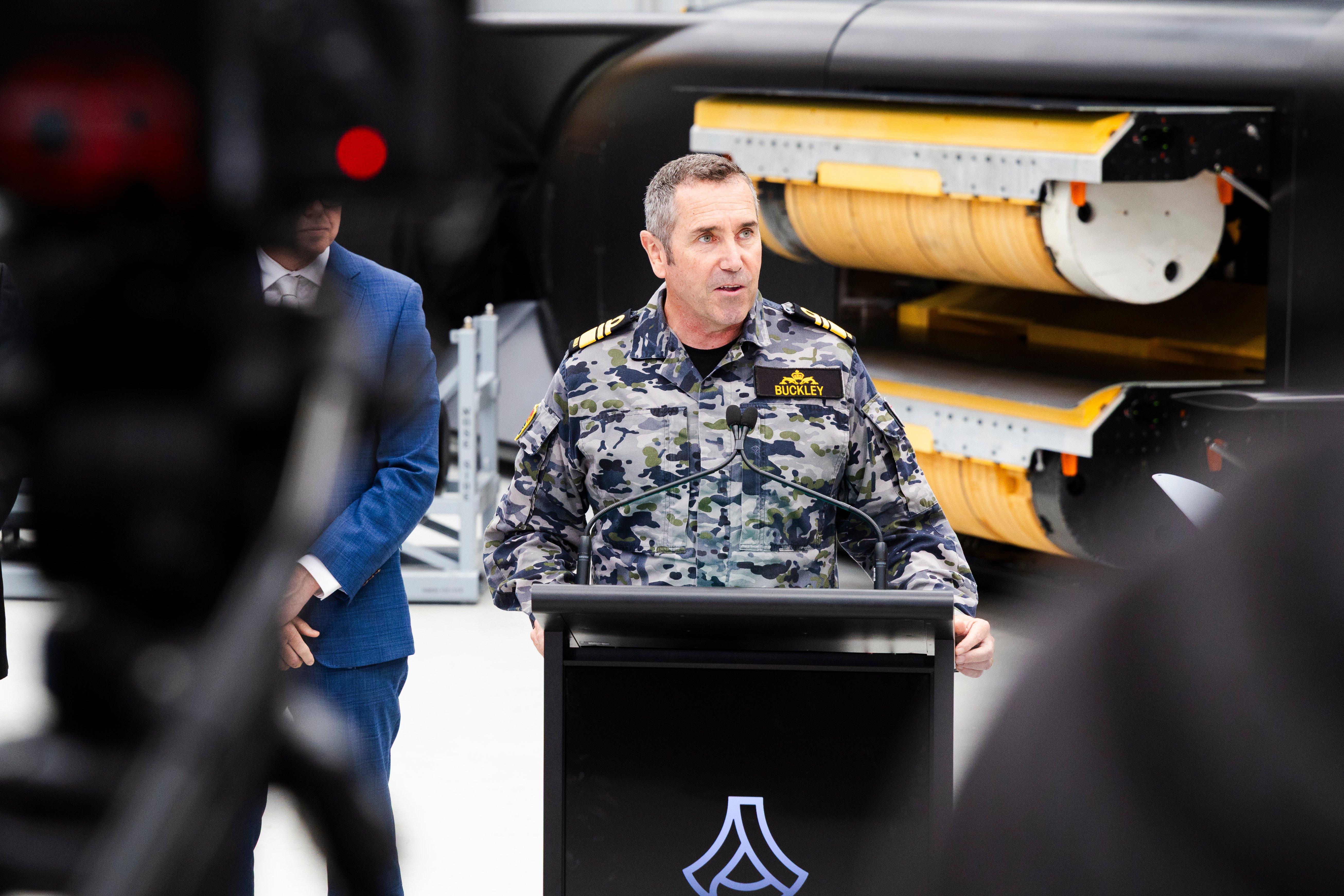
The images were taken during a recent visit to Anduril Australia’s Sydney factory by Pat Conroy, Australia’s minister for defense industry. They emerged alongside an October 19 government announcement covering payload development for Ghost Shark, the Speartooth large uncrewed underwater vehicle and the BlueBottle uncrewed surface vessel.
In the Ghost Shark images, the open bay provides a first public view of the space intended to accept mission-specific systems. That modular approach is central to the platform’s purpose. Rather than build separate underwater vehicles for every task, the navy could configure a common vehicle with different payloads as operational needs change.
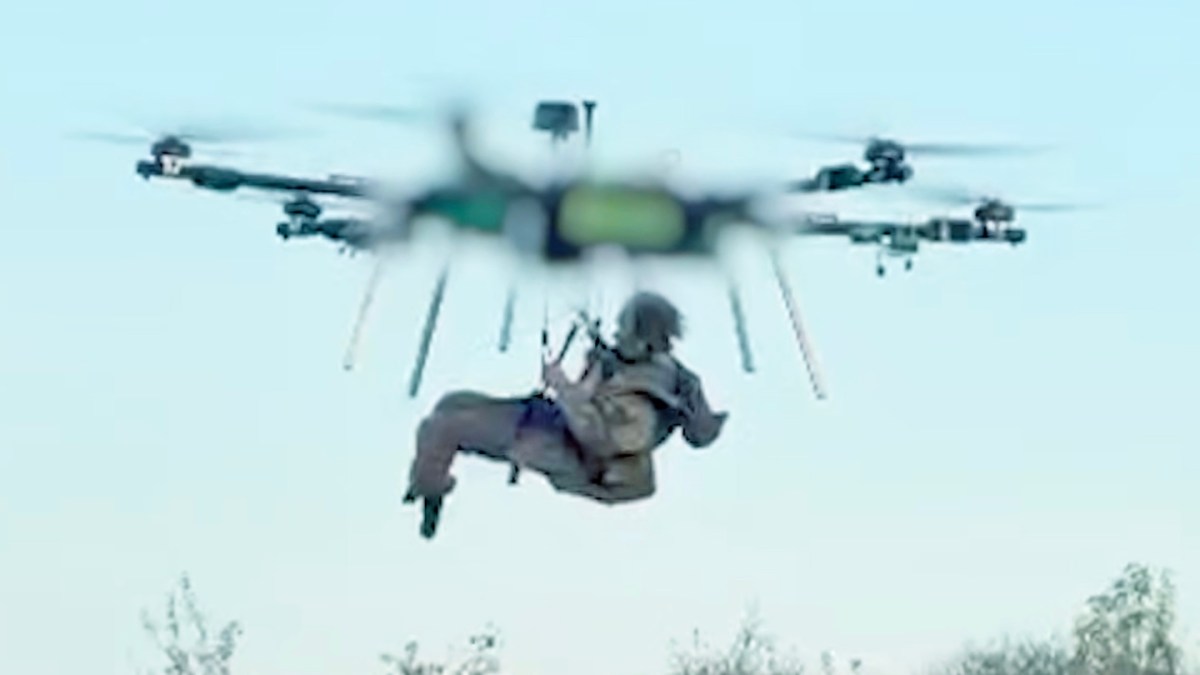
The announcement described three previously undisclosed payload options for Ghost Shark: carrying up to 12 sea mines on a mission, placing supply caches on the seabed, and launching Anduril ALTIUS aerial drones for reconnaissance or strike missions. Each option implies a very different role for the same underwater platform.
From surveillance to undersea logistics
Mine deployment would give an autonomous vehicle a means of creating hazards or restricting access in contested waters without requiring a crewed vessel to enter the same area. The stated capacity of up to 12 mines illustrates the scale being considered for the vehicle’s payload bay, although the announcement did not provide details about the mines, their employment or their operational status.
Seabed resupply is a different proposition. Leaving supply caches underwater could support distributed operations in which equipment is positioned ahead of need or delivered without exposing conventional logistics ships. The supplied details do not specify what the caches would contain or how they would be recovered, but the proposed mission underlines an interest in using uncrewed systems for more than sensing and surveillance.
The ability to launch ALTIUS aerial drones from an underwater vehicle is also notable. It would combine an underwater approach with an airborne payload for reconnaissance or strike. The announcement does not establish how such a mission would be conducted, but it describes a concept in which Ghost Shark serves as a mobile platform for systems operating in another domain.
Why modularity is central
Ghost Shark’s modular design is intended to accommodate different mission-specific systems and enable the Royal Australian Navy to configure the underlying platform for varying requirements. That flexibility matters because undersea missions can demand different combinations of endurance, sensors, communications, payload capacity and risk tolerance.
A platform configured for persistent intelligence gathering would not necessarily need the same equipment as one tasked with delivering a seabed cache or carrying mines. A modular bay offers a way to change the mission without redesigning the entire vehicle. It also creates a continuing development task: the utility of the vehicle will depend on the payloads, interfaces and operational concepts developed around it.
Conroy framed the expanded payload options in stark terms, saying Ghost Shark now has “teeth” and would be able to inflict damage on a potential adversary. The broader government announcement, however, described payload development in general terms. The disclosed options should therefore be understood as an indication of planned capabilities rather than a public account of deployed operational systems.
An emerging Australian undersea capability
The Ghost Shark update arrives as Australia details work across several uncrewed maritime platforms. Speartooth, a large uncrewed underwater vehicle, and BlueBottle, an uncrewed surface vessel, were included in the same announcement. Together, those programs point toward a wider effort to develop systems that can operate below and on the sea while supporting surveillance, logistics and other missions.
For Ghost Shark, the visible payload bay is important because it turns an abstract claim of modularity into a physical design feature. The vehicle is not presented simply as a sensor carrier. Its announced concepts include moving supplies to the seabed, deploying sea mines and acting as a launch point for aerial drones.
The release leaves major questions unanswered, including timing, testing, payload integration and how the navy would employ the vehicle in practice. Yet it provides a clearer view of the direction of travel: Australia is pursuing an uncrewed underwater system designed to accept varied payloads and perform missions that extend beyond traditional reconnaissance.
This article is based on reporting by twz.com. Read the original article.
Originally published on twz.com