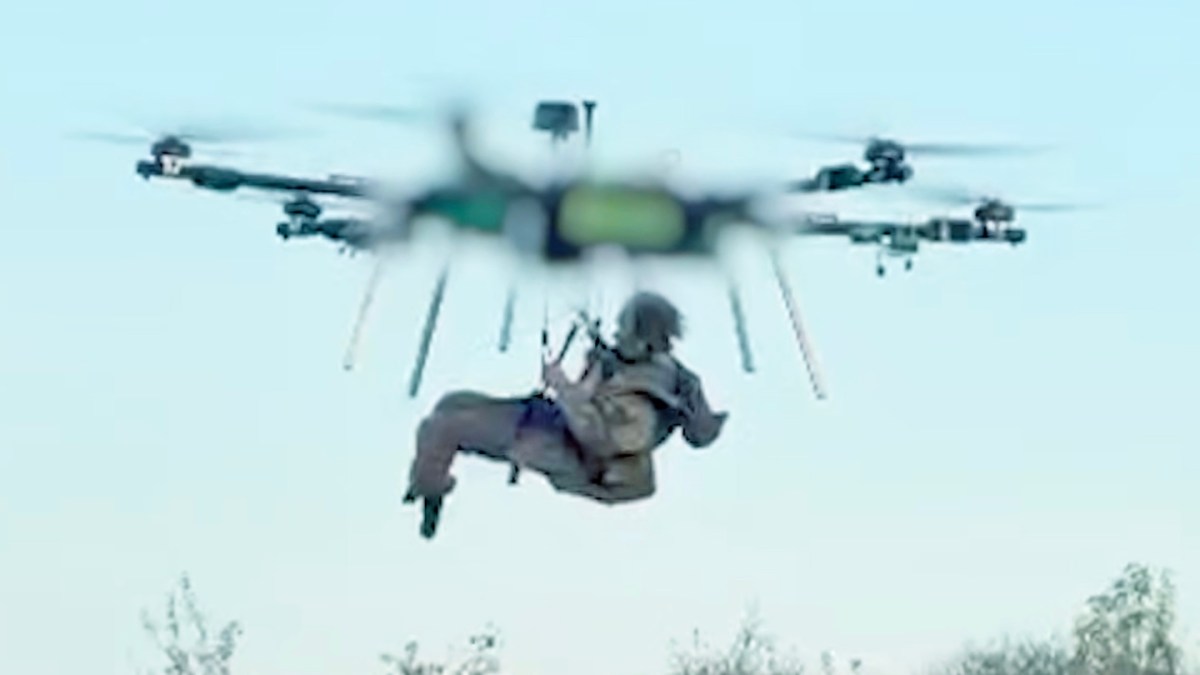
The Ukrainian Armed Forces say they have used an aerial drone to evacuate a wounded soldier from the front line, an operation described by the unit involved as a world first. The account, along with video released by Ukraine’s 92nd Assault Brigade, should be treated cautiously: the date and location have not been disclosed, and the claim has not been independently verified.
If the reported mission occurred as described, it would illustrate a new and unusually direct use of uncrewed aircraft in a battlefield environment already saturated with drones. Rather than carrying a weapon, observing an area or delivering supplies, the aircraft was used to lift a person away from a position that Ukraine said could not be reached safely by conventional ground evacuation.
A reported extraction from a denied area
According to the 92nd Assault Brigade’s account, the infantryman was wounded while holding his position. Mines and intense Russian drone activity prevented a normal recovery by ground vehicle or personnel, prompting specialists to attempt aerial extraction.
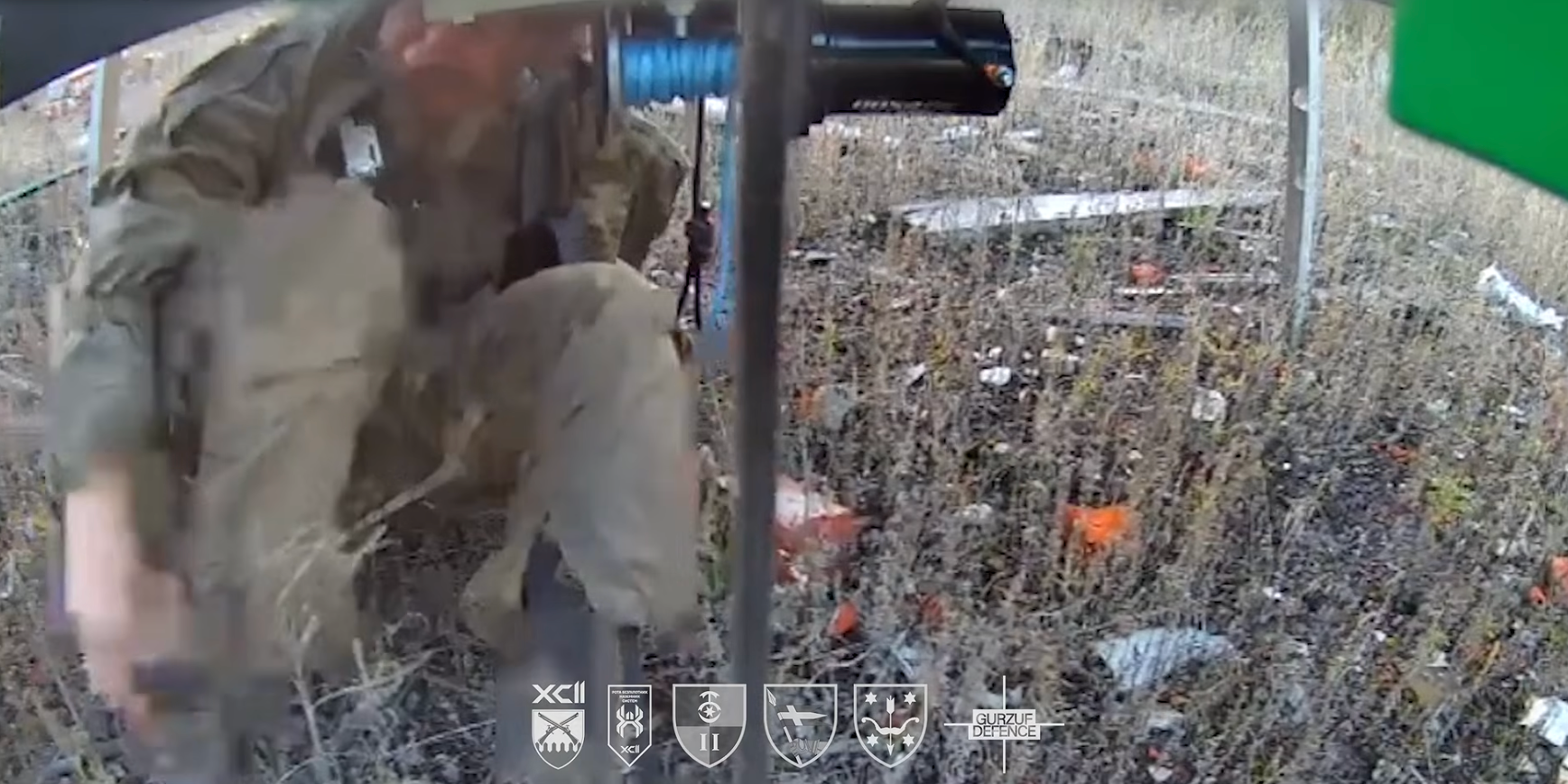
The published footage shows a soldier beneath a hexacopter attaching a harness to the aircraft before being flown away. The soldier appears to hang below the drone’s rigid landing legs during the flight. The improvised configuration is central to the operation’s significance and its risk: the footage does not show a purpose-built air ambulance, but a heavy drone adapted to carry a human load.
The soldier was from Ukraine’s 30th Mechanized Brigade, according to the report. The 92nd Assault Brigade said the recovery was successful and that the soldier was receiving treatment and rehabilitation. A squad commander and programmer in the 92nd’s uncrewed ground vehicle company called it a historic event for the unit.
What is known about the aircraft
The aircraft was described as a heavy hexacopter made by Ukrainian company Gurzuf Defense. The company supplied it without charge, according to the published account. A UAV operator from the 30th Mechanized Brigade piloted the drone, while the wounded soldier remained in contact with the operator during the recovery.
No payload figures, flight distance, battery details, altitude or precise operating conditions were disclosed in the supplied account. Those missing facts limit the conclusions that can be drawn about whether the technique can be repeated at scale. The video also cannot independently establish that the event took place during an active combat evacuation rather than as a demonstration.
The War Zone, which reported the claim, explicitly noted that the footage had not been independently verified and could depict a staged demonstration. That caveat is especially important for a purported first-of-its-kind operation, where the available public evidence is a unit-released video and accompanying statements.
Why the reported mission matters
Even with those uncertainties, the episode points to the pressure that drone warfare places on casualty evacuation. The Ukrainian account describes a situation in which mines and enemy drone activity made conventional recovery impractical. In such a setting, an aerial platform may offer a way to reach an isolated casualty without sending a larger rescue team through the same threatened route.
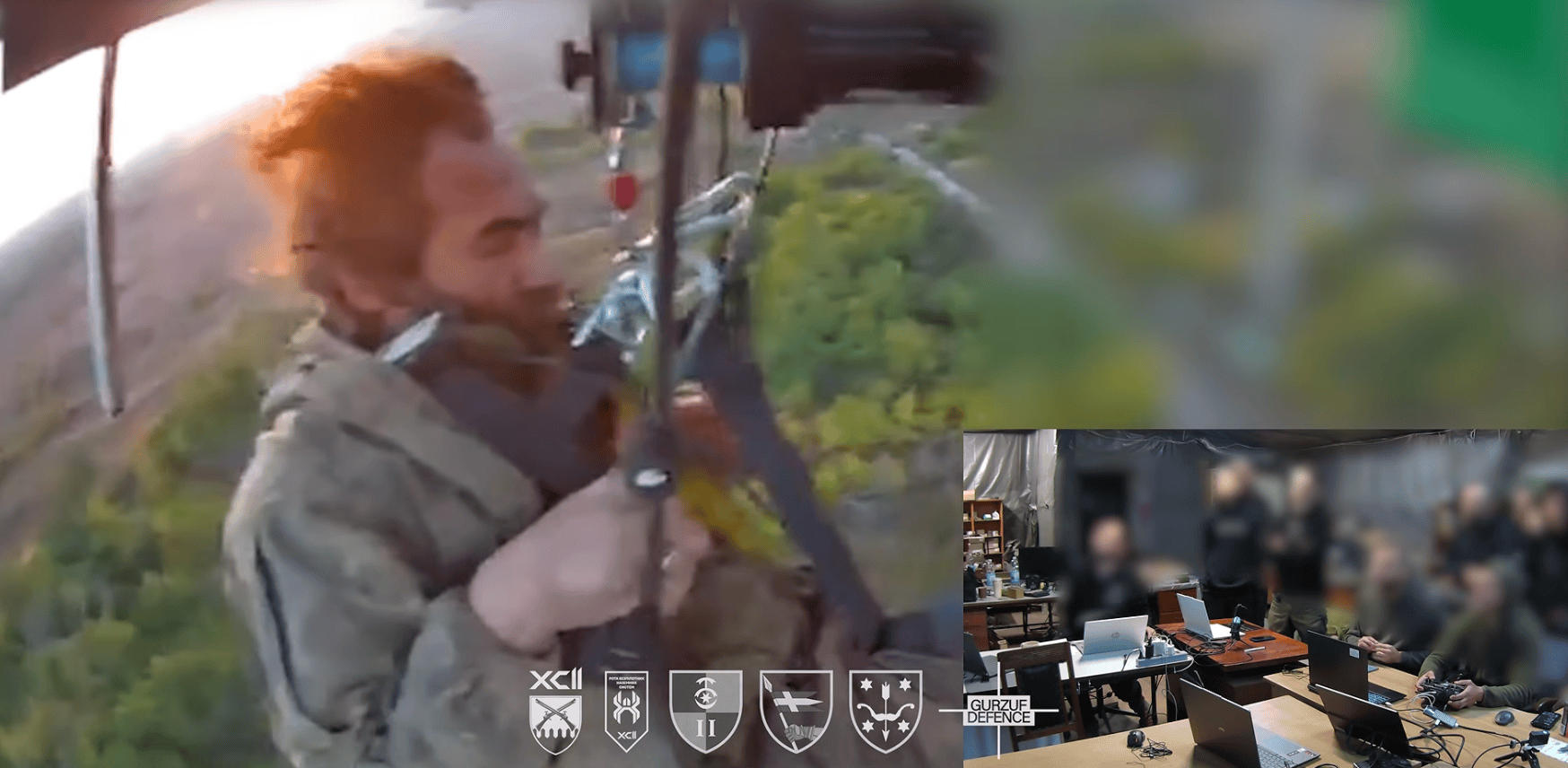
But carrying a person externally beneath a small uncrewed aircraft presents obvious limitations. A wounded casualty is exposed during the flight, must be secured reliably, and depends entirely on the aircraft, its controls and its ability to complete the journey. The footage’s apparent use of a harness attached below the landing legs underlines how far the setup is from a standardized medical-evacuation system.
That does not make the attempt insignificant. It suggests that units facing fast-changing battlefield constraints are testing whether existing heavy-lift drone technology can fill gaps created by minefields and persistent aerial surveillance. The reported operation appears to have been an adaptation born of an immediate tactical problem, not evidence that aerial casualty evacuation has become routine.
Claims still need verification
Ukraine’s statement calls the extraction the first frontline evacuation of a wounded person by aerial drone. The available reporting does not independently confirm that it was the first such event globally, nor does it provide enough information to compare it fully with previous trials or demonstrations elsewhere.
For now, the clearest conclusion is narrower. Ukraine says it successfully used a heavy hexacopter to remove a wounded soldier from a frontline position where ground evacuation was judged too dangerous. The released footage offers a rare view of that claimed tactic, while also leaving important questions unresolved.
Those questions matter because the difference between a singular improvised rescue and a repeatable capability is substantial. Independent verification, technical details and evidence of subsequent missions would be needed before the reported event can be treated as a durable change in battlefield medical evacuation. Still, the claim captures the increasingly broad role drones are being asked to play when conventional movement on the battlefield becomes difficult or dangerous.
This article is based on reporting by twz.com. Read the original article.
Originally published on twz.com