Germany pulls two standby naval vessels back from the Gulf region
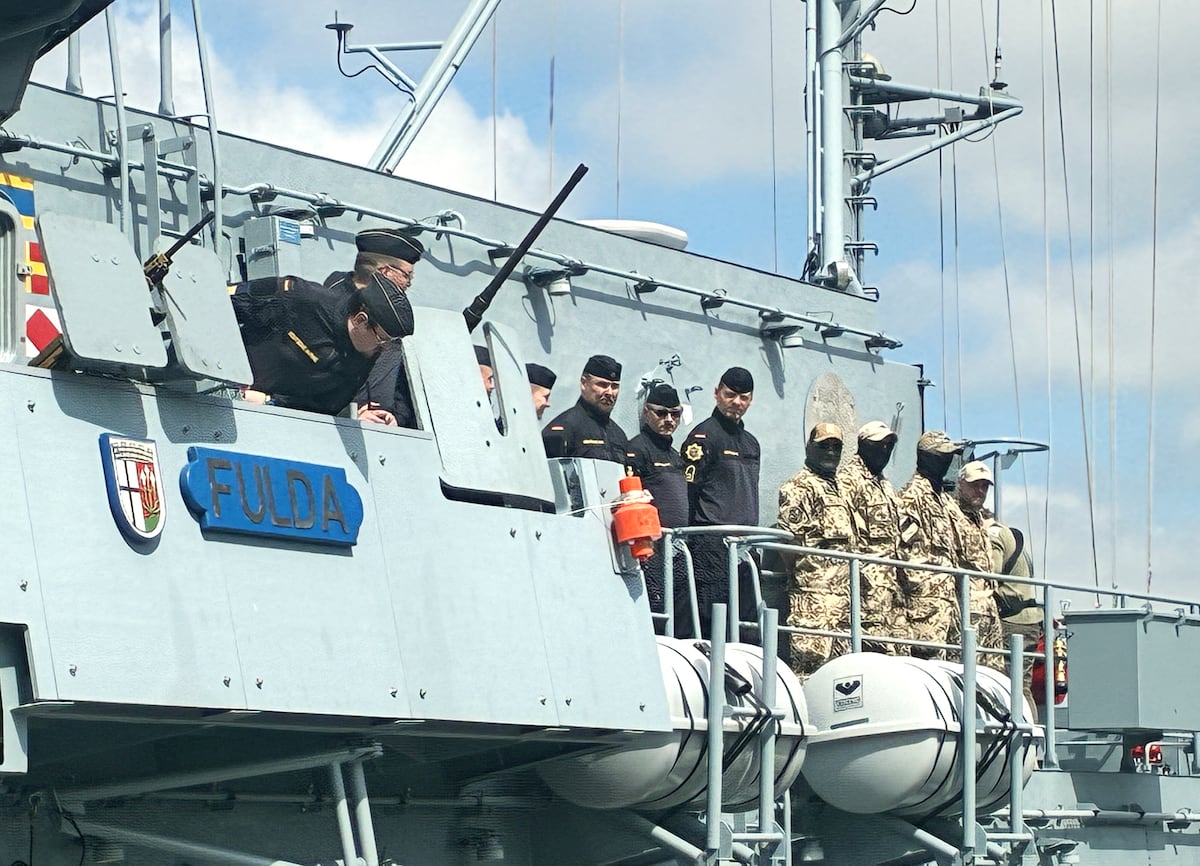
Germany has repositioned two navy ships that had been placed on standby for a possible international security mission in the Strait of Hormuz, a sign that Berlin sees little chance of a near-term stabilization of the conflict involving Iran. The mine hunter Fulda and the support vessel Mosel, which had been stationed near the southern entrance to the Red Sea, are now set to move to the eastern Mediterranean instead, where they will wait for further instructions.
The redeployment reflects a sharp downgrade in expectations. According to the source report, European governments had signaled a willingness to contribute naval assets to a multinational mission intended to protect commercial traffic through the Strait of Hormuz, one of the world’s most strategically important shipping chokepoints. But that plan depended on a meaningful reduction in hostilities. Berlin now appears to believe that condition is no longer in sight.
The German Defense Ministry’s announcement, as summarized in the source material, said open hostilities had broken out again between Iran and the United States after a period of relative calm. In that environment, the prospect of what officials described as a permissive setting for a naval security operation has become increasingly unlikely. Rather than keep the ships in a forward waiting position near Djibouti, Germany is shifting them to a location viewed as more sustainable while political and military conditions remain unsettled.
A regional war is colliding with Europe’s maritime security planning
The ships had originally been sent to the Gulf of Aden region weeks earlier as a standby force for an eventual post-war mission tied to Hormuz. That planning followed the outbreak of the U.S.-Israeli war against Iran in late February, when European nations indicated they were prepared to support a multinational effort aimed at securing shipping routes if the fighting eased enough to allow deployment without immediate exposure to active combat.
That caveat now matters more than ever. The Strait of Hormuz is economically vital because of the volume of energy supplies and other trade that move through it, and any instability there has direct implications for shipping risk, insurance costs, and broader supply-chain confidence. European governments have strong incentives to help preserve freedom of navigation. At the same time, they have shown reluctance to place naval crews into a mission that could quickly slide from escort duty into direct wartime exposure.
Germany’s move therefore captures a wider European tension. Leaders want to be seen as reliable contributors to international maritime security, but they also want to avoid being drawn into an open-ended conflict whose political logic and military trajectory remain uncertain. The source report suggests German officials no longer see a realistic opening for the sort of limited post-conflict operation that had been under discussion earlier in the year.
The shift also underlines how rapidly the strategic picture has changed. A mission framed as a stabilization effort after the fighting now looks premature because the fighting itself has not clearly receded. That leaves participating governments with an awkward choice: either maintain costly military readiness near the theater indefinitely, or step back and accept that any coalition operation may be delayed or abandoned altogether. Berlin has chosen a middle path by keeping the vessels available, but farther away.
Technical limits mattered too
Geopolitics was not the only factor behind the decision. The source report says German Navy officials also acknowledged a practical operational issue: the two vessels were not well suited to prolonged deployment in the extreme heat of the Gulf of Aden area. Their cooling systems rely on seawater, and the ships were built decades ago for operations in cooler environments such as the North Atlantic and waters closer to Germany.
That detail may sound secondary, but it is strategically important. Military readiness is not just about intent; it is also about whether platforms can safely and effectively remain in a theater for as long as policymakers require. Older vessels designed for a different climate can become liabilities when they are pushed into missions outside their original operating assumptions. In this case, the eastern Mediterranean is described as a more suitable holding area while Berlin waits to see whether a future tasking emerges.
The episode is a reminder that Europe’s naval capacity constraints are not only numerical but also technical. Governments may pledge support quickly in a crisis, yet the actual sustainability of those commitments depends on vessel design, maintenance cycles, escort availability, and environmental conditions. Those constraints can shape policy just as much as diplomatic signaling does.
Symbolism, alliance politics, and uncertainty ahead
The report also highlights the political optics surrounding Germany’s initial deployment and its subsequent repositioning. One analyst cited in the source suggested that U.S. President Donald Trump could interpret the move as a sign of weak staying power in the region. At the same time, the same analysis indicated that European partners would likely understand the decision, given the confusion created by rapidly shifting U.S. messaging around military strikes and peace prospects.
That split captures a central problem for U.S.-European coordination in the current crisis. If Washington’s signals are hard to interpret, allied governments face a greater challenge in deciding how much risk to accept, how long to remain postured for action, and what exactly success would look like in a joint maritime mission. A standby deployment can serve as reassurance for partners, but it can also become an exercise in political theater if the underlying mission never materializes.
The source report notes criticism that Germany may have engaged in symbolic politics by moving vessels into the area in the first place to signal support for the United States without a clearly defined operational end state. Whether that critique is fair or not, the new redeployment suggests Berlin is now trying to match its military posture more closely to the realities on the ground.
For now, the two ships remain in a holding pattern rather than exiting the picture entirely. That preserves some flexibility. If conditions improve and an international Hormuz security mission becomes viable, Germany could still contribute. But the immediate message is unmistakable: Berlin no longer expects the war environment around Iran to settle soon enough to justify keeping these ships in their original forward standby position.
In practical terms, Germany’s decision does not close the door on a future maritime operation. In political terms, however, it is a sober signal that Europe’s contingency planning for Hormuz has run into the harder truth of an unresolved war. As long as that conflict continues to flare, even limited security missions will struggle to move from concept to deployment.
This article is based on reporting by Defense News. Read the original article.
Originally published on defensenews.com