ATACMS capacity is coming, but not on a crisis timetable
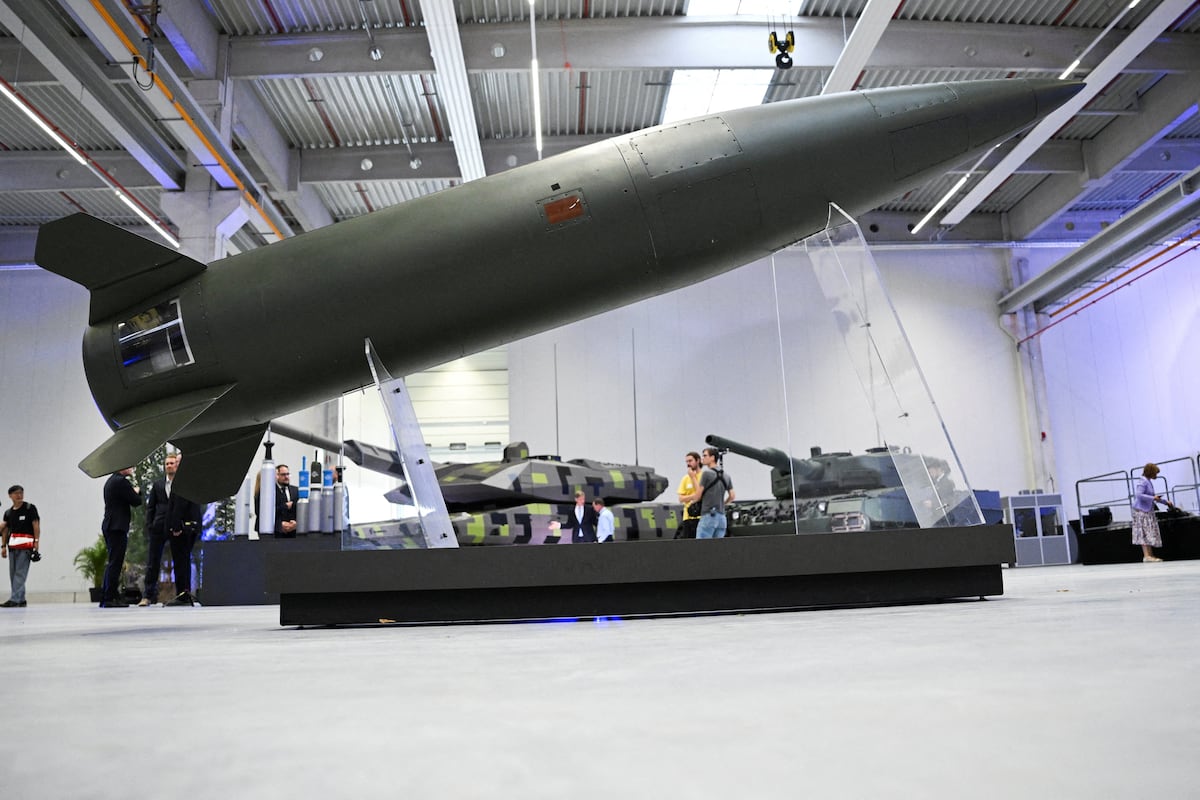
Rheinmetall says the United States and its partners should not expect a rapid surge in Army Tactical Missile Systems production, even as pressure grows to rebuild inventories of long-range precision weapons. In an interview published Friday, chief executive Armin Papperger said the company’s planned production effort with Lockheed Martin can eventually contribute to replenishing U.S. arsenals, but that the process will take substantially longer than two years.
That is a significant admission at a moment when stockpile depth has become a strategic issue rather than a background industrial concern. The comment links battlefield consumption, industrial readiness and alliance burden-sharing in a single sentence: demand exists, government backing appears strong, and the manufacturing base still cannot move at wartime speed.
According to the report, Rheinmetall signed a memorandum of understanding with Lockheed Martin last month to jointly produce ATACMS at the company’s Unterluess plant in northern Germany. The facilities needed for that effort are due to be set up next year. Papperger said there would be enough capacity in the long run to help refill U.S. military stockpiles depleted by the conflict involving Iran, but he added that it would not happen quickly.
Why the timeline matters
The timing matters because it cuts against the common assumption that defense spending automatically turns into near-term output. Governments can authorize budgets, place orders and announce partnerships, but missile production depends on harder constraints: specialized tooling, qualified labor, approved supply chains, regulatory clearance and time to stand up facilities that can consistently deliver at scale.
The Reuters account cited in the source text said the U.S. Army used much of its global stockpile of long-range precision missiles during the five-month war with Iran. That has sharpened concern about readiness for future crises. President Donald Trump, speaking Thursday, reportedly downplayed the broader risk by saying the United States had an almost unlimited supply of some munitions while acknowledging tighter stocks in others. He also said U.S. defense companies were expanding capacity.
Rheinmetall’s message adds an industrial reality check. Even if new lines are funded today, the benefits may not appear on the timelines that planners want. That creates a gap between strategic demand and manufacturing supply, especially for systems that rely on complex components and highly controlled production processes.
Europe’s defense industry is becoming part of the U.S. replenishment story
The planned Rheinmetall-Lockheed venture is also notable because it reflects a deeper integration of European manufacturing into a missile market long shaped by U.S. requirements. Rheinmetall is best known as Europe’s largest ammunition maker, and the company has expanded aggressively as governments across Europe raise military spending in response to wars in Ukraine and the Middle East and to continued U.S. pressure for Europe to assume more responsibility for regional security.
In that context, the proposed ATACMS work in Germany is about more than one missile program. It shows how allied industrial policy is shifting from discussion to co-production. A system designed around U.S. military demand could increasingly rely on European plants to support both American replenishment and international sales.
Papperger said the venture still requires approval, but described the process as well advanced and backed by the U.S. government. He also said the partners intend to target the global market for ATACMS missiles and predicted sustained demand, saying there would be a market for missiles for the next 15 years.
That outlook aligns with the broader direction of the defense sector. Militaries are consuming precision weapons faster than many procurement systems were designed to replace them. At the same time, countries are trying to stock deeper reserves for deterrence. The result is a market in which buyers are no longer planning around short production bursts. They are planning around decade-scale demand.
Revenue later, demand now
One of the clearest indicators of the industry’s pacing is the revenue schedule. Rheinmetall expects the joint venture to generate its first revenue in 2028. That does not mean nothing happens before then, but it does show that the business impact of today’s urgency will likely arrive after several more years of preparation, approval and industrial buildout.
For policymakers, this is the core problem. A shortage can emerge quickly after combat operations intensify, yet the recovery path often runs across multiple budget cycles. The political system reacts in months. The industrial system reacts in years.
The implication is that defense ministries may need to think less in terms of emergency replenishment and more in terms of pre-crisis capacity. If production cannot be expanded fast enough after inventories are drained, then surge resilience has to be built before the next conflict. That could mean larger standing orders, more geographically distributed manufacturing and longer-term commitments that give suppliers confidence to invest.

A wider expansion push
The ATACMS project sits within Rheinmetall’s broader attempt to scale across multiple defense segments. Papperger said the company remains interested in acquiring Iveco’s military truck business from Italy’s Leonardo, although future negotiations will depend on the new Leonardo chief executive, Lorenzo Mariani. He said he had a handshake agreement with Mariani’s predecessor and would need to see whether revised terms remain attractive.
Rheinmetall also expects a multibillion-euro contract for Boxer armored vehicles by the end of the year, according to the report. That detail matters because it shows the company is managing missile expansion alongside other major land-systems opportunities, all while Europe’s rearmament cycle is still accelerating.
At the same time, the company recently cut its sales outlook after Germany canceled its F126 frigate program. That serves as a reminder that defense growth is not linear. Companies can face surging demand in some areas and abrupt setbacks in others, making capital allocation and production planning more complex than headline spending figures suggest.
The strategic takeaway
The most important point from Rheinmetall’s remarks is not simply that missile demand is high. That has been clear for some time. The more consequential point is that the industrial base still appears unable to translate urgency into immediate output, even when a major transatlantic partnership is already in motion.
That gap will shape military planning well beyond this specific program. Precision weapons are now central to deterrence, escalation management and long-range strike doctrine. If replenishment takes longer than two years, then stockpile policy, alliance coordination and procurement strategy all have to adjust to a slower industrial clock.
In practical terms, Rheinmetall is saying the market is durable, the political support is there and the capacity can be built. But none of that eliminates the one constraint governments can least afford to ignore: time.
This article is based on reporting by Defense News. Read the original article.
Originally published on defensenews.com