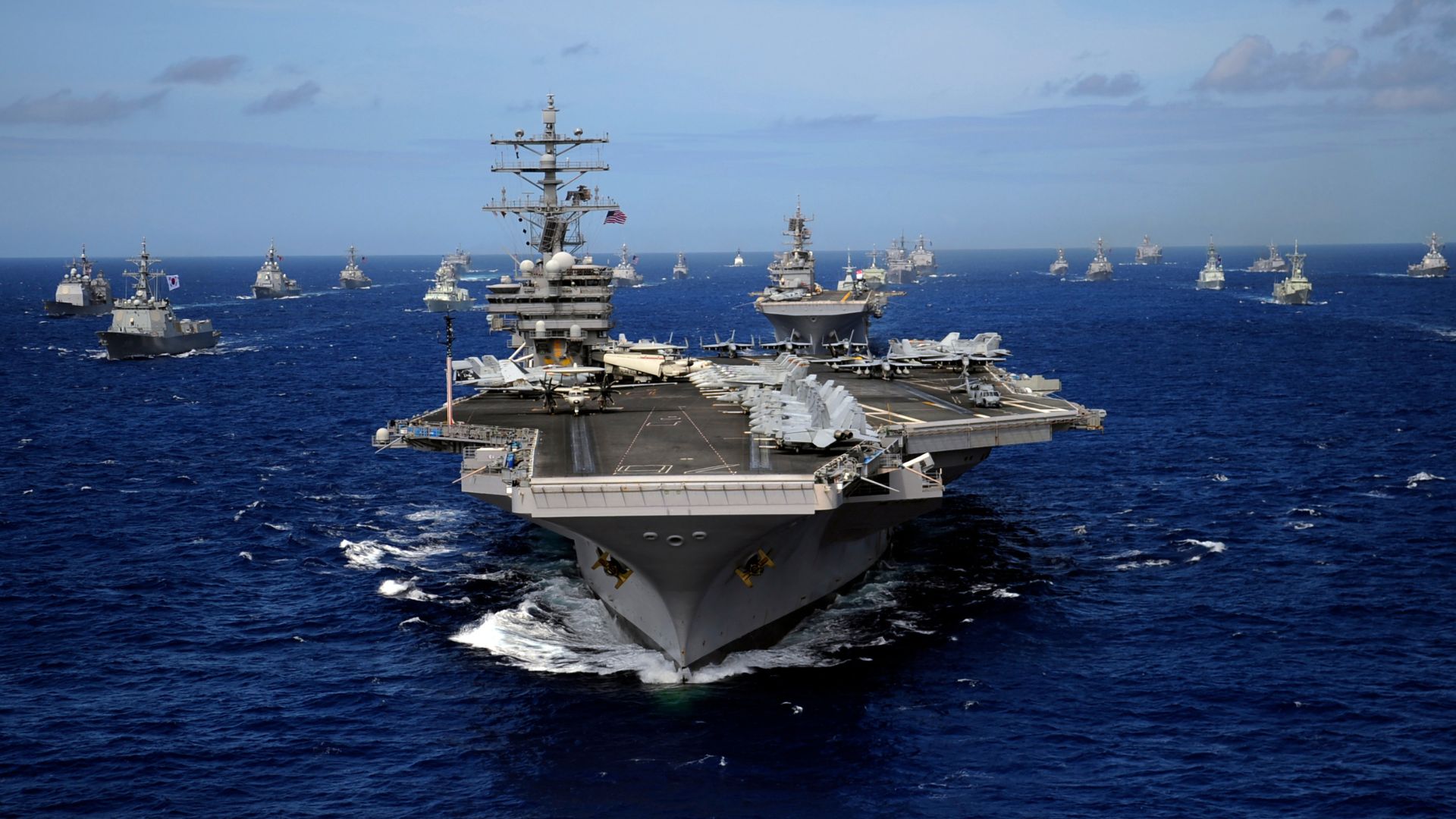
A 100,000-Ton Return to the Fleet
The U.S. Navy has brought the aircraft carrier USS Ronald Reagan back into its operational fleet after a period of maintenance and modernization, restoring one of the largest warships afloat to serviceable status. According to reporting on the milestone, critical systems aboard the carrier were upgraded during the work, with the stated aim of sharpening the ship's battle readiness. The figure attached to the vessel — on the order of 100,000 tons of displacement — captures the scale of the undertaking. This is not a refit of a patrol craft but of a floating airfield that also functions as a command node, a power plant, a hospital, a weapons magazine and a home for thousands of sailors.
For any navy, a carrier emerging from an upkeep period is a signal with two audiences. Domestically, it tells planners whether yards, suppliers and crews delivered. Internationally, it changes the arithmetic of how many carrier strike groups can be generated at any given moment, and how long a demanding deployment tempo can be sustained before the force runs short.
Why Battle Readiness Is the Real Headline
The phrase "boost battle readiness" may read like boilerplate, but in carrier operations it points to something concrete. A warship can be fully repaired and still not be ready. Readiness is the combination of material condition, trained crews, certified air wings, stocked spare parts and tested procedures — the difference between a hull that floats and a hull that can fight on arrival.
Upgrading critical systems during a maintenance period is one of the most efficient ways to move that needle. Work that would otherwise require taking the ship out of service later can be bundled into a scheduled availability, when the vessel is already pier-side, access panels are open and contractor teams are on board. The trade-off is that every added modification risks extending the schedule. Naval planners weigh that risk constantly: a longer yard period means a longer gap in the fleet, but skipping the upgrade means paying for it during a deployment, often at the worst possible moment.
What "Critical Systems" Typically Covers
When navies describe upgrades to critical systems on a carrier, the work generally clusters around the capabilities that make the ship useful in a contested environment. Broadly, those categories include:
- Combat and sensor systems — radars, combat-direction suites and the networking that lets a strike group share a coherent picture of the battlespace.
- Aviation support — catapults, arresting gear, elevators and deck lighting, the machinery that turns sorties into a repeatable routine rather than a stunt.
- Propulsion and power generation — the plant that drives the hull and, just as importantly, feeds the ship's electrical demand as more systems become digital.
- Command, control and communications — the links that allow a carrier to serve as a flagship for a multi-ship formation and to coordinate with allied forces.
- Self-defense and damage control — the layered weapons and the compartmentalization, firefighting and medical capabilities that determine whether a hit becomes an inconvenience or a catastrophe.
Each of those areas interacts with the others. A faster network is of limited value if the ship's electrical margins cannot support it; a new radar matters less if the crew has not trained on it. That interdependence is why modernization is treated as a package deal rather than a shopping list.
The Industrial Base Behind the Return
Carrier maintenance is also a test of the wider defense industrial base. Public shipyards, private contractors and a long chain of subcontractors all have to deliver simultaneously, and shortages of skilled labor, specialized components or dry-dock capacity in any one link can ripple through the schedule. When a carrier returns to the fleet, it is evidence that an entire ecosystem performed — not only the crew that ultimately takes the ship to sea.

That ecosystem is expensive and slow to expand. Shipyard capacity cannot be conjured on demand, and the workforce needed for nuclear-powered carrier work takes years to train. This is part of why the return of a single hull attracts attention well beyond the ship itself: it is a rare, visible indicator of whether the sustainment side of naval power is keeping pace with the acquisition side.
Crew, Certification and the Road Back to Deployment
A ship's return to the operational fleet is the beginning of a sequence, not the end of one. Before a carrier can take up a full deployment, it typically moves through a progression of training and certification events: individual crew qualifications, unit-level drills, integrated exercises with its air wing and, eventually, evaluation alongside escorting destroyers and cruisers as a coherent strike group.
Each step exists because modern naval warfare punishes improvisation. Flight deck operations run on seconds and hand signals; damage control runs on muscle memory; air defense runs on trust between ships that have practiced together. Upgraded hardware only pays off when the human system around it has been rebuilt through repetition.
This is also where the readiness claim will ultimately be validated. A yard period produces documentation and test results. A deployment produces evidence. The gap between the two is where naval leaders watch most closely, because a carrier that returns to the fleet is an investment that has not yet been cashed in.
What to Watch Next
The clearest indicators of whether the upgrades translate into real capability will come over the following months. Analysts and observers will look for the carrier's participation in integrated strike group exercises, its integration with allied navies, and the tempo of its air wing operations once it is fully certified. They will also watch whether the maintenance period's lessons feed back into planning for the next carrier in the queue, since sustainment schedules are only as good as the last one executed.
For now, the immediate takeaway is straightforward. A roughly 100,000-ton aircraft carrier has moved from the repair column back into the operational column, carrying upgraded systems and a mandate to be more battle-ready than it was before. In a force built around a limited number of such ships, that shift is measured in presence: where the fleet can go, how long it can stay, and what it can do when it arrives.
This article is based on reporting by Interesting Engineering. Read the original article.
Originally published on interestingengineering.com