A Clean-Sheet Motor for a Longer-Reach Interceptor
Norwegian defense manufacturer Nammo has opened a new development effort on a prototype rocket motor engine intended to power a long-range member of the IRIS-T air defense family, according to a company program manager who briefed reporters during the firm's multipurpose symposium. Speaking on condition that he not be named, the executive characterized the work as an entirely fresh program rather than a derivative of existing hardware, noting that it leans only lightly on motor architectures Nammo has produced for other munitions.
Nammo already supplies rocket motors across a range of munitions, but the official said this project stands apart because it does not borrow heavily from prior designs or inherit much from earlier categories of programs. He added that the company aims to begin fabricating hardware as soon as it can, signaling that schedule pressure is already shaping how the effort is being run.
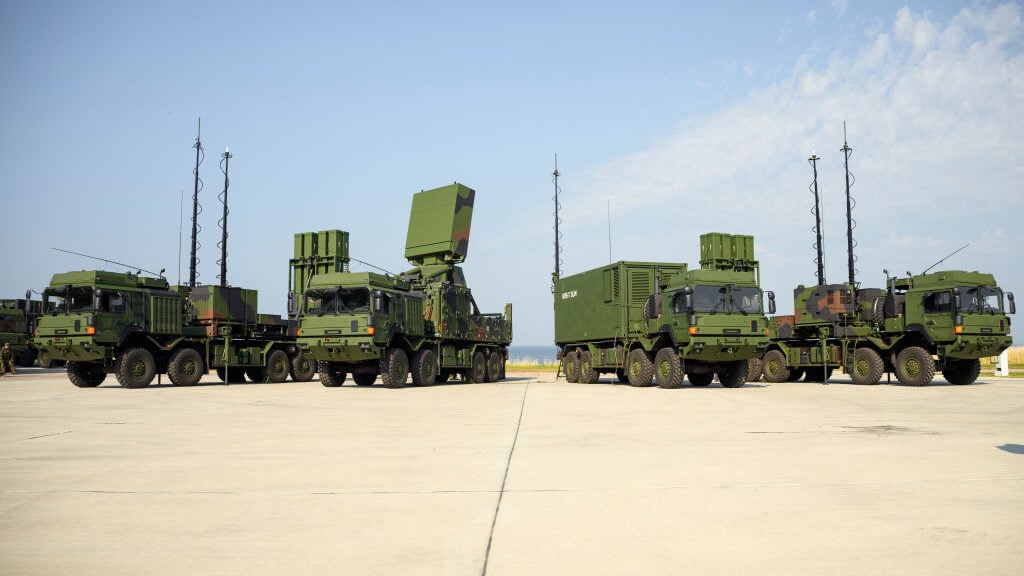
The motor is being developed with German defense firm Diehl in mind as the eventual customer. Diehl builds the IRIS-T family of surface-launched interceptors, and a longer-range variant — the IRIS-T SLX — would need propulsion capable of sustaining engagement envelopes well beyond what the current medium-range model delivers.
Inside the Dual-Pulse Concept
The technical heart of Nammo's work is a so-called dual pulse design. According to the program manager, the approach involves formulating the propellant to produce a specific thrust profile while simultaneously dividing the rocket motor engine into two separate sections. That internal split is the defining structural feature of the concept, distinguishing it from a conventional single-section motor.
The official did not disclose performance figures, propellant chemistry or the expected burn characteristics of the finished article, and no timeline for a completed, qualified motor has been made public. What is clear is that the company views the two-section architecture as the central engineering problem to solve, and that the thruster must ultimately satisfy requirements set by a missile program with its own separate test schedule.
Static Firings Planned at Raufoss
Early prototype activity will be concentrated at Nammo's production site in Raufoss, a town more than 100 kilometers (62 miles) north of Oslo, where the company maintains manufacturing infrastructure. The program manager outlined the initial sequence of work:
- Static firings of early prototype hardware to validate engineering analysis and simulated modelling
- Adjustments to the design where test results diverge from predicted behavior
- Progressive refinement of the dual-pulse configuration ahead of higher-fidelity testing
Static test stands allow engineers to characterize thrust output and internal ballistics without the complexity of a full flight vehicle, making them a standard early checkpoint for propulsion programs. The willingness to adjust the design after initial firings suggests Nammo expects the modelling to be corrected by real-world data rather than treated as final.

Diehl Targets a 2027 Firing Test
The propulsion work is running in parallel with Diehl's own milestones for the missile itself. Alexander Linss, who leads the ground-based air defense business unit at Diehl, said the company is targeting a first development or Safety Integrity Level firing test of the surface-launched IRIS-T SLX in 2027. Serial production of the longer-range missile has reportedly been slated for 2029.
Safety Integrity Level testing is a structured verification step that evaluates whether a system meets defined safety and reliability thresholds, and it typically follows substantial design maturation. A 2027 target therefore places the missile program on a timeline that Nammo's motor development must ultimately support.
Diehl first unveiled the extended-range interceptor at the 2024 Berlin Air Show, positioning it as the top tier of a family that already includes the short-range IRIS-T SLS and the medium-range IRIS-T SLM.
Doubling Reach and Widening the Target Set
The headline figure attached to the SLX is range. According to the company, the variant can intercept targets at 80 kilometers (50 miles), roughly twice the reach of the SLM model. That additional depth is intended to open engagement opportunities against a broader set of airborne threats, including enemy fighter jets, bombers, long-endurance drones and support aircraft such as tankers and airborne early warning platforms.
Striking those targets — particularly aircraft that operate well behind the forward edge of a battlefield — requires a missile that can travel farther while retaining enough energy to complete an intercept. That requirement is precisely what a dual-pulse motor architecture is meant to address, and it explains why Nammo's propulsion effort sits on the critical path for the SLX program.
A Combat Record Built by the Shorter-Range Models
While the SLX remains in development, its predecessors have been used extensively in Ukraine. Linss said Ukrainian forces have employed both the IRIS-T SLS and SLM to destroy more than 1,000 Russian targets since the war began in 2022, and he put the hit rate for the two interceptors at 95 percent.
He identified the principal targets engaged by the systems as Russian Kh101 cruise missiles, 3M14 Kalibr cruise missiles and Shahed 136 drones — a threat mix dominated by cruise missiles and one-way attack munitions rather than crewed aircraft. That operational record gives Diehl a body of combat data to draw on as it matures the longer-range variant.
The Patriot Question
The SLX's extended envelope carries strategic as well as tactical implications. In July, Diehl chief executive Helmut Rauch said the longer-range interceptor could reduce reliance on US-produced Patriot missiles, a system that has been in short supply during the war in Ukraine. Kyiv has repeatedly pressed Western allies to donate additional Patriot batteries and interceptors from their own stocks.
If the SLX can cover part of the engagement envelope currently assigned to Patriot — particularly against cruise missiles and drones at medium and longer ranges — European operators would gain a domestically produced option. That prospect is likely to add urgency to both Diehl's missile milestones and Nammo's motor development.
What to Watch
Several questions remain unanswered. Nammo has not published thrust figures, motor dimensions or a qualification schedule, and it is unclear how closely the company's prototype firings will be timed against Diehl's 2027 Safety Integrity Level test. Nor is there a confirmed fielding date for the SLX beyond the reported 2029 serial production target, and production timelines for complex interceptors have historically slipped.
The immediate items to track are the first static firings at Raufoss, any design adjustments that follow, and whether the dual-pulse configuration survives early testing without changes significant enough to affect Diehl's schedule. For now, Nammo's message is one of momentum: the company says hardware construction will begin as soon as possible, and the propulsion program is being treated as a ground-up engineering challenge rather than a repackaging of existing technology.
Note: Breaking Defense accepted travel and accommodation from Nammo for the company's symposium.
This article is based on reporting by Breaking Defense. Read the original article.
Originally published on breakingdefense.com