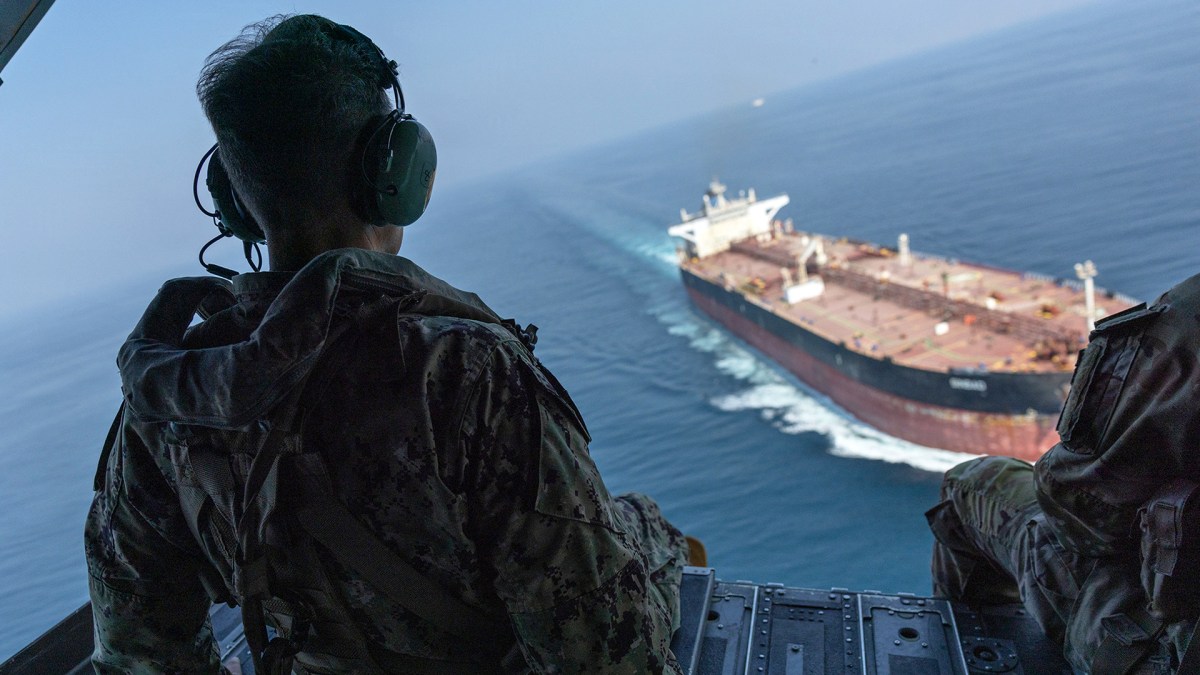
Reported attack raises fresh concern for commercial shipping
A small boat reportedly approached a commercial tanker in the Strait of Hormuz and placed two explosive devices on the vessel’s hull, setting off a blast and a fire in the engine room. The incident involving the Dubai-owned tanker Louise 1 has been described as a limpet-mine attack attributed to Iran in reporting cited by The War Zone.
The United Kingdom Maritime Trade Operations center reported that the devices were placed above the waterline. Financial Times reporting cited by The War Zone said the weapons were limpet mines and that the attack was carried out by Iranians.
The event is significant because it illustrates a particular threat to ships using one of the world’s most strategically important waterways: a small craft can potentially approach a transiting vessel, attach explosive devices and leave before an attack becomes apparent. The consequences can extend beyond damage to one ship, affecting confidence in a congested route used by commercial traffic.
A method associated with earlier Gulf incidents
The report described the attack as the first of its kind since June 2019, when Japanese and Norwegian vessels were struck with limpet mines. Limpet mines are explosive devices attached directly to a ship’s hull. Their placement can make them difficult to detect in advance, particularly when the attacker relies on a small vessel operating close to the target.
According to the account, the explosive devices on Louise 1 caused a blast that started a fire in the engine room. The specific allegation is therefore not simply that shipping is under pressure in the Strait of Hormuz, but that an attacker may have demonstrated the ability to get close enough to a moving or transiting commercial tanker to place explosives physically on its hull.
Marisks, a Greece-based maritime risk-management group quoted by Reuters, said the apparent ability of a small craft to approach, deploy explosive devices and withdraw presents a significant security concern. That assessment reflects the operating environment in the strait, where dense maritime traffic and coastal geography can complicate the task of distinguishing ordinary small-vessel activity from a hostile approach.
Mine clearance does not address every danger
Earlier the same day, U.S. Central Command commander Adm. Brad Cooper said that the waterway’s internationally recognized primary transit routes had been cleared of Iranian sea mines. His statement, posted on X, followed U.S. operations that he said had cleared the routes after Iranian mines were placed there.
But sea mines and limpet mines pose different operational problems. Clearing a transit route of mines addresses explosive hazards placed in the water. A limpet-mine attack, by contrast, depends on a close approach to an individual ship and the physical placement of a device on its hull. Cooper’s statement did not address the limpet-mine claim.
That distinction matters for maritime security planning. A cleared route can reduce one form of risk, yet vessels may still face threats from small craft, boarding attempts or explosive devices attached during a close encounter. The reported Louise 1 attack shows why protecting shipping requires more than verifying whether a channel is free of mines.
Why the Strait of Hormuz remains difficult to secure
The Strait of Hormuz is a busy and complex littoral environment. Large commercial ships transit close to shore in constrained waters, while naval, commercial and small local vessels share the same space. Those conditions can create opportunities for a small boat to blend into routine activity until it is near a target.
The report comes amid what The War Zone described as an Islamic Revolutionary Guard Corps wave of strikes against shipping in the strait following Operation Epic Fury. It also said that additional air defenses, ships, troops, ammunition and supplies were moving into the Middle East as the prospect of a new air campaign against Iran approached.
Those wider movements underscore how an incident involving one tanker can have strategic implications. Commercial shipping is not only an economic activity in such a waterway; it is also a point of pressure during regional confrontation. A successful close-in attack can force vessel operators, insurers and naval forces to reconsider assumptions about what protection is needed in transit.

What is established and what remains reported
The available account supports several core facts: UKMTO reported that a small boat placed two explosive devices on a tanker’s hull above the waterline, a blast caused an engine-room fire, and reporting cited by The War Zone identified the vessel as the Dubai-owned Louise 1. The identification of the devices as limpet mines and the attribution to Iran are reported assessments cited from the Financial Times.
The episode should therefore be understood with the appropriate distinction between reported details and independently established findings. The account does not provide a public technical examination of the devices, nor does it establish every aspect of responsibility through evidence included in the supplied material.
Even with those limits, the operational concern is clear. The reported method would expose a gap between broad route clearance and ship-by-ship protection. It suggests that maritime forces and commercial crews must account for threats that arrive not only from underwater minefields or long-range weapons, but also from a nearby small craft.
A new warning for tanker operators
For tanker operators, the reported attack is a reminder that physical proximity remains a central security risk in contested waterways. A device placed above the waterline may be comparatively simple in concept, but it can still trigger a fire in critical machinery spaces and create danger for the crew, cargo and vessel.
The incident also adds to the challenge of maintaining reliable maritime commerce through the Strait of Hormuz. Naval authorities may be able to clear recognized transit routes, but the safety of ships can still depend on surveillance, awareness of nearby traffic and the ability to identify a threatening approach in time.
As further information emerges, the most consequential question will be whether this was an isolated event or evidence of a renewed pattern of limpet-mine attacks on commercial shipping. Either outcome would reinforce the vulnerability of the strait’s congested sea lanes during a period of heightened regional tension.
This article is based on reporting by twz.com. Read the original article.
Originally published on twz.com