Canberra Moves Two Surveillance Fleets Into the Operational Column
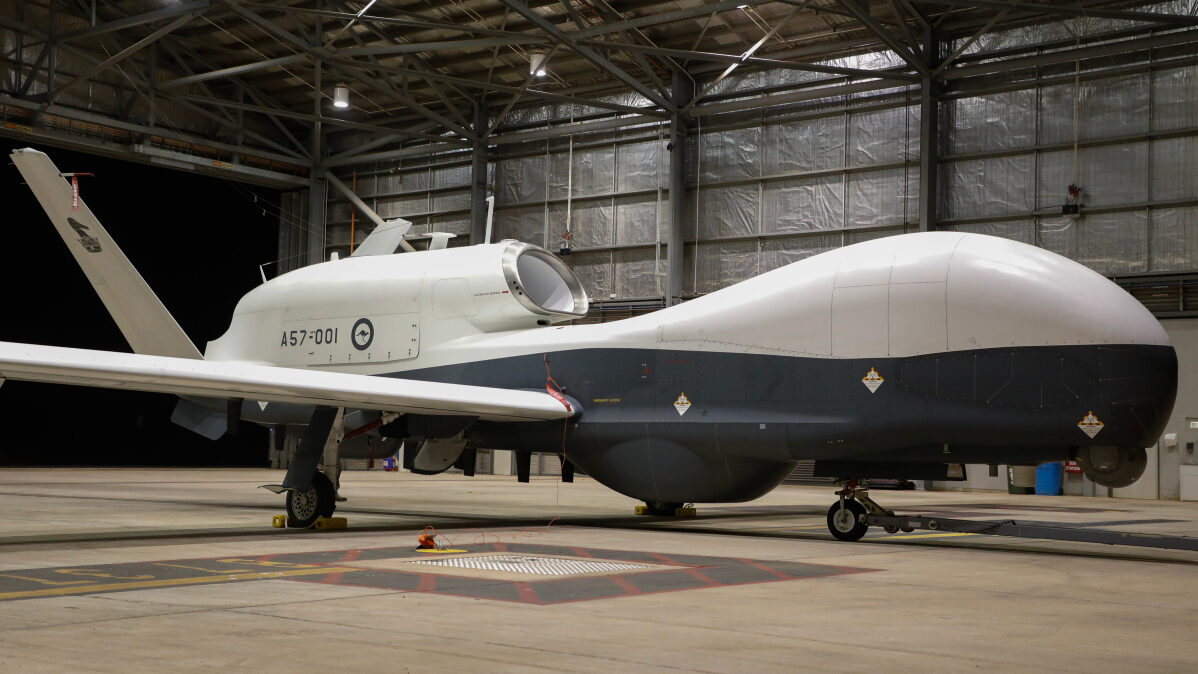
The Australian Department of Defence has announced that two of the Royal Australian Air Force's newest airborne surveillance programs have reached a significant milestone. The MQ-4C Triton, a high altitude, long endurance unmanned aircraft built by Northrop Grumman, and the L3Harris MC-55A Peregrine, an intelligence, surveillance, reconnaissance and electronic warfare platform, have both attained Initial Operational Capability. The declaration came after what the department characterised as extensive operational testing and evaluation.
The announcement carries weight for a nation whose primary area of military interest covers an enormous expanse of ocean and airspace. According to the department, the milestone improves Australia's ability to conduct long-range, persistent surveillance across the Indo-Pacific and the waters surrounding the continent.
What Initial Operational Capability Actually Means
In the Australian context, declaring IOC is not the same as declaring a program complete. The term signals that an initial subset of a platform or system — part of the eventual aircraft complement together with its supporting elements — is considered ready to be deployed operationally. Full capability arrives later, as remaining airframes, ground infrastructure, crews and sustainment arrangements mature.
Both fleets are still short of their planned size. The RAAF has taken delivery of three MQ-4C Tritons and three MC-55A Peregrines, having ordered four of each type. The department noted that the fourth MC-55A is scheduled to arrive in Australia later this year.
- Three MQ-4C Tritons delivered; four ordered in total
- Three MC-55A Peregrines delivered; four ordered in total
- Fourth Peregrine expected in Australia before the end of the year
- Both platforms declared IOC after operational testing and evaluation
Triton: Persistent Eyes for Joint Commanders
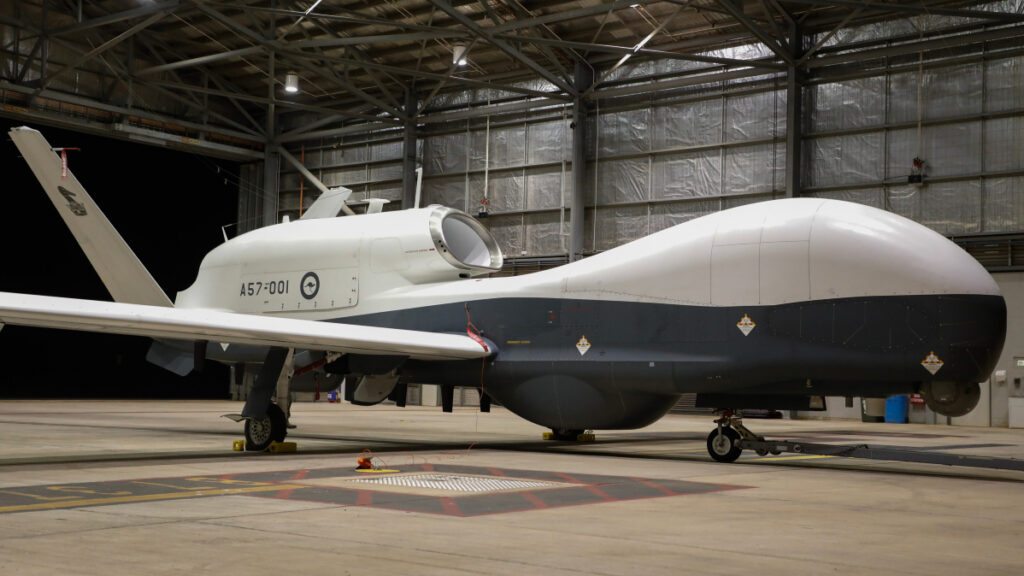
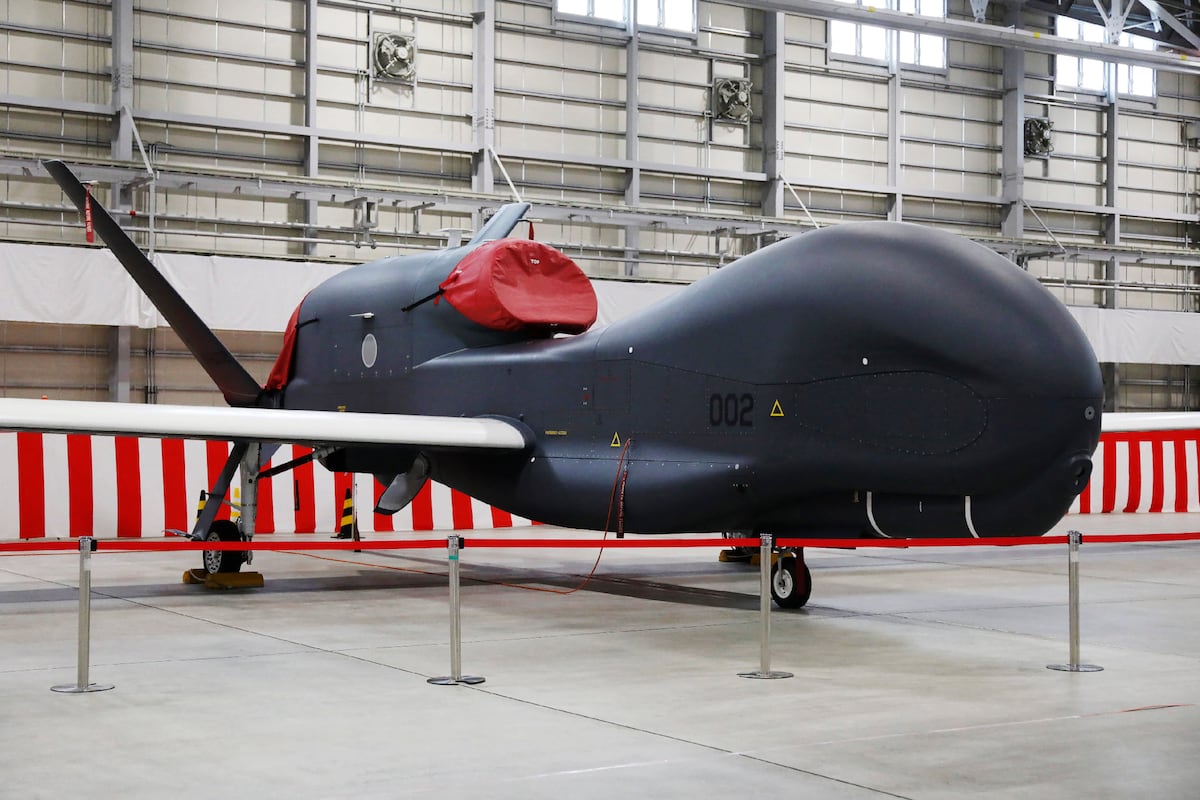
The MQ-4C Triton is designed to loiter at high altitude for extended periods, gathering surveillance data over distances that crewed aircraft struggle to cover economically. That characteristic is central to why Canberra pursued the platform, and it was echoed in industry reaction to the IOC declaration.
Jane Bishop, vice president and general manager of Northrop Grumman's Global Surveillance Division, described the achievement as a key step in reinforcing the ISR capabilities the aircraft brings to the vast Indo-Pacific region. She said commanders can now take full advantage of the comprehensive surveillance picture Triton produces, strengthening regional security for joint decision makers even in harsh and remote environments.
Australia's own framing was similarly direct. The department said reaching IOC with the Tritons has significantly strengthened the Air Force's ability to deliver persistent ISR effects across Australia's primary area of military interest — a reference to the maritime and air approaches that dominate national defence planning.
Peregrine: Where Surveillance Meets Electronic Warfare
The MC-55A Peregrine occupies a different niche. Built by L3Harris, it is an ISREW aircraft — a platform that blends intelligence collection with electronic warfare effects rather than treating them as separate missions. The Australian announcement said the Peregrines expand the Air Force's ability to deliver integrated intelligence, surveillance, reconnaissance and electronic warfare effects in support of defence operations.
The fleet has not sat idle while waiting for its formal milestone. Since the first Peregrine arrived in Australia in February, the aircraft have deployed overseas. In July, one MC-55A operated from Clark Air Base in the Philippines and flew several missions over the South China Sea — an early indication of how Australia intends to use the platform alongside regional partners.
That deployment matters because it demonstrates the aircraft is already being exercised in the geography it was purchased for. Electronic warfare and signals collection are inherently cooperative activities, and operating from a partner's airbase suggests a level of interoperability that typically takes years to build.
Poseidon Upgrades Round Out the ISR Picture
The same announcement touched on a third, longer-established fleet. The first of two Boeing P-8A Poseidon multi-mission aircraft upgraded by Boeing in the United States has returned to Australia. Boeing was awarded a contract in 2024 to bring the RAAF's fleet of 14 P-8As up to the Increment 3 Block 2 standard, which includes improvements to the aircraft's onboard software, systems and sensors.
Work on the first two Poseidons was carried out in Jacksonville, Florida. The remainder of the fleet is to be upgraded in Australia, keeping a substantial share of the modification effort and its associated industrial skills onshore. Taken together with the Triton and Peregrine milestones, the Poseidon program points to a deliberate effort to modernise several layers of airborne sensing at once.
Why the Timing Matters
Persistent surveillance over the Indo-Pacific is a demanding proposition. The distances involved are enormous, the weather can be punishing, and the areas of interest are frequently far from the bases that support them. Uncrewed, high-altitude aircraft address part of that problem by staying aloft far longer than crewed alternatives, while electronic warfare platforms add the ability to detect, interpret and potentially disrupt the emissions that modern militaries rely on.
Combining those capabilities — along with upgraded maritime patrol aircraft — gives commanders a layered picture rather than a single source of data. It also gives Australia options in how it contributes to regional awareness alongside allies and partners, an increasingly central consideration in its defence posture.
What to Watch Next
- Arrival of the fourth MC-55A Peregrine later this year and progress toward full fleet strength
- Follow-on deployments of Peregrines to overseas bases and allied airfields
- Additional MQ-4C Tritons joining the three already in RAAF service
- Completion of P-8A Increment 3 Block 2 modifications, with most work shifting to Australia
- The shift from initial to final operational capability across both new fleets
Crucially, IOC is a starting line rather than a finish line. The coming months will determine how quickly these platforms move from an initial deployable subset to the fully rounded capability Canberra has planned — and how visibly they appear in the airspace and waters that matter most to Australia's strategic planners.
This article is based on reporting by Breaking Defense. Read the original article.
Originally published on breakingdefense.com