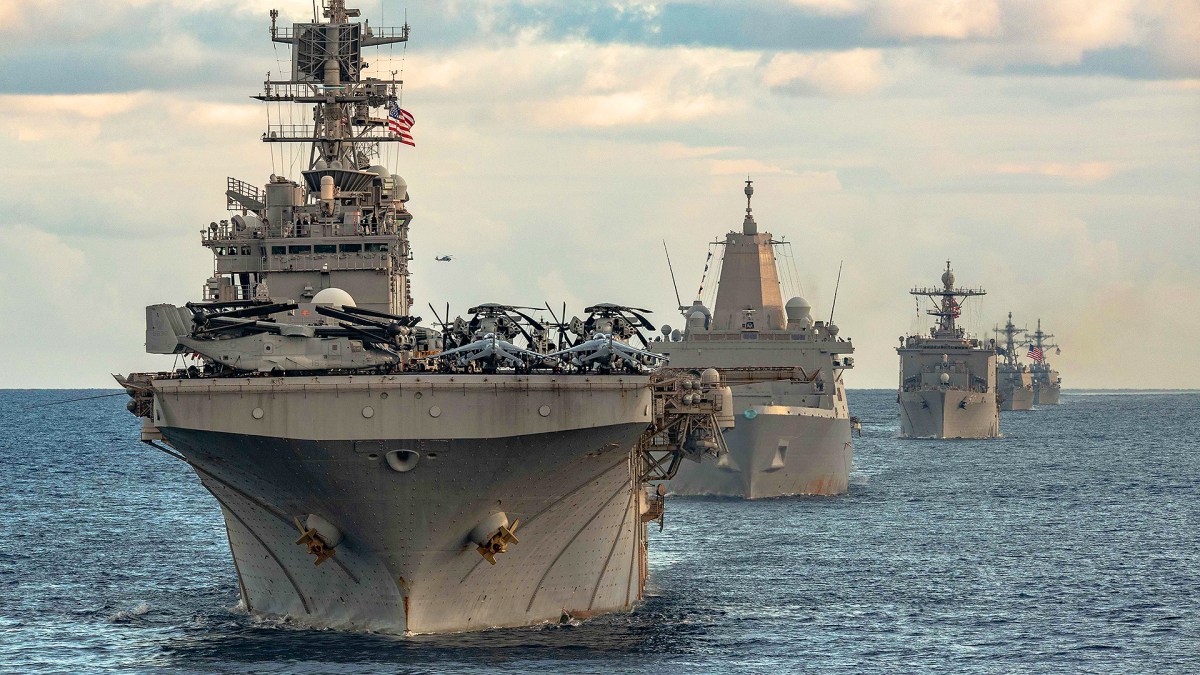
The US Marine Corps says it needs a larger amphibious fleet to sustain its desired level of global presence. Navy and Marine Corps leaders have concluded that 40 amphibious ships are required to keep three Marine Expeditionary Units, or MEUs, deployed at the same time—nine more than the 31 vessels currently in the fleet.
The finding puts a new number behind a long-running debate over the size, readiness and affordability of the amphibious force. Congress currently mandates a minimum fleet of 31 amphibious ships, but Marine Corps leadership is seeking support for a larger requirement built around persistent deployment of three Marine units: one from the East Coast, one from the West Coast and one based in Japan.
From a 31-ship floor to a 40-ship requirement
The 40-ship figure emerged from work between the analytical organizations of the Navy and Marine Corps, according to Shon Brodie, director of Maritime Expeditionary Warfare at the Corps’ Combat Development and Integration Directorate. The analysis was intended to determine how many ships would be needed, based on current readiness, to maintain what the service calls “3.0 ARG/MEU presence.”
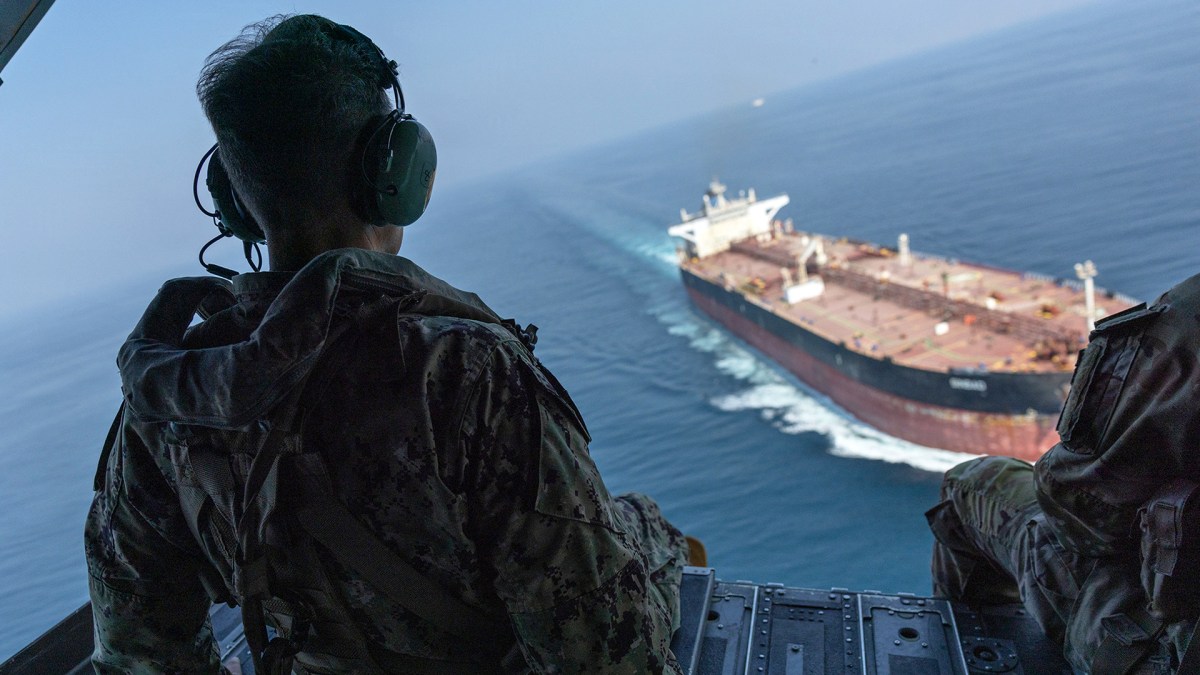
An Amphibious Ready Group, or ARG, typically includes an amphibious assault ship and two transport dock or dock landing ships. A MEU, normally composed of about 2,200 Marines, embarks on that naval formation. Supporting vessels, surface combatants and, in some cases, a nuclear-powered fast-attack submarine can be part of a larger Expeditionary Strike Group.
That force structure explains why a three-MEU presence cannot be supported by only the nine ships that might be involved in three groups at a single moment. Ships rotate through maintenance, training, transit and other readiness cycles. The services’ new assessment is that maintaining three groups persistently, rather than deploying them only intermittently, requires a larger inventory of hulls.

Persistent MEUs as the objective
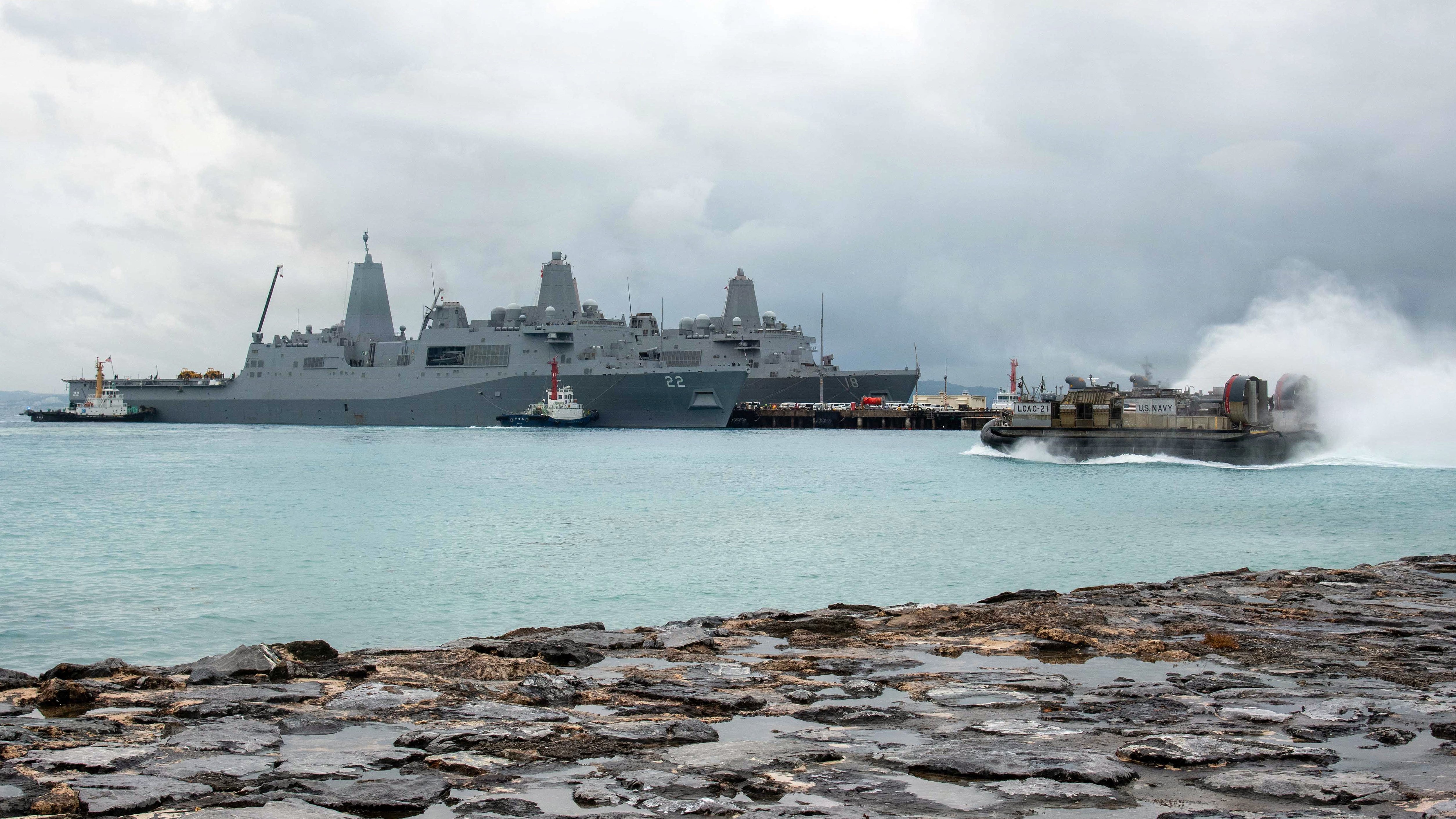
Marine Corps Commandant Gen. Eric Smith has made the three-ARG/MEU presence his leading priority, Brodie said. The aim is a continuous ability to field highly trained Marine units from both US coasts and Japan.
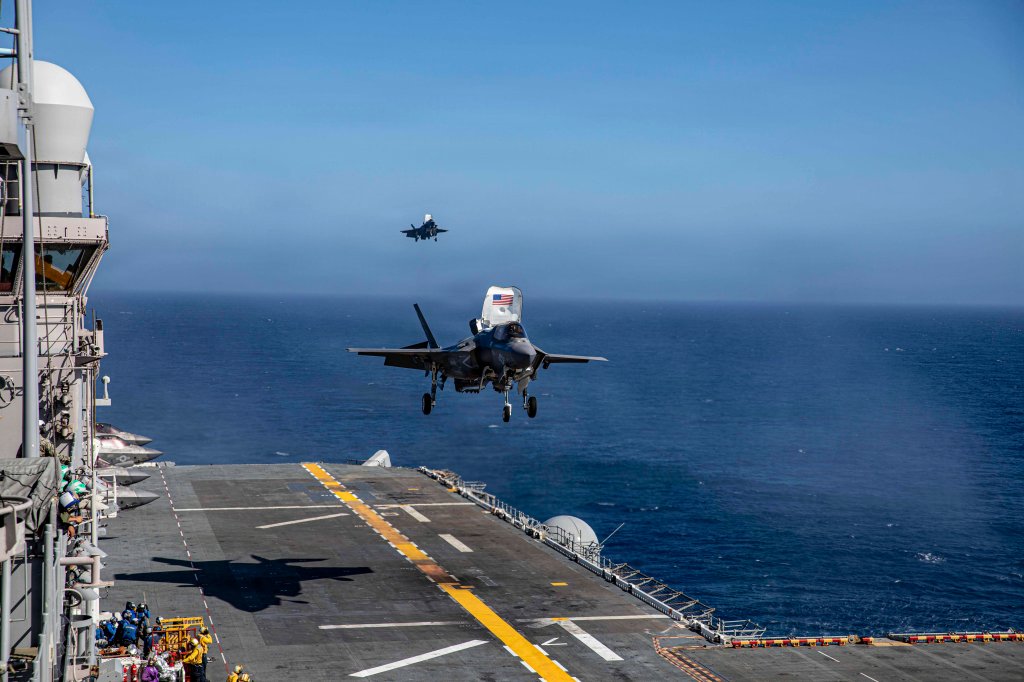
MEUs are designed to provide an adaptable, sea-based force that can respond across a range of missions. Their ships provide aviation facilities, command-and-control capacity, vehicles, supplies and the ability to move Marines and equipment between sea and shore. The concept is central to the Corps’ ability to operate forward without depending entirely on permanent land bases.
The distinction between having enough ships on paper and having enough ships ready for sustained operations is therefore central to the argument for 40 vessels. A ship in a maintenance period cannot fill an operational deployment requirement, and a force sized only for the minimum number of formations may have little flexibility when repairs, modernization or unexpected demands intervene.
Funding remains unresolved
The requirement does not by itself create new ships or identify a way to pay for them. The current fleet of 31 amphibs meets the congressional minimum, while the additional nine vessels would require an expansion of the force beyond that floor. The article notes that the funding path is more uncertain following the midterm elections.
That makes the new assessment as much a budget and industrial question as an operational one. Amphibious ships are large, complex naval vessels, and increasing their number depends on procurement funding, shipyard capacity, construction schedules and the resources needed to crew, maintain and modernize them after delivery.
The demand must also compete with other Navy priorities. Fleet planning involves choices across submarines, surface combatants, logistics vessels, aircraft, weapons and maintenance accounts. A 40-ship amphibious requirement gives lawmakers and Pentagon planners a specific benchmark, but it does not resolve those tradeoffs.
Readiness drives the calculation
The Marine Corps’ case rests on current readiness assumptions rather than a purely theoretical force-design target. That framing matters because a fleet requirement based on continuous presence has to account for the full operating cycle of every ship. Training before deployment, transit to and from operating areas, scheduled upkeep and unplanned maintenance all affect how many hulls are available.
The analysis also reflects the tight relationship between the Navy’s ships and the Marine Corps’ deployment model. The Corps can identify the number of units it wants to keep forward, but the Navy must supply the amphibious platforms that transport and sustain them. The reported agreement between Vice Chief of Naval Operations Adm. James W. Kilby and Assistant Commandant Gen. Bradford J. Gering signals that the two services have aligned on the underlying force requirement.
Whether that agreement produces a program of record will depend on decisions outside the services’ analysis. Congress sets funding levels and has already established the 31-ship statutory minimum. The new 40-ship objective gives advocates a more expansive goal: a fleet large enough to preserve three concurrent ARG/MEU deployments despite the normal constraints of readiness and maintenance.
A concrete test for amphibious-force policy
The debate now has a concise operational test. If the United States wants to keep three Marine Expeditionary Units persistently deployed—one associated with each coast and one in Japan—the services say 31 amphibious ships are not enough. Their answer is 40.
That conclusion does not guarantee a larger fleet. But it clarifies the scale of the gap and turns a broad discussion about naval presence into a measurable procurement question. The next issue is whether lawmakers will accept the requirement, fund it and sustain the industrial effort needed to close it.
This article is based on reporting by twz.com. Read the original article.
Originally published on twz.com